BLM grazing rules up for comment

Do you have something that supports that claim?

Everything ive read says that grazing on federal public lands account for low single digit percentages of the production.
There’s a lot of nuance and cherry picking of those numbers.

Western states are predominantly cow-calf operations. We send our calves to states like Nebraska, South Dakota, etc. where they finish them and butcher. So our beef production by the pound out west isn’t necessarily high but we are somewhere around 25% of total beef cow numbers. If you made it so ranchers in the west could only raise the number of cattle they could support on deeded ground, that number would be significantly lower and major dent in national calf crop.
 
So you feel that at $1.69 /aum they are already paying to hire the BLM employee to oversee their impact/benefits on public land?

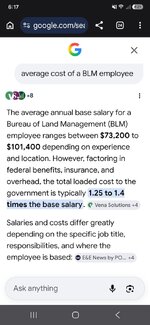
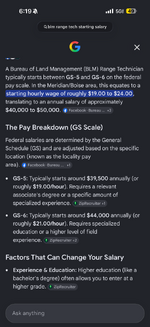
If we assume that an entry level range tech costs the feds $100,000 in salary and benefits (to low) then it only takes about 60,000 AUM (cow calf pair months) to pay for their work. That doesn't pencil.
I’ve sure never met anybody from the BLM making six figures. And yes it absolutely does pencil considering overseeing grazing is only one portion of what they do on an annual basis. They also monitor watershed, wild horses, sage grouse, vegetation surveys, etc.
 
There’s a lot of nuance and cherry picking of those numbers.

Western states are predominantly cow-calf operations. We send our calves to states like Nebraska, South Dakota, etc. where they finish them and butcher. So our beef production by the pound out west isn’t necessarily high but we are somewhere around 25% of total beef cow numbers. If you made it so ranchers in the west could only raise the number of cattle they could support on deeded ground, that number would be significantly lower and major dent in national calf crop.

Do you have any numbers to cite that the west west has 25% of the total beef cow numbers on public lands, most are relatively low productivity lands


Sent from my iPhone using Tapatalk
 
It's pretty clear we have very different opinions. So I will take the high road and get off this subject.

I'll close with this. The public comment period, and the point the OP was trying to make, is open for a rule change. And while the process is far from perfect it is what it is. We all should make our voices heard. Even people who think subsidizing ranching is a good use of public land.
 
Do you have any numbers to cite that the west west has 25% of the total beef cow numbers on public lands, most are relatively low productivity lands


Sent from my iPhone using Tapatalk
I never said the west has 25% of the total beef on public lands. My point is it is misleading to say that only 1-2% of beef production comes from public lands because that doesn’t describe the way it is practiced in real life.

Western states have ~25% of the US beef cow herd. I’ve read anywhere from 20 to 30%. It is hard to know the exact percentage of that group that utilizes public land at SOME point during the year as every ranch operates differently on a yearly basis. But it is certainly not as insignificant as 1-2%.
 
It's pretty clear we have very different opinions. So I will take the high road and get off this subject.

I'll close with this. The public comment period, and the point the OP was trying to make, is open for a rule change. And while the process is far from perfect it is what it is. We all should make our voices heard. Even people who think subsidizing ranching is a good use of public land.
This has nothing to do with taking a high or low road. We are both engaging in civil discourse on a public forum. The difference is this isn’t a debate about sleeping bags or barrel lengths. You’re diminishing the way hard working people, myself and family included, earn a living and put food on the table of millions of people in this country. And now that we have discussed it, you’re also choosing to ignore the impacts this could have on the environment, on food supply, and on local and national economies, just because you’d selfishly rather there be less cattle and more elk on the landscape for you to hunt.

This is America and it is absolutely your right to have an opinion and make that voice heard. But that article is a fear mongering piece to rile up hunters and demonize a sustainable use of public lands. And you’re falling for it.
 
This has nothing to do with taking a high or low road. We are both engaging in civil discourse on a public forum. The difference is this isn’t a debate about sleeping bags or barrel lengths. You’re diminishing the way hard working people, myself and family included, earn a living and put food on the table of millions of people in this country. And now that we have discussed it, you’re also choosing to ignore the impacts this could have on the environment, on food supply, and on local and national economies, just because you’d selfishly rather there be less cattle and more elk on the landscape for you to hunt.

This is America and it is absolutely your right to have an opinion and make that voice heard. But that article is a fear mongering piece to rile up hunters and demonize a sustainable use of public lands. And you’re falling for it.
Seriously dude?

I am 3rd generation Montana rancher. I am in no way diminishing anything about ranching or ranchers. They work hard some harder than others. My grandfather homesteaded here. We have never been given the federal free grazing golden ticket. And still made a living. If you are on that gravy train enjoy the ride you are definitely NOT the majority. I can't believe that you are arguing that the only way to ranch is paying nothing for your grazing lease. That is an insult to ranchers.

I am not arguing for more elk on the landscape. I am not arguing for less cattle. I am stating a fact the feds give away grazing. That is not debatable the rate has barely changed in 60 years!! You can hardly buy a candy bar for what you are paying to feed a 1400lb cow and calf for a month.....and you think that is fair?

A real grazing price will not harm economics it will simply shift costs...yes some ranchers will have to pay a fair rate. And if they can't make it then the next rancher will.

National food supply will not be interrupted by paying a fair rate.

Impacts to the environment by paying a reasonable lease so our public land can actually be managed. Well that can only help environmental impacts to prevent mismanaged grazing.

Ranching is a sustainable use of our PUBLIC natural resources and it should continue. But free is not a fair price.
 
Seriously dude?

I am 3rd generation Montana rancher. I am in no way diminishing anything about ranching or ranchers. They work hard some harder than others. My grandfather homesteaded here. We have never been given the federal free grazing golden ticket. And still made a living.
Then you have to stop talking out of both sides of your mouth, my guy. If this is true, you should understand that every ranch in every part of the country is different and they all do what they can to make it work. Some ranchers aren’t lucky enough to have been handed the golden ticket of a being third generation or having been given a homestead to lean on either. Saying they’re on welfare for paying what the government charges them to graze is more than a little diminishing.
If you are on that gravy train enjoy the ride you are definitely NOT the majority.
There’s 18,000 permits. Thats a lot of producers “on that gravy train”.
I can't believe that you are arguing that the only way to ranch is paying nothing for your grazing lease. That is an insult to ranchers.
That’s not at all what I am saying. All I have ever said is that the use of permits makes it possible for a lot of ranchers to produce at the level that they do and it would be harmful if they went away. Especially when our national inventory is as low as it is. That has nothing to do with what they cost.
I am not arguing for more elk on the landscape. I am not arguing for less cattle. I am stating a fact the feds give away grazing. That is not debatable the rate has barely changed in 60 years!! You can hardly buy a candy bar for what you are paying to feed a 1400lb cow and calf for a month.....and you think that is fair?

A real grazing price will not harm economics it will simply shift costs...yes some ranchers will have to pay a fair rate. And if they can't make it then the next rancher will.

National food supply will not be interrupted by paying a fair rate.

Impacts to the environment by paying a reasonable lease so our public land can actually be managed. Well that can only help environmental impacts to prevent mismanaged grazing.

Ranching is a sustainable use of our PUBLIC natural resources and it should continue. But free is not a fair price.
I never even disagreed that they shouldn’t be more expensive. But they cost as much as they need to in order to pay their way. You may feel like that’s unfair or feel like they should be more expensive, but for what? More range techs? More infrastructure? Fine. Then double it. Or triple it. But saying it should cost as much as private landowners charge is ridiculous.

Private landowners selling grazing are making a tradeoff. They are forgoing ranching themselves or doing something else with that property in order to be paid for that grass. That is the free market at work, absolutely. The federal government is not making that same tradeoff and therefore is not participating in the market. Either nothing is happening on that land or it is making money by ranchers paying for the grass. There is no benefit for them to price people out. I’m sorry that bothers you so much.
 
By all means please share your sources that more than 3-6% of US cattle spend any portion of their lives on public lands. Now, in the 11 Western states it's more like 40-60%, but those states have a relatively small percentage of the national cattle herd.

You can see the maximum eligible federal AUMs annually in the Western states (which represents 91.2% of total US federal AUMs), divide that by 12 to see the maximum # of cow/calf pairs that can be grazed a year in federal public land and then actualize it to account for the other 8.8% outside the Western states. Then you can compare that to the total US headcount of beef and get an upper threshold of ~6%
https://www.wyoextension.org/agpubs/pubs/B-1400.pdf
6% can completely disappear without any discernible market impacts nationally. And since that 6% operates at significant subsidy odds are there still be zero price impacts to fulfill that demand gap with Argentine or Brazilian beef.

I addressed the comments I thought were ignorant already.

Yes, that cost you shared is a fact and that money pays the BLM to in turn manage and monitor those areas to ensure they’re not being overgrazed. I am sorry that you feel like they’re doing an inadequate job but what you described is currently in place.

“Capitalism would do _______ if government would get of the way.” Kind of a universal argument isn’t it? The government rarely if ever charges as much for its version of something compared to what the private sector provides so not sure I can get on board with you here.

There’s a lot of nuance and cherry picking of those numbers.

Western states are predominantly cow-calf operations. We send our calves to states like Nebraska, South Dakota, etc. where they finish them and butcher. So our beef production by the pound out west isn’t necessarily high but we are somewhere around 25% of total beef cow numbers. If you made it so ranchers in the west could only raise the number of cattle they could support on deeded ground, that number would be significantly lower and major dent in national calf crop.
Not really nuanced or cherry picked when you get into it.

At the end of the day BLM and USFS combined spend ~$3 to administer for every $1 collected through the grazing program.


By all means please share your sources that more than 3-6% of US cattle spend any portion of their lives on public lands. Now, in the 11 Western states it's more like 40-60%, but those states have a relatively small percentage of the national cattle herd.

You can see the maximum eligible federal AUMs annually in the Western states (which represents 91.2% of total US federal AUMs), divide that by 12 to see the maximum # of cow/calf pairs that can be grazed a year in federal public land and then actualize it to account for the other 8.8% outside the Western states. Then you can compare that to the total US headcount of beef and get an upper threshold of ~6%
https://www.wyoextension.org/agpubs/pubs/B-1400.pdf
6% can completely disappear without any discernible market impacts nationally. And since that 6% operates at significant subsidy odds are there still be zero price impacts to fulfill that demand gap with Argentine or Brazilian beef.


Not really nuanced or cherry picked when you get into it.
Yes, it still is.

That national headcount factors all live cattle. Dairy cows, dairy bulls, dairy calves, beef steers and sterile heifers already in feed lots, etc. It is not an accurate representation of the beef market.

The national beef cow headcount as of Jan. 1, 2026 per the USDA, is around 27.6 million. That is mother cows of a breed meant for beef production. This is the important number for two reasons. It is the number of animals continuing to reproduce year after year and it almost exclusively the category of animals that ranches are turning out during the summer months on these BLM permits.

Of those 27.6 million, the 11 western states are home to ~5.5-6 million

From what I could find, there are 12.6 million total active AUMs. That is enough to support 3.2-4.2 million cow/calf pairs for a 3-4 month grazing window. This is the most common use window. For the sake of this conversation we will stick to that, although it is highly likely the number is higher as some ranches will run more cows for a shorter period of time, still equating to the same total of AUMs.

But again we will call it between 58% and 76% of that 5.5 million are utilizing some public land at some point. That is 13-15% of the national total of mother beef cows. These are the cattle that are producing the calves year after year that are sent to feed lots to be butchered. Which means that 13-15% of the national beef calf crop are also utilizing these public lands.

And I understand that some people will still view that as an insignificant percentage but it is absolutely not. Especially if you don’t like eating Holstein and Jersey ribeyes.

 
Yes, it still is.

That national headcount factors all live cattle. Dairy cows, dairy bulls, dairy calves, beef steers and sterile heifers already in feed lots, etc. It is not an accurate representation of the beef market.

The national beef cow headcount as of Jan. 1, 2026 per the USDA, is around 27.6 million. That is mother cows of a breed meant for beef production. This is the important number for two reasons. It is the number of animals continuing to reproduce year after year and it almost exclusively the category of animals that ranches are turning out during the summer months on these BLM permits.

Of those 27.6 million, the 11 western states are home to ~5.5-6 million

From what I could find, there are 12.6 million total active AUMs. That is enough to support 3.2-4.2 million cow/calf pairs for a 3-4 month grazing window. This is the most common use window. For the sake of this conversation we will stick to that, although it is highly likely the number is higher as some ranches will run more cows for a shorter period of time, still equating to the same total of AUMs.

But again we will call it between 58% and 76% of that 5.5 million are utilizing some public land at some point. That is 13-15% of the national total of mother beef cows. These are the cattle that are producing the calves year after year that are sent to feed lots to be butchered. Which means that 13-15% of the national beef calf crop are also utilizing these public lands.

And I understand that some people will still view that as an insignificant percentage but it is absolutely not. Especially if you don’t like eating Holstein and Jersey ribeyes.

Thanks for confirming you did not actually read the sources I provided. My first one very specifically uses the national beef cow head count, breaks out the number of cattle grazed on federal lands, etc.
 
Thanks for confirming you did not actually read the sources I provided. My first one very specifically uses the national beef cow head count, breaks out the number of cattle grazed on federal lands, etc.
I did read the sources you provided, including the first one that you’re referring to that is referencing numbers from 2022. So I’m confused. I did provide an updated national head count. Beyond that I used and showed numbers VERY similar to what that source you provided states. If anything, it confirms the point I am making?
 
I did read the sources you provided, including the first one that you’re referring to that is referencing numbers from 2022. So I’m confused. I did provide an updated national head count. Beyond that I used and showed numbers VERY similar to what that source you provided states. If anything, it confirms the point I am making?
I believe that you have read them now, after I called you out on it, but your post before clearly shows you had not at that time:

Yes, it still is.

That national headcount factors all live cattle. Dairy cows, dairy bulls, dairy calves, beef steers and sterile heifers already in feed lots, etc. It is not an accurate representation of the beef market.

The national beef cow headcount as of Jan. 1, 2026 per the USDA, is around 27.6 million. That is mother cows of a breed meant for beef production. This is the important number for two reasons. It is the number of animals continuing to reproduce year after year and it almost exclusively the category of animals that ranches are turning out during the summer months on these BLM permits.

Of those 27.6 million, the 11 western states are home to ~5.5-6 million

From what I could find, there are 12.6 million total active AUMs. That is enough to support 3.2-4.2 million cow/calf pairs for a 3-4 month grazing window. This is the most common use window. For the sake of this conversation we will stick to that, although it is highly likely the number is higher as some ranches will run more cows for a shorter period of time, still equating to the same total of AUMs.

But again we will call it between 58% and 76% of that 5.5 million are utilizing some public land at some point. That is 13-15% of the national total of mother beef cows. These are the cattle that are producing the calves year after year that are sent to feed lots to be butchered. Which means that 13-15% of the national beef calf crop are also utilizing these public lands.

And I understand that some people will still view that as an insignificant percentage but it is absolutely not. Especially if you don’t like eating Holstein and Jersey ribeyes.

 
Yes, it still is.

That national headcount factors all live cattle. Dairy cows, dairy bulls, dairy calves, beef steers and sterile heifers already in feed lots, etc. It is not an accurate representation of the beef market.

The national beef cow headcount as of Jan. 1, 2026 per the USDA, is around 27.6 million. That is mother cows of a breed meant for beef production. This is the important number for two reasons. It is the number of animals continuing to reproduce year after year and it almost exclusively the category of animals that ranches are turning out during the summer months on these BLM permits.

Of those 27.6 million, the 11 western states are home to ~5.5-6 million

From what I could find, there are 12.6 million total active AUMs. That is enough to support 3.2-4.2 million cow/calf pairs for a 3-4 month grazing window. This is the most common use window. For the sake of this conversation we will stick to that, although it is highly likely the number is higher as some ranches will run more cows for a shorter period of time, still equating to the same total of AUMs.

But again we will call it between 58% and 76% of that 5.5 million are utilizing some public land at some point. That is 13-15% of the national total of mother beef cows. These are the cattle that are producing the calves year after year that are sent to feed lots to be butchered. Which means that 13-15% of the national beef calf crop are also utilizing these public lands.

And I understand that some people will still view that as an insignificant percentage but it is absolutely not. Especially if you don’t like eating Holstein and Jersey ribeyes.


While interesting, Less than 3% of ranchers hold allotments. There’s no basis for your numbers. If you go to the coastal areas, the land if much more productive than the arid west with little interaction with public lands.

Plus a lot of ranches choose not to use public beyond in holdings as a general rule due to high costs for gather etc.

I think your location skews your perception of reality.
 
Back
Top