Argument against small caliber? Blood trail/exit wounds?

Ive been tracking deer for people in south louisiana for a couple decades. Blood trails are critical most places here unless you keep a dog handy. You can be 5 feet from a dead deer and not find it on much of my land. Exits and generous blood trails are absolutely critical where I hunt.
Agree 100%...blood trails aren't overrated and the need for is definitely terrain/vegetation dependent. They are essential to finding dead critters in some places.
 
I have shot animals using the bullets you listed and many others in magnum calibers, and can say more often than not, the bullets are caught in the offside hide. Yes, I have had complete pass-throughs with Barnes TSX, ELDXs, Bergers, and Partitions, but I have also had them with the same in smaller calibers.

If both bullets fail to expand and pencil through, then yes, the larger bullet will create a larger permanent wound, but in bullets that have performed as designed, I have not, at this point, seen any evidence firsthand or on RS that a larger caliber bullet does more damage than a small caliber bullet.

The damage you see from a small caliber bullet is honestly too much for many, and if it were that much worse using a large caliber bullet, no one would use them.

I agree to a point. A small caliber bullet operating a performer is better than a large cal poorly performing bullet. But a bullet designed for what your hunting operating as it should in a large cal will outperform a smaller bullet operating as it shoukd
 
I agree to a point. A small caliber bullet operating a performer is better than a large cal poorly performing bullet. But a bullet designed for what your hunting operating as it should in a large cal will outperform a smaller bullet operating as it shoukd

Are you looking for more damage than Form showed below or what has been shown at least 100 times with the 77 TMK in the 223 thread?

I think most hunters already lean towards this being too destructive. I have yet to see anyone actually look at small caliber TMK necropsy photos and say wow I want to try that bullet in my 30 cal.

 
In the piney woods of Louisiana where I hunt a blood trail makes it much easier to find a deer that has ran. I do rather have them not run at all though. The one deer that I've had to track while using berger bullets left a blood trail a blind man could follow. It didn't go far but would have been tough to find without it. There's no garentee of an exit or blood trail no matter what you use but I've yet to not get an exit on deer and hogs with a berger.
 
Just came back from a Colorado guided hunt. I use 30-06, but thinking of getting a 6.5CM for mostly long distance shooting and occasional speed goat.

There were three guides and I asked each, independent of the other, about 65CM.
Basically all three said they hate it when hunters show up 6.5 (anything), as it’s a military caliber and in their experience on elk, (mostly 6.5CM) punches entry and exit hole and does not do the internal damage a 30 cal would do unless it hits something solid.

Sure, they’d seen some hunters who are very effective with the 6.5Cm on elk but the nature of the round means the hunter really has to step it up and it also means the angles and distances that a 30 cal cartridge allows is more restricted with the 6.5.

They also frequently find the lack of blood trail from 6.5 cal it means a very long day for them tracking the wounded animal up and down mountains.

We didn’t discuss loads, but they did ask my partner and I what caliber and load we were using.

Not seeking to start caliber war, but thought you’d like some feedback from guys who do this for a living.
 
You can change bullet to combat that. But bigger does kill better. There is no replacement for displacement
 
There were three guides and I asked each, independent of the other, about 65CM.
Basically all three said they hate it when hunters show up 6.5 (anything), as it’s a military caliber and in their experience on elk, (mostly 6.5CM) punches entry and exit hole and does not do the internal damage a 30 cal would do unless it hits something solid.

Hopefully they are better at glassing for elk than terminal ballistics or the military, since they clearly don’t know a darn thing about either of those topics.
 
There were three guides and I asked each, independent of the other, about 65CM......in their experience on elk, (mostly 6.5CM) punches entry and exit hole and does not do the internal damage a 30 cal would do
Look at the threads here. Look at the pictures of what people have done with 22/24/26 caliber rifles.

The pictures don't align with what you heard from your guides. Or even close. The only significant difference, is that most of the pictures here were taken by people who a) chose a bullet based on its known terminal performance, and b) the people who post pictures here can halfway shoot. I don't mean 'shoot' as in every shot is perfect; I just mean they aren't breathlessly lobbing random rounds in the general direction of an elk and ruining the day with marginal hits. No caliber can make up for that - but with decent shot placement, almost any caliber works.

As for the guides....most of them come by their warped views halfway honestly. They start with knowing very little about terminal ballistics then they veer off into knowing even less because they try to make sense of what they see from hunters. They try to look at the terrible shooting and correlate it to caliber choices and it doesn't work. The stories people tell about how terrible the average easterner on his first elk hunt, seem exaggerated, until you see them play out before your eyes. I've seen a few of those stories play out firsthand. I've also hit what I was aiming at, with a guide, and once you pull off a halfway decent shot, the floodgates open and the guides who spend their fall with dudes who can't shoot, will pretty much hug you and start venting stories about what they've seen from other hunters. I think it's therapeutic to them because they spend all season worried they're gonna hustle to put a guy on an elk then he's gonna shoot it in the back leg.

Nothing on earth makes a hunting guide happier than a hunter that is in halfway decent shape, and can make first round hits on the shots he's presented. I think most of them appreciate that more than tips.

Figure out how much the average hunter shoots, then work on getting yourself one standard deviation above that mean, and suddenly it won't matter what caliber your rifle is. Stuff will just die.
 
yet to see anyone actually look at small caliber TMK necropsy photos and say wow I want to try that bullet in my 30 cal

Maybe we should start using carcass yield charts and doing the math, maybe the meat loss would actually be worth it 🤷

Those pictures are gross. I skint a deer this year that was shot with a .270 and deer season XPs at about 35 yards and it was downright nasty. Of course it worked but hitting a broadside deer in the shoulder and having gut soup inside from the neck to the butthole doesnt make for fun processing.

For us, normal .30 cal stuff (.308, '06, etc) and controlled expansion bullets are where its at. Most shots are from contact to 150 yards, so it works well and you dont have to be a particularly good shot for it, so recoil is really not a big problem.
 

Attachments

  • Screenshot_20260207_082201_Gallery.jpg
    Screenshot_20260207_082201_Gallery.jpg
    201.8 KB · Views: 6
It depends on the shot. I typically shoot animals facing me, or quartering shots. I always make a heart shot. And snake the bullet around the quarters to avoid the meat.

Once the heart stops, the blood stops pumping. I was once first on scene for a fire department to a 60 year old man who walked out of a bar and fell down the concrete steps landing on his face. He was stone cold dead with significant damage to the front of his face and skull. About 3 drops of blood were present on the concrete. The coroner told me he had a massive heart attack and lost blood pressure before he fell down the steps. Without the heart pumping there was no pressure to force the blood out of his injuries.

Ive never worried about blood trails when rifle hunting. Pretty impossible to find blood on a lot of the foliage here in wyoming anyways.

Last fall i shot a bull elk at 140 yards head on with 270 winchester. Using a hornady interlock as I always do for hunting. Did not find a single drop of blood. It was a heart shot that destroyed the lungs and continued on into the guts. No exit. It ran about 80 yards and fell over dead. Watched it fall so it was easy to find.

Couple years ago i shot an antelope buck at 250 yards in the wind with 300 win mag. He was facing me. 200 grain speer hotcor. Made a heart shot, that also unfortunately went through the left front quarter lengthwise, it went down the ribs cutting them all and into the fat under the hide. Went out of the last rib and around the rear quarter coming to rest in the fat layer under the hide at the far posterior end. About 4 feet of penetration, that began with shattering a scapula. When i cut open the cavity it looked like the animal swallowed a hand grenade. Pieces of that scapula were all over the lungs and into the guts. The bullet expanded to about an inch in diameter. Only lost 7 grains of lead. Ran about 40 yards and fell over. Only a few drops of blood and where it fell was about a softball sized pool of blood- it was facing down a still hill.

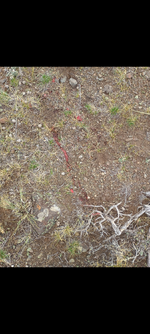
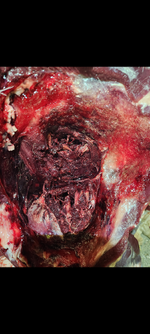
This year i shot an antelope at 55 yards with the same 300 win mag 200 grain speer hotcor load. Was facing me, went in just inside the left front shoulder and exited just infront of the right rear quarter. Everything inside the ribs looked like a smoothie. No major bone contact so no ruined meat or shredded bones. It looked like a looney tunes cartoon. Having 3,000 ft lbs of energy dump was wild. The antelope flew up in the air and did a barrel roll and crashed down to the dirt. Never moved again. The bullet exit left a trail of blood it pushed out. No other blood. I will attach the photo of that trail.

Best blood trail ive seen yet was a 180 grain hornady interlock spitzer. 85 yards on a 3 year old mule deer buck. Shot him broadside both lungs about an inch behind the heart. He made it about 20 yards in sage so tall it took over an hour to find him. This was before wyoming allowed dogs to find big game kills. Maybe a quart of blood lost.

Bullets really are not an effective way to make blood trails with kill shots. It takes a gaping hole below the blood to get a great blood trail. Broadheads from a tree stand fir the bill. Often times bullets dislodge so much tissue that any blood trying to work out will push that tissue into blocking the exit hole. I dont worry about blood trails. I worry about good clean kills that dont ruin the meat. I dont think any particular bullet design is the magic bullet or brand or will fare significantly different, if its designed to do the same thing. My vintage hunting rifles like flat base cup and core bullets. They shoot very well. They also have killed millions of game animals just fine. I save the expensive bullet money to upgrade optics every few years.

I think 6.5 creedmore is a fine caliber. You wont see me recommend it simply because there are 100 year old calibers that do the exact same thing for less money. That does not mean this caliber is any less effective.
 

Attachments

  • Screenshot_20260207-073953.Photos.png
    Screenshot_20260207-073953.Photos.png
    1.9 MB · Views: 4
There were three guides and I asked each, independent of the other, about 65CM.
Basically all three said they hate it when hunters show up 6.5 (anything), as it’s a military caliber and in their experience on elk, (mostly 6.5CM) punches entry and exit hole and does not do the internal damage a 30 cal would do unless it hits something solid.
What? Despite the fact that being a “military caliber” is irrelevant and doesn’t make sense, 30 cal is more of a “military caliber” than 6.5, and it’s not even close. This is actually the worst and most flawed argument on this topic I’ve heard yet.
 
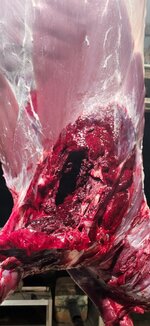
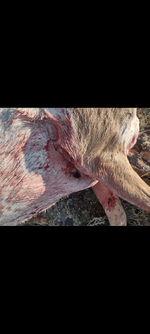
This is the exit hole on an antelope of 200 grain speer hotcor from 300 win mag shot at 487 yards, down a 15 degree slope.

The last 2 are an antelope shot lengthwise with 180 grain hornady interlock at 300 yards. One small entry hole at the base of the neck.
 

Attachments

  • Screenshot_20260207-074843.Photos.png
    Screenshot_20260207-074843.Photos.png
    1,010.2 KB · Views: 8
  • Screenshot_20260207-075319.Photos.png
    Screenshot_20260207-075319.Photos.png
    1.6 MB · Views: 8
  • Screenshot_20260207-075328.Photos.png
    Screenshot_20260207-075328.Photos.png
    1.2 MB · Views: 8
Just came back from a Colorado guided hunt. I use 30-06, but thinking of getting a 6.5CM for mostly long distance shooting and occasional speed goat.

There were three guides and I asked each, independent of the other, about 65CM.
Basically all three said they hate it when hunters show up 6.5 (anything), as it’s a military caliber and in their experience on elk, (mostly 6.5CM) punches entry and exit hole and does not do the internal damage a 30 cal would do unless it hits something solid.

Sure, they’d seen some hunters who are very effective with the 6.5Cm on elk but the nature of the round means the hunter really has to step it up and it also means the angles and distances that a 30 cal cartridge allows is more restricted with the 6.5.

They also frequently find the lack of blood trail from 6.5 cal it means a very long day for them tracking the wounded animal up and down mountains.

We didn’t discuss loads, but they did ask my partner and I what caliber and load we were using.

Not seeking to start caliber war, but thought you’d like some feedback from guys who do this for a living.

Confidence, ignorance, and advise are a very scary combination.
 
unless it's 90 degrees, whats the issue with leaving it? It's ten times easier to find animals in daylight and processing goes way better after a nights sleep vs hunting all day and cleaning an animal at night.
I've left several whitetails in MS with 50-60 lows, and elk in CO, and never lost meat.
I’ve seen coyotes or bears clean an elk overnight and once when shot in morning backed out to give it 2 hours went back up at 11 and all consumable meat besides a front and the neck was consumed
 
Confidence, ignorance, and advise are a very scary combination.
No kidding. I get so tired of the youtubers such as tim sundles who say you need need an elephant rifle to hunt elk correctly so you can shoot them from behind when they are running away through brush.

The only way to hunt is a clean, calculated, ethical shot to the vitals. Any bullet that can penetrate 8" of flesh will be lethal when it hits the heart.

The reason for magnum calibers is not because they are needed to hit the vitals on an elk, but because heavy bullets have less drift in heavy wind, and fast bullets shoot flat. Putting the two together makes it easier to make precise hits on animals with less calculations. I think this was a bigger deal in the 60s before we had excellent optics, and ballistic calculators with lasers in our binoculars. Its really easy when taking long shots in wyoming to be in cover where wind is not significant, and not realize where the bullet is actually going there might be a 30 mph wind.

Last year i shot a deer that had an old bullet inside of the left rear ham. About a month later i was at the range shooting 22 250 in 30 mph wind at 600 yards. After dialing 10 feet of wind drift to hit the bullseye, it was a reminder of the reason so many people like belted magnums when hunting.
 
I’ve seen coyotes or bears clean an elk overnight and once when shot in morning backed out to give it 2 hours went back up at 11 and all consumable meat besides a front and the neck was consumed
Ive had coyotes steal meat out from under me twice.

A few years ago I was rabbit hunting with a shotgun on a large rock formation. Shot a rabbit at 30 yards. Before i took 5 steps a coyote came out of the rock, grabbed the twitching rabbit and took off.

Once as a teenager i arrowed a doe at the high back corner of the lungs. It made it about 150 yards into a field drain that was full of dead fall. I waited a couple hours before chasing it as many bow hunters do . When i got down there 3 coyotes had already chewed the thing to bits.
 
Ive had coyotes steal meat out from under me twice.

A few years ago I was rabbit hunting with a shotgun on a large rock formation. Shot a rabbit at 30 yards. Before i took 5 steps a coyote came out of the rock, grabbed the twitching rabbit and took off.

Once as a teenager i arrowed a doe at the high back corner of the lungs. It made it about 150 yards into a field drain that was full of dead fall. I waited a couple hours before chasing it as many bow hunters do . When i got down there 3 coyotes had already chewed the thing to bits.
I lost my first velvet buck in high school with a low shot. I know now if it’s liver to go sooner than I used to. If it’s elk and only giving it 2 or 3 hours I stay nearby and listen
 
I don’t mean to offend and I’m sure there are brilliant guides on here but many I’ve been around are great at finding elk, gossiping, and complaining. That’s about it.

None have been convincing at all in their understanding of ballistics, long range shooting, bullets, or terminal performance.

In the past 2 years I’ve heard how the creed can’t kill with less than 4 shots and how the 6.5prc with the same bullet will knock them on their ass and when asked the velocity at impact they had zero clue.

I’ve also been told adamantly how great their rifle is after they told a story about missing an elk twice at 500 yards and finally killing it after 3 more.
These are just the last few and the sober ones.


I’ve stopped really putting an ounce of care into what a guide thinks I should use to kill an animal
 
The smaller, easier to shoot, inherently more accurate cartridge vs the larger, harder to shoot, and inherently less accurate cartridge debate isn’t much different than the middle of the road arrow, tipped with a moderately sized quality mechanical vs, ranch fair telephone poles arrows, with tiny cut on contact heads.

The argument for big magnums is they’re more deadly when you don’t hit what you should. No different than the ranch fairy arrows.

Here’s the kicker, big magnums and ranch fairy arrows make you more likely to hit what you shouldn’t.

Hit the critter in the boiler room, and you’re killing it. Hit them elsewhere, and it’s most likely going to be a shitty day. For me, I’ll keep shooting middle of the road arrows with mechanicals and smallish caliber rifles, because they’re more accurate when it matters most.


Sent from my iPhone using Tapatalk
 
The smaller, easier to shoot, inherently more accurate cartridge vs the larger, harder to shoot, and inherently less accurate cartridge debate isn’t much different than the middle of the road arrow, tipped with a moderately sized quality mechanical vs, ranch fair telephone poles arrows, with tiny cut on contact heads.

The argument for big magnums is they’re more deadly when you don’t hit what you should. No different than the ranch fairy arrows.
Not an apples to apples comparison/generalization...I'd be much more inclined to shoot a smaller cartridge with a good bullet in open country than use a mechanical broadhead.

In my experience long sharp two blades give superior penetration to mechanicals, especially at lower velocity with a recurve.
 
Back
Top