

CNEdeer307
FNG
The H a u l R o a d caribou hunt has a way of lingering in the back of every DIY hunter's mind. For years I browsed the H a u l R o a d discussion forums and scoured through numerous articles and Youtube videos regarding the infamous hunt. An expedition that felt half a continent away and impossible to commit to with work and school obligations. Impossible, that is, until about two weeks before pulling the trigger and jumping in the deep end.
I'd like to start off by saying I don't think my experience was too dissimilar to what most DIY guys experience on the D a l t o n. And for that reason I'll keep the story of my hunt mostly to myself and instead share some lessons that I learned, things that I feel mattered, things that didn't, and changes I would make if I was ever to commit to this hunt again.
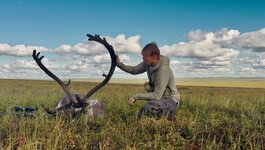
For context, I am a 25 year old male, in very good shape, experienced hunter and guide based out of Wyoming and NZ. My knowledge of caribou and Alaska however, only extended as far as you can read online or watch on the outdoor channel. I decided to make the trip in the middle of July, only a few short weeks from embarking, which normally would spell disaster for a hunt so heavily rooted in logistics as most anything in Alaska is. I drove. Which was about 3,000 miles one way resulting in three and a half days on the road. I took the ALCAN, which I highly recommend as it's incredibly beautiful, but understand most people have time constraints and can't afford to allot 7+ days to travel alone. I had 4 border crossings all of which went smooth as I had all the required paperwork for my rifle and caribou upon return. I purchased my locking tag at Walmart and carcass coupons and hunting licenses at Sportsman's Warehouse in Fairbanks, because of leaving on short notice. The bulk of my food I brought up, and slept in the back of my truck which has a topper for nearly the entirety of the trip I wasn't in my tent. For those wondering, all said the trip ran me just under $3,000. I walked out the door on August 6th, hunted the 10th through the 21st (7ish days hunting, 2 ½ days packing, few rest days) and arrived back home in Wyoming August 26th-ish
In regards to the hunt, it was absolutely not for the faint of heart. This was the most physically demanding hunt I have embarked on by a long shot. However there were a few main factors that played into that. One, I was solo and killing a bull with camp on my back meant I was going to be two trips. Obviously this doubles the mileage, however I felt it was wiser than risking an injury trying to haul out a pack that was ridiculously heavy on the uneven tundra. Two, I only brought a rifle which meant my hunt didn't start until I’d broken out of the 5 mile archery only corridor. A very honest 5 tundra miles, and more than likely you are not killing a bull on or just past the boundary. My bull for example was 14 miles from the truck, just about 9 miles past the rifle boundary. Granted I passed numerous smaller bulls closer to camp but was willing to put in the extra time and effort to kill a mature bull. If you start doing the math it was just about 56 miles (28 of which heavy) getting to and hauling out my bull. This does not include the hunting days prior. All said, I was roughly 102 miles across 11ish days on the tundra (I say roughly because my phone died twice and there were a few sections not fully tracked). I am well conditioned and hunt 90+ days a year and still the last 3 and a half days were an absolute dog fight.
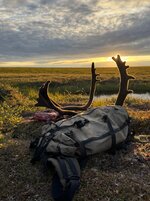
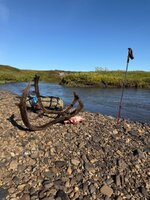
Weather and environment. I'm sure you've all read about how much the tundra sucks, it does. I'm not convinced tundra miles are exactly 2:1 physically but I was averaging about 1 mile an hour when heavy and or hunting methodically (I don’t hunt hard or fast, it's a marathon not a sprint). And honestly after the first 20 miles your body gets pretty used to the tundra. Be incredibly selective with where you decide to push in. physically and time wise you only have so many of those 5 mile pushes in you. Don't expect to run in and check out a new spot every day, or even every other; it's just not feasible.
The weather was incredibly unpredictable. It snowed on me twice, dealt with thick fog, but mostly hunted in 60 degree blue bird weather (bug weather). Having an array of layers is a must, because the weather changes on a dime and you aren't going anywhere in a hurry. One of my biggest mistakes was leaving my bug head-net in the truck when I dove back in to grab the last load. It had just snowed and I wrongly thought it would have killed most of the bugs… it didn't. My last day packing was only 10 miles but it was the hottest, buggiest 10 miles I've ever hiked. I couldn't breathe without sucking in a swarm of the little black devils and every few minutes I’d have one Kamikaze into my eye. If you stopped for water they filled your water bottle, it was 65 degrees and I was dressed like it was 35 just to keep the bugs off. Awful.
In regards to the caribou themselves, and hunting them I found the most success camping somewhere with a bit of elevation and then cutting off moving caribou. DO NOT CHASE CARIBOU! You will not catch them. That comes from experience, I did, and killed my bull, but I should not have and it’s why I ended up 14 miles deep. When the rifle cracked and the bull piled up the relief was short lived, as the reality of many slow tundra miles between me and the truck sank in. The caribou numbers fluctuated as much as the weather. Some days I would see 2,500 animals. Other days I'd see four. Obviously you are hoping you either hike into the big herd or they wander into you. Try not to get too impatient if you aren't seeing much as it can change dramatically in the course of a few hours. The caribou I encountered were not spooky whatsoever, I killed my bull at 200 yards and the other bulls with him stood around and watched me butcher him. I didn't have a bow, and therefore didn't try to stalk in close on any but it is open ground and I could see them being difficult at times to close within 50 yards of. All in all, incredibly cool animals.
A few other small things. Bring a jerry can fill it up in Fairbanks, rely as little as possible on the fuel in Coldfoot and Deadhorse as you'll likely be paying more than double.
The road itself is brutal, between loose rock and truck traffic. If you make it through the whole trip without a chipped windshield you're far luckier than most.
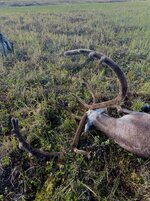
Have a plan for your velvet if you intend to keep it. Pro tip, isopropyl alcohol is at any Walmart and is a fraction of the cost of Velvalok. It's not perfect but I sprayed my antlers with it every 12ish hours for the week before I was home and was able to put it in the freezer and my velvet saved just fine.
A bug head net is the best $15 you'll ever spend.
The biggest thing this hunt taught me was learning to exist in the suck. Be flexible. Very little goes according to plan up there. No articles or blog posts can truly prepare you for the tundra, weather, wet socks, or piece of gear you forgot to throw in your pack. Being adaptable and maintaining a positive mindset is a must, negative thoughts will absolutely kill an already difficult hunt dead in the water. It's all too easy to get caught up in the pressure of filling a tag and lose sight of why we are really out there. The North slope is an incredible place, a place very few people will ever get to experience the way a hunter does. Try not to take it for granted.
I'd like to start off by saying I don't think my experience was too dissimilar to what most DIY guys experience on the D a l t o n. And for that reason I'll keep the story of my hunt mostly to myself and instead share some lessons that I learned, things that I feel mattered, things that didn't, and changes I would make if I was ever to commit to this hunt again.
For context, I am a 25 year old male, in very good shape, experienced hunter and guide based out of Wyoming and NZ. My knowledge of caribou and Alaska however, only extended as far as you can read online or watch on the outdoor channel. I decided to make the trip in the middle of July, only a few short weeks from embarking, which normally would spell disaster for a hunt so heavily rooted in logistics as most anything in Alaska is. I drove. Which was about 3,000 miles one way resulting in three and a half days on the road. I took the ALCAN, which I highly recommend as it's incredibly beautiful, but understand most people have time constraints and can't afford to allot 7+ days to travel alone. I had 4 border crossings all of which went smooth as I had all the required paperwork for my rifle and caribou upon return. I purchased my locking tag at Walmart and carcass coupons and hunting licenses at Sportsman's Warehouse in Fairbanks, because of leaving on short notice. The bulk of my food I brought up, and slept in the back of my truck which has a topper for nearly the entirety of the trip I wasn't in my tent. For those wondering, all said the trip ran me just under $3,000. I walked out the door on August 6th, hunted the 10th through the 21st (7ish days hunting, 2 ½ days packing, few rest days) and arrived back home in Wyoming August 26th-ish
In regards to the hunt, it was absolutely not for the faint of heart. This was the most physically demanding hunt I have embarked on by a long shot. However there were a few main factors that played into that. One, I was solo and killing a bull with camp on my back meant I was going to be two trips. Obviously this doubles the mileage, however I felt it was wiser than risking an injury trying to haul out a pack that was ridiculously heavy on the uneven tundra. Two, I only brought a rifle which meant my hunt didn't start until I’d broken out of the 5 mile archery only corridor. A very honest 5 tundra miles, and more than likely you are not killing a bull on or just past the boundary. My bull for example was 14 miles from the truck, just about 9 miles past the rifle boundary. Granted I passed numerous smaller bulls closer to camp but was willing to put in the extra time and effort to kill a mature bull. If you start doing the math it was just about 56 miles (28 of which heavy) getting to and hauling out my bull. This does not include the hunting days prior. All said, I was roughly 102 miles across 11ish days on the tundra (I say roughly because my phone died twice and there were a few sections not fully tracked). I am well conditioned and hunt 90+ days a year and still the last 3 and a half days were an absolute dog fight.
Weather and environment. I'm sure you've all read about how much the tundra sucks, it does. I'm not convinced tundra miles are exactly 2:1 physically but I was averaging about 1 mile an hour when heavy and or hunting methodically (I don’t hunt hard or fast, it's a marathon not a sprint). And honestly after the first 20 miles your body gets pretty used to the tundra. Be incredibly selective with where you decide to push in. physically and time wise you only have so many of those 5 mile pushes in you. Don't expect to run in and check out a new spot every day, or even every other; it's just not feasible.
The weather was incredibly unpredictable. It snowed on me twice, dealt with thick fog, but mostly hunted in 60 degree blue bird weather (bug weather). Having an array of layers is a must, because the weather changes on a dime and you aren't going anywhere in a hurry. One of my biggest mistakes was leaving my bug head-net in the truck when I dove back in to grab the last load. It had just snowed and I wrongly thought it would have killed most of the bugs… it didn't. My last day packing was only 10 miles but it was the hottest, buggiest 10 miles I've ever hiked. I couldn't breathe without sucking in a swarm of the little black devils and every few minutes I’d have one Kamikaze into my eye. If you stopped for water they filled your water bottle, it was 65 degrees and I was dressed like it was 35 just to keep the bugs off. Awful.
In regards to the caribou themselves, and hunting them I found the most success camping somewhere with a bit of elevation and then cutting off moving caribou. DO NOT CHASE CARIBOU! You will not catch them. That comes from experience, I did, and killed my bull, but I should not have and it’s why I ended up 14 miles deep. When the rifle cracked and the bull piled up the relief was short lived, as the reality of many slow tundra miles between me and the truck sank in. The caribou numbers fluctuated as much as the weather. Some days I would see 2,500 animals. Other days I'd see four. Obviously you are hoping you either hike into the big herd or they wander into you. Try not to get too impatient if you aren't seeing much as it can change dramatically in the course of a few hours. The caribou I encountered were not spooky whatsoever, I killed my bull at 200 yards and the other bulls with him stood around and watched me butcher him. I didn't have a bow, and therefore didn't try to stalk in close on any but it is open ground and I could see them being difficult at times to close within 50 yards of. All in all, incredibly cool animals.
A few other small things. Bring a jerry can fill it up in Fairbanks, rely as little as possible on the fuel in Coldfoot and Deadhorse as you'll likely be paying more than double.
The road itself is brutal, between loose rock and truck traffic. If you make it through the whole trip without a chipped windshield you're far luckier than most.
Have a plan for your velvet if you intend to keep it. Pro tip, isopropyl alcohol is at any Walmart and is a fraction of the cost of Velvalok. It's not perfect but I sprayed my antlers with it every 12ish hours for the week before I was home and was able to put it in the freezer and my velvet saved just fine.
A bug head net is the best $15 you'll ever spend.
The biggest thing this hunt taught me was learning to exist in the suck. Be flexible. Very little goes according to plan up there. No articles or blog posts can truly prepare you for the tundra, weather, wet socks, or piece of gear you forgot to throw in your pack. Being adaptable and maintaining a positive mindset is a must, negative thoughts will absolutely kill an already difficult hunt dead in the water. It's all too easy to get caught up in the pressure of filling a tag and lose sight of why we are really out there. The North slope is an incredible place, a place very few people will ever get to experience the way a hunter does. Try not to take it for granted.


