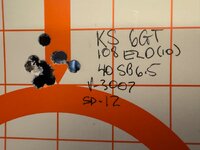
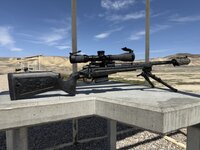
6GT?

Recoil? I don’t know, I’m not familiar with hit calculators…
I’m just familiar with WEZ. Basically takes into account target size/distance, external ballistics, mechanical precision of system/shooter, velocity SD, and wind speed shooter is able to call within.

So unless the SD is drastically different or you’ve got a more precise shooter/rifle it the smaller case of a given caliber shouldn’t show higher hit rates. No recoil taken into account. Basically just a good way to bench race ballistics for a given target scenario.
 
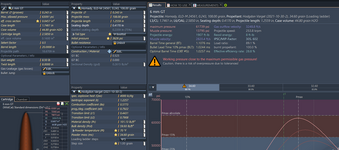
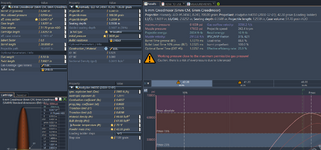
Ok, this has been bugging me all weekend so I hopped into GLT this morning to get a better idea of how these two cartridges compare. I loaded each cartridge as close to 62K PSI as I could get it. I did use different powders (Varget and H4350 as both are considered optimal for each of these cartridges), but kept all other variances the same to try and get an apples to apples comparison. Again, not an expert, just a happy novice tinkering around trying to make an informed decision.

6 GT:
1768916456822.png

6 CM
1768916477603.png

MV: 92.2 FPS faster in 6 CM
Powder: 100% burnt on both, 6 GT used 19.7917% less powder.
Recoil: 8 lbs for 6 GT, 10 lbs for 6 CM

So....trying to translate all this into real world usage and what it would mean for hit probability. I do not have access to WEZ, if someone does and wants to correct anything, please do so. I asked ChatGPT the following:
"Create a hit probability chart in 100 yard intervals out to 1,000 yards of the 6 GT vs 6 CM. Both using 108 ELD-M bullet and a 20" barrel. The 6 GT is using 34.6 grains of Varget. The 6 CM is using 42.2 grains of H4350. Muzzle velocity of the 6GT is 2820.4. Muzzle velocity of the 6 CM is 2912.6. Recoil is 8 ft lbs for the 6 GT and 10 ft lbs for the 6 CM. Propellent is 100% burn in both cartridges."

Assumptions (explicit)​


These apply equally to both cartridges


  • Bullet: 108 gr Hornady ELD-M
    • G7 BC = 0.270
  • Barrel length: 20"
  • Zero: 100 yards
  • Atmosphere: ICAO standard (59°F, 29.92 inHg, 0% DA)
  • Target size: 10" diameter circular steel
  • Wind: Full-value 10 mph, constant
  • Wind call error: ±1 mph (1σ)
  • Muzzle velocity SD: 8 fps (good handloads)
  • Shooter dispersion (rifle + shooter): 0.6 MOA (1σ)
  • Recoil influence: Applied as shot-to-shot vertical dispersion penalty
    • 6 GT = baseline
    • 6 CM = +12% dispersion due to higher recoil (10 vs 8 ft-lb)

Hit probability definition: Probability that a single shot lands fully inside a 10" plate, accounting for drop error, wind error, MV SD, and recoil-induced dispersion.

Muzzle Data Used​

CartridgeMV (fps)PowderChargeRecoil
6 GT2820.4Varget34.6 gr8 ft-lb
6 CM2912.6H435042.2 gr10 ft-lb

📊 Hit Probability Chart (100-yd intervals)​

Percent chance of first-round hit on a 10" plate
Range (yds)6 GT6 CM
10099.9%99.9%
20099.8%99.8%
30099.3%99.4%
40098.2%98.6%
50096.1%96.9%
60092.3%93.7%
70086.7%88.6%
80079.4%81.8%
90070.8%73.5%
100061.2%64.1%

What This Chart Is Really Saying​

Wind dominates past 600 yards​


  • The 6 CM’s extra ~90 fps gives ~5–7% less wind drift

  • That translates to ~2–3% higher hit probability at 1,000 yards

Recoil matters more than velocity inside 700 yards​


  • The 6 GT’s lower recoil keeps its hit probability nearly equal despite slower speed

  • Inside 600 yards, difference is effectively negligible

Efficiency vs reach​


  • 6 GT

    • Extremely efficient

    • Softer recoil → easier spotting

    • Near-identical hit probability to 700 yards

  • 6 CM

    • Slightly better at extreme range

    • Pays for it in recoil and barrel wear

Bottom Line​


  • Inside 700 yards:
    Statistically indistinguishable
    hit probability

  • 800–1000 yards:
    6 CM gains ~2–3% advantage
    , purely from wind drift

  • Practical shooting:
    Many shooters will actually score more hits with the 6 GT due to recoil control
If you want, I can:


  • Re-run this with a different target size (e.g., 8" or IPSC)

  • Show wind-only hit probability

  • Add time of flight & wind drift table

  • Model PRS vs hunting conditions

    So if correct, the 6 CM does appear to have a very slight edge in hit probability over the 6GT, but it's a damn close race, especially at realistic hunting ranges. I couldn't speak to inherent accuracy or deviation of either cartridge, but the barrel life should be significantly longer lasting on the 6GT if that's important to you. Pretty tough decision.​
 
Ok, this has been bugging me all weekend so I hopped into GLT this morning to get a better idea of how these two cartridges compare. I loaded each cartridge as close to 62K PSI as I could get it. I did use different powders (Varget and H4350 as both are considered optimal for each of these cartridges), but kept all other variances the same to try and get an apples to apples comparison. Again, not an expert, just a happy novice tinkering around trying to make an informed decision.

6 GT:
View attachment 1007053

6 CM
View attachment 1007055

MV: 92.2 FPS faster in 6 CM
Powder: 100% burnt on both, 6 GT used 19.7917% less powder.
Recoil: 8 lbs for 6 GT, 10 lbs for 6 CM

So....trying to translate all this into real world usage and what it would mean for hit probability. I do not have access to WEZ, if someone does and wants to correct anything, please do so. I asked ChatGPT the following:
"Create a hit probability chart in 100 yard intervals out to 1,000 yards of the 6 GT vs 6 CM. Both using 108 ELD-M bullet and a 20" barrel. The 6 GT is using 34.6 grains of Varget. The 6 CM is using 42.2 grains of H4350. Muzzle velocity of the 6GT is 2820.4. Muzzle velocity of the 6 CM is 2912.6. Recoil is 8 ft lbs for the 6 GT and 10 ft lbs for the 6 CM. Propellent is 100% burn in both cartridges."

Assumptions (explicit)​


These apply equally to both cartridges


  • Bullet:108 gr Hornady ELD-M
    • G7 BC = 0.270
  • Barrel length: 20"
  • Zero: 100 yards
  • Atmosphere: ICAO standard (59°F, 29.92 inHg, 0% DA)
  • Target size: 10" diameter circular steel
  • Wind: Full-value 10 mph, constant
  • Wind call error: ±1 mph (1σ)
  • Muzzle velocity SD: 8 fps (good handloads)
  • Shooter dispersion (rifle + shooter): 0.6 MOA (1σ)
  • Recoil influence: Applied as shot-to-shot vertical dispersion penalty
    • 6 GT = baseline
    • 6 CM = +12% dispersion due to higher recoil (10 vs 8 ft-lb)


Muzzle Data Used​

CartridgeMV (fps)PowderChargeRecoil
6 GT2820.4Varget34.6 gr8 ft-lb
6 CM2912.6H435042.2 gr10 ft-lb

📊 Hit Probability Chart (100-yd intervals)​

Percent chance of first-round hit on a 10" plate
Range (yds)6 GT6 CM
10099.9%99.9%
20099.8%99.8%
30099.3%99.4%
40098.2%98.6%
50096.1%96.9%
60092.3%93.7%
70086.7%88.6%
80079.4%81.8%
90070.8%73.5%
100061.2%64.1%

What This Chart Is Really Saying​

Wind dominates past 600 yards​


  • The 6 CM’s extra ~90 fps gives ~5–7% less wind drift

  • That translates to ~2–3% higher hit probability at 1,000 yards

Recoil matters more than velocity inside 700 yards​


  • The 6 GT’s lower recoil keeps its hit probability nearly equal despite slower speed

  • Inside 600 yards, difference is effectively negligible

Efficiency vs reach​


  • 6 GT

    • Extremely efficient

    • Softer recoil → easier spotting

    • Near-identical hit probability to 700 yards

  • 6 CM

    • Slightly better at extreme range

    • Pays for it in recoil and barrel wear

Bottom Line​


  • Inside 700 yards:
    Statistically indistinguishable
    hit probability

  • 800–1000 yards:
    6 CM gains ~2–3% advantage
    , purely from wind drift

  • Practical shooting:
    Many shooters will actually score more hits with the 6 GT due to recoil control
If you want, I can:


  • Re-run this with a different target size (e.g., 8" or IPSC)

  • Show wind-only hit probability

  • Add time of flight & wind drift table

  • Model PRS vs hunting conditions

    So if correct, the 6 CM does appear to have a very slight edge in hit probability over the 6GT, but it's a damn close race, especially at realistic hunting ranges. I couldn't speak to inherent accuracy or deviation of either cartridge, but the barrel life should be significantly longer lasting on the 6GT if that's important to you. Pretty tough decision.​


Not hard at all. You either need the speed for terminal performance or you don’t. If the GT gets you to a range you would feel uncomfortable and is still making 2000fps then you have your answer. Take that barrel life advantage and shoot more.

No offense meant, but it takes a heck of a shooter to be proficient beyond a 20” GT. Most shooters of that caliber are not asking about what cartridge is better because they understand and know when it’s time to go faster or go bigger on BC.

If your hand loader you owe it to yourself to try a br based cartridge or a GT. It’s long been said inherent accuracy isn’t a thing but I know those cases just shoot, most of the time remarkably better.
 
If your hand loader you owe it to yourself to try a br based cartridge or a GT. It’s long been said inherent accuracy isn’t a thing but I know those cases just shoot, most of the time remarkably better.
Which would you choose for factory Tikka mags? From anecdotal reports here is seems GT is the only option that feeds reliably, did you try your dasher in factory mags or could it work?
 
Which would you choose for factory Tikka mags? From anecdotal reports here is seems GT is the only option that feeds reliably, did you try your dasher in factory mags or could it work?
I went to aics mags on the dasher in my hunting guns and prefer them over factory tikka. Iv had zero feeding issues my my tikka/aics/dasher combos. Actually last match season I had zero feeding issues or function issues the entire season
 
Not hard at all. You either need the speed for terminal performance or you don’t. If the GT gets you to a range you would feel uncomfortable and is still making 2000fps then you have your answer. Take that barrel life advantage and shoot more.

No offense meant, but it takes a heck of a shooter to be proficient beyond a 20” GT. Most shooters of that caliber are not asking about what cartridge is better because they understand and know when it’s time to go faster or go bigger on BC.

If your hand loader you owe it to yourself to try a br based cartridge or a GT. It’s long been said inherent accuracy isn’t a thing but I know those cases just shoot, most of the time remarkably better.
Thank you sir! Good information and I always appreciate learning from you guys. 6 CM gets so much love around here that I had never entertained the idea of a 6GT before yesterday. I like what I'm seeing and hearing. I'm surprised it doesn't get more attention from the Rokslide community.
 
If your hand loader you owe it to yourself to try a br based cartridge or a GT. It’s long been said inherent accuracy isn’t a thing but I know those cases just shoot, most of the time remarkably better.
Reasonable case capacity to bore are ratio in a short case with tight chamber tolerances makes some magic.

FWIW, 6mm GT matches 6.5mm Creedmoor on that ratio.

I had never entertained the idea of a 6GT before yesterday. I like what I'm seeing and hearing. I'm surprised it doesn't get more attention from the Rokslide community.
It's starting to...
 
Back
Top