KenLee
WKR
We dont need no f'n practice, Randy!!!You may need to work on your aim then, amigo.

Follow along with the video below to see how to install our site as a web app on your home screen.
Note: This feature may not be available in some browsers.
We dont need no f'n practice, Randy!!!You may need to work on your aim then, amigo.

ANY OD THE LORD'F CALIBURS!!! 2HUNNERT23 MITE ECSPAND BUT 30 OUGHT 6 DONT SHRINK!!! I SHUT A MOOOSE ONCET AND HE HADDALAYERDOWN!! GOBBLESS!!What calibers require not tracking?
Jay
GOBBLESS YOU IN YER TIME OF NEED.ANY OD THE LORD'F CALIBURS!!! 2HUNNERT23 MITE ECSPAND BUT 30 OUGHT 6 DONT SHRINK!!! I SHUT A MOOOSE ONCET AND HE HADDALAYERDOWN!! GOBBLESS!!
~sent from Norelco Electric Shaver
I got the joke,You might need to work on getting a joke. And I’m not your amigo.

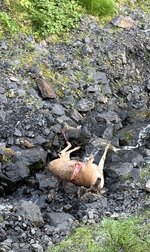
112 matchburner? Nice “hole.”I live in Alaska and don’t think I could ever be comfortable using a small caliber. I like the added insurance of exit wounds like this.
I don’t need to be tracking little droplets of blood, I like to follow entrails.
View attachment 744393

Probably the best overall summary I've read to date. Well said @Macintosh !@KenLee @gabenzeke To be fair, all of the photo threads and the folks perceived as gurus in this "cult of the small gun" have repeatedly said a larger cartridge with a like-bullet (ie small eldm vs big eldm, small tmk vs big TMK, etc) will create a bigger hole in the critter, and with photos to illustrate it. All of those photos are posted to show "excessive damage", and the move to the smaller cartridge was to accomplish "enough" damage for a fast, efficient, reliable kill. If a bigger hole qualifies as an "insurance factor", then as far as I can tell it's 100% certain the larger cartridge, given the same bullet, does typically provide some amount of insurance strictly from a terminal perspective. So, from what I can gather the hard evidence DOES clearly support there being at least some "insurance factor" with a big gun. The key is whether that is 1) partially or entirely offest by greater difficulty to put the shot in the right place with a harder-recoiling gun, 2) enough of a bigger hole to provide a meaningful degree of "insurance", 3) is the big gun actually using a bullet that makes a bigger hole, or is it using a bullet that produces smaller diameter wound channel, in which case the smaller cartridge may actually provide more insurance, and 4) if using a larger cartridge with a highly damaging bullet introduces other negatives, such as not having an acceptable amount of critter left after making such a big hole in it.
This is all ballistic masturbation to a large degree, but did want to point out that the evidence I have seen posted on this site, in all cases, does support bigger cartridges making bigger holes--but only if the same bullets are used. The typical statement of a small gun making "as big a hole or bigger" is focused on larger calibers only when they are throwing bullets designed to produce a narrower wound.
I killed a whitetail with a tire tool once in college......it was a very efficient killer, so much so that there wasn't even an entrance or exit hole.

If you've ever wondered why it is hard to take any post you make seriously, read this outloud. What exactly are you trying to accomplish?I killed a whitetail with a tire tool once in college......it was a very efficient killer, so much so that there wasn't even an entrance or exit hole.


You're exactly right; however, I've shot deer with this approach (45 Colt cast SWC's at 800 fps), and while the bullets always exit, and the deer do die with double lung hits, blood trails are long and very sparse to nonexistent. In thick cover, it makes for tough recoveries.This isn’t super relevant other than it’s further proof that energy isn't a good metric and wound characteristics matter, but y’all should hang out with guys who cast their own bullets to hunt with sometime. Those dudes are getting reliable kills with obsolete rounds that don’t even generate .223 energy levels, using wide meplat bullets that bore a hole through the animal like a wadcutter.
These dudes have a completely different mindset about terminal ballistics than most, they expect the deer to run a little ways but know it won’t go far and that they can blood trail it easily, so in that regard it’s a lot like bow hunting. They’re the first group of people I ever saw effectively dismantle the “1,000 ft lbs minimum for big game” argument.

I live in Alaska and don’t think I could ever be comfortable using a small caliber. I like the added insurance of exit wounds like this.
I don’t need to be tracking little droplets of blood, I like to follow entrails.
View attachment 744393
Please do yourself and elk a favor, and don't hunt them.Even with a smallish 7 mag I squeeze the trigger with enough confidence in placement and killing effectiveness that I don’t usually feel there’s a benefit to putting a second hole in what will be a most certainly dead elk or deer.
I’m just overly simple I guess. Shoot ‘em once kill ‘em once.
You’re probably right - one well placed shot is a goofy way to hunt.Please do yourself and elk a favor, and don't hunt them.
I haven’t had an issue yet with blood trails but since I’m using a 45/70 I’m definitely on the high end of the wound diameter/bullet speed spectrum. My experience has been similar to or slightly better than the blood trails I see from 2-blade broadheads. Not great, but good enough. It’s definitely not how you’d want to hunt if you’re colorblindYou're exactly right; however, I've shot deer with this approach (45 Colt cast SWC's at 800 fps), and while the bullets always exit, and the deer do die with double lung hits, blood trails are long and very sparse to nonexistent. In thick cover, it makes for tough recoveries.
You, atmat, and a couple others with the perpetual redasss need to lighten up and learn how to take a light hearted, tongue in cheek post not so seriously.If you've ever wondered why it is hard to take any post you make seriously, read this outloud. What exactly are you trying to accomplish?
In fairness, I took it as a joke and responded with a meme.You, atmat, and a couple others with the perpetual redasss need to lighten up and learn how to take a light hearted, tongue in cheek post not so seriously.





