Typical shot distance

We recently went to the Crow reservation in Montana with the goal of ELR hunt. We shot one at 643 and one at 1234 with 15MPH winds. Key is being able to read the wind and use a good ballistics app with properly set up rifle meaning dialed in correctly at 100, scope correction factor applied, trued BC with actual velocity if you plan to shoot past 600 yards

 
Daddaman, so on your 643 and 1234 yard shots how did you monitor wind speed through the entire range of those shots? With 15 mph wind gusts where you were set up for your shot, how do you know it was 15 mph wind at further down range distances between you and the animal? How do you compensate for different wind speeds and gusts scattered through those distances of a shot?
 
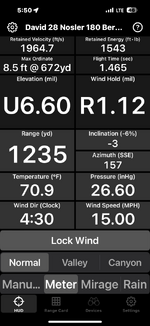
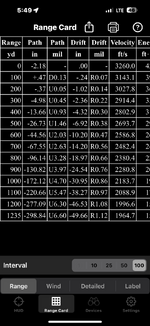
I have trained with James Eagleman at Barbourcreek on reading wind from the mirage which is only good to 10-12MPH depending on Atmospheric conditions. We were using a Kowa TSN88 35 power fixed to confirm wind was over 12. We also were using a Calypso set up at the max ord height and there were 4 of us present all proficient at ELR shooting. 2 of the guys were tribe members who also trained with James and shoot ELR all the time on the reservation. Combination Mirage, Calypso mini and watching the grass determined the wind adjustment which was coming from 430 and helped. We use the Eagleballistics app which grabs all the atmospheric data from nearest weather station when you open it and use the app to set the Azimuth and inclination. I spent about 50 hours at Barbourcreek over the past year where they have life size Kevlar game targets with moving kill zones from 500-1700 yards in varying wind conitions from 5-20MPH. I also spend a lot of time with my Calypso Mini practicing reading the mirage and movement it trees and grass at various wind speeds. In addition when we got there we checked our rifle zeros, established velocities and the new elevation and tried BCs at 1100 yards the day before the hunt started. The 643 wasn't so bad as the wind was only 2 MPH. We have that one on film but I don't know how to post it. Wind is the toughest part of ELR it takes a lot of practice year round. Below is the data for my shot at 1234IMG_2683.pngIMG_2682.png
 
Daddaman, so on your 643 and 1234 yard shots how did you monitor wind speed through the entire range of those shots? With 15 mph wind gusts where you were set up for your shot, how do you know it was 15 mph wind at further down range distances between you and the animal? How do you compensate for different wind speeds and gusts scattered through those distances of a shot?
Also was shooting off RRS Soar tripod with second one under my right arm to steady the 28 Nosler for the shot. Running 180 Berger Hybrid at 3270 with a Kahles K540i-DLR scope on 40x

VIDEO OF BUDDIES 643 SHOT

 
Also was shooting off RRS Soar tripod with second one under my right arm to steady the 28 Nosler for the shot. Running 180 Berger Hybrid at 3270 with a Kahles K540i-DLR scope on 40x
Here is a video showing us doing a half day hunt prep 2 weeks before our trip which shows me shooting an elk at 1434 yards. This course is designed to check your rifle out, and practice wind calls.

 
I haven"t kept accurate records of my pronghorn kills but I'd say 90% are under 300 with a rifle. My last two were at 426 and 180 yards. I've taken over 40, as there were years when I drew 1 tag in Colorado and 2 in Wyoming.
 
I am not sure, but I think I have shot over 50 antelope. None of them over 500 yds away, most between 200 and 300 yards. You are right about the wind, it gets more difficult to deal with the further away the animal is. Make sure you have a good range finder and know where you rifle shoots at the distances you plan on shooting.

Good luck, antelope hunting is a blast and you will have fun.
I've shot about a dozen and 95% of them were under 300 yards. We had about 60 hunters in our antelope camp and stats were much the same on their kills at our place in SE NM. There are two big problems hunting antelope IMO.......first and foremost as mentioned in the wind, and first shot cold bore hits are very difficult no matter who you are unless your last name is Tubb. 2nd problem is that any RF we've ever used has a very difficult time ranging these small animals in flat, open, dull, drab country they live in. If you hunt more rolling country that can help, but it's still the biggest challenge I've ever had using a RF in the field.
 
Back
Top