Training for the cold?

solostalker

Lil-Rokslider
Joined
Oct 17, 2022
Messages
224
Location
Lewiston, Idaho
Couldn't find any threads on this. Has anyone "trained" and prepared for the cold. I do okay in colder weather but would really like to be more comfortable and spend less time and energy on just staying warm. I have good quality clothing and gear but have noticed I get much colder than others do in the same temps.

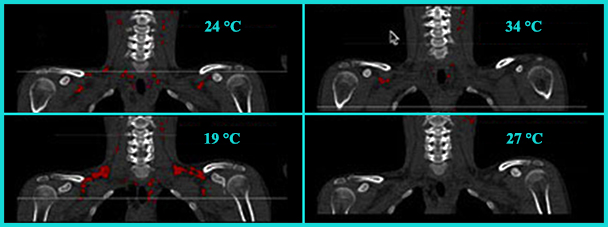
Any effective ways to train your body for the cold? What little I've found suggests cold showers and frequent cold exposure as well as some exercises to increase circulation. or should I just stop being a sissy and tough it out...
 
I'm not sure what specifically you're "cold training" for. Are we talking sitting or activity in the cold? I have a cold tub and can't say it helps me with cold tolerance, but it does make you more resilient to uncomfortable environments. I think the short answer is to be more resilient in the cold you have to spend time in it. Additionally, I've noticed that when I leave my comfort environment for a 10 day backpack hunt, the first couple days are pretty uncomfortable. Then my body and metabolism adjusts and I'm fine.
 
I think it is more "getting comfortable being uncomfortable" than it is being better adapted at being physically cold. At least after the first few days of a new environment either hot or cold as mentioned above. After the first, say 3 to 7 days, there isn't much in the way of physical adaption that the body can do. Or at least that is what they taught us military medics at various classes on the topic.
We have a sauna and a cold plunge tank here on the ranch and I can tell a definite difference when I use them both on the regular vs when I stop doing them for a while and the restart the habit. The difference, at least for me, is more noticeable for heat than cold.
 
I do absolutely find that training in the cold helps condition one to the cold. I've very intentionally shifted my training hikes to the very early, pre dawn timeframe because I get used to getting going in the cold and get regular check ins for layering correctly. Sucking in cold air and managing sweat and layers is normalized. I can't say its any easier to get out of a warm sleeping bag, but the hiking in the cold and dark is a regular activity that I am very used to.

In terms of just staying warm in general, as in you are noticing that you are more uncomfortable in the cold then other people, upping your fat intake when you are out in (and in anticipation of) cold conditions is the easiest solution. Add more butter, coconut oil, MCT oil etc to your diet. In the backcountry, ghee is pretty easy to carry and consume -add it to your dehydrated meals, coffee, even just eat it by the spoonful.

Ceylon cinnamon (and it has to be of the Ceylon variety to get these benefits) is known as being thermogenic as well as a vasodilator, relaxing the blood vessels allowing more expansion. You can add some to your coffee or your food or you can also just take it in capsule form. I have a finger that suffered from frost bite on a mountaineering trip about 25 years ago. It would prematurely straight turn into a painful piece of lead when exposed to cold for years following. I started consuming Ceylon Cinnamon daily at some point and that issue went away almost entirely. I consume it in one form or the other daily.
 
Once you have the right gear and the knowledge of how to care for your body, dealing with environmental conditions is all mental.
 
Once you have the right gear and the knowledge of how to care for your body, dealing with environmental conditions is all mental.
I don’t think this statement is correct. At a minimum, it’s overbroad.

Acclimating to heat is an actual, observable, replicable, physiological process that has been extensively studied. This adaptation is not all mental, no matter what gear you have.

I haven’t seen studies on the cold, so I can’t be completely sure. I feel like it at least has some physiological component.

After a summer of running in serious heat, the first several cold/wet days really affect me: I feel cold, subjectively, and objectively my heart rate slows way down. A few weeks later, the subjective feeling of cold is gone and heart rate stabilizes, albeit at a lower overall rate than in the heat. Maybe there are studies out there, I just haven’t seen any, which makes sense because being cooler tends to enhance performance rather than impede it.
 
I don’t think this statement is correct. At a minimum, it’s overbroad.

Acclimating to heat is an actual, observable, replicable, physiological process that has been extensively studied. This adaptation is not all mental, no matter what gear you have.

I haven’t seen studies on the cold, so I can’t be completely sure. I feel like it at least has some physiological component.

After a summer of running in serious heat, the first several cold/wet days really affect me: I feel cold, subjectively, and objectively my heart rate slows way down. A few weeks later, the subjective feeling of cold is gone and heart rate stabilizes, albeit at a lower overall rate than in the heat. Maybe there are studies out there, I just haven’t seen any, which makes sense because being cooler tends to enhance performance rather than impede it.
Quibble all you want. There is a huge mental component to all this stuff. Most good training in these areas has to do with pushing a person past their own pre-conceived limits and up to the point just before where "real injury" occurs. Really tough training will assume the risk that some people will be much tougher mentally than they are physiologically, to the point where people keep going despite physical injuries from the environmental conditions. I've seen people quit tough training because they lacked the mental strength to handle the conditions long before they reached their physical limits. And I have seen people push through real injury under appalling conditions. I'm not tooting my own horn, but I have been through comparatively easy versions of this training (i.e., not the hardest possible situations) and I have experienced this firsthand. Courage is fear holding on a minute longer.

I'm not arguing that you can acclimate to frost bite conditions, hypothermia, etc. What you can do is learn to care for your body and use the right gear to protect yourself from frost bite conditions (up to a point). And you absolutely can learn to deal with the mental aspects of uncomfortable conditions short of the physiological limits and even past them, to an extent.

In a hunting situation, the confidence derived from knowing you have the right gear, knowing that you know how to take care of yourself, and your mental toughness is usually the difference between being able to stay on the stand or out in the woods another five minutes or another two hours or another two days.
 
In my experience the people who are in the very best shape, sometimes struggle in the cold. Little body fat and a very low resting metabolism. It's a two edged sword and the only real solution is to wear more clothes or bring a few chemical handwarmers. Or gain weight. Ask me for tips on that last strategy; I have mastered it.

(That's a joke, more or less).


In terms of just staying warm in general, as in you are noticing that you are more uncomfortable in the cold then other people, upping your fat intake when you are out in (and in anticipation of) cold conditions is the easiest solution. Add more butter, coconut oil, MCT oil etc to your diet. In the backcountry, ghee is pretty easy to carry and consume -add it to your dehydrated meals, coffee, even just eat it by the spoonful.

Ceylon cinnamon (and it has to be of the Ceylon variety to get these benefits) is known as being thermogenic as well as a vasodilator, relaxing the blood vessels allowing more expansion. You can add some to your coffee or your food or you can also just take it in capsule form. I have a finger that suffered from frost bite on a mountaineering trip about 25 years ago. It would prematurely straight turn into a painful piece of lead when exposed to cold for years following. I started consuming Ceylon Cinnamon daily at some point and that issue went away almost entirely. I consume it in one form or the other daily.
Agreed on both counts. Keto dieter here. I try not to be the guy who blabs about it endlessly but I'm a huge fan of fats as fuel for reasons beyond this thread, but I'll say this:

I used to get 'hangry' at work about 10-11AM most days. I started dumping MCT/coconut oil /butter in my coffee every morning sometime around 2011 and it largely changed my life in terms of ability to focus and ability to work through the day without being distracted by hunger, and also ability to stay warm-ish when out in the cold. In short, and at the risk of grossly oversimplifying, carbohydrates are like gas - quick fire, burns out - and fats are like diesel fuel - slower, more controlled energy release. If I were to fill up on carbs for breakfast I'd be ravenous by 11am. But with fat for breakfast, I can roll all day.

I'm somewhere close to 15 years of eating 'bulletproof coffee' breakfast - basically coffee with some fat in it - and I will never eat lunch unless someone I'm with wants to eat lunch. I don't even think about lunch. A glob of fat with morning coffee keeps your body fueled and slow-burning until close to dinnertime.
 
I definitely agree there is a HUGE mental factor to this but there has be something other than mental toughness that allows for one guys to be totally comfortable in freezing weather while another is completely numb.

something physiologically, whether its, genetic, exposure, diet or a combination of multiple factors...some people are simply affected by the cold more. I will definitely look into the cinnamon supp. and make it a habit to consume more fats when cold weather is expected. and it can't hurt just spend more time in the cold i suppose
 
Back
Top