Sierra Heavy TMK 6MM Testing

IMG_2857.jpeg
IMG_2860.jpeg

IMG_2862.jpeg
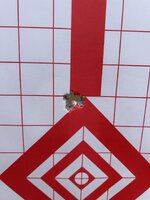
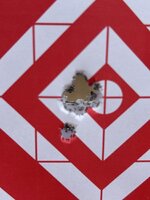
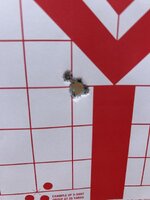
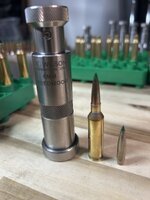
This is for you guys talking about finicky bullets. They’re far from finicky. Top one is 115’s, middle is 116 and bottom is the 117’s.

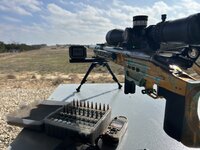
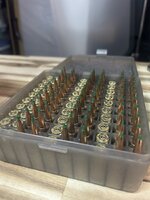
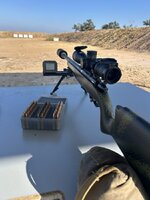
This is with zero load work up from a 6 Dasher. I used my PRS load, but dropped .2 grains just to hopefully gain a little head room for the heavier projectiles. I used 30 grns of Varget, seated them using the same die setting as the 110 SMK, (which I seat so the bottom of the bearing surface is at the neck shoulder junction). These were the first 3 10 shot groups testing to see how accurate these bullets might be.

As an aside, I haven’t changed that seating die across a bunch of projectiles and it’s always worked, and the bottom of the bearing surface is generally right at the neck shoulder junction. These heavies extended a bit below that though.

You tell me, but they look plenty accuracy capable. I wouldn’t call those finicky in any way.
IMG_2876.jpeg

IMG_2875.jpeg

IMG_2880.jpeg

IMG_2864.jpeg
 
View attachment 1000393
View attachment 1000394

View attachment 1000395
This is for you guys talking about finicky bullets. They’re far from finicky. Top one is 115’s, middle is 116 and bottom is the 117’s.

This is with zero load work up from a 6 Dasher. I used my PRS load, but dropped .2 grains just to hopefully gain a little head room for the heavier projectiles. I used 30 grns of Varget, seated them using the same die setting as the 110 SMK, (which I seat so the bottom of the bearing surface is at the neck shoulder junction). These were the first 3 10 shot groups testing to see how accurate these bullets might be.

As an aside, I haven’t changed that seating die across a bunch of projectiles and it’s always worked, and the bottom of the bearing surface is generally right at the neck shoulder junction. These heavies extended a bit below that though.

You tell me, but they look plenty accuracy capable. I wouldn’t call those finicky in any way.
View attachment 1000402

View attachment 1000403

View attachment 1000404

View attachment 1000405
But isn't a 6 dasher generally a non picky cartridge and usually easy to find extremely accurate loads for?
 
But isn't a 6 dasher generally a non picky cartridge and usually easy to find extremely accurate loads for?
Absolutely it is. That's why I used it for accuracy testing. If the bullets didn’t shoot accurately, I wouldn’t have suspected my rifle or load, I would have known it was the bullet that was the weak link.
 
View attachment 1000393
View attachment 1000394

View attachment 1000395
This is for you guys talking about finicky bullets. They’re far from finicky. Top one is 115’s, middle is 116 and bottom is the 117’s.

This is with zero load work up from a 6 Dasher. I used my PRS load, but dropped .2 grains just to hopefully gain a little head room for the heavier projectiles. I used 30 grns of Varget, seated them using the same die setting as the 110 SMK, (which I seat so the bottom of the bearing surface is at the neck shoulder junction). These were the first 3 10 shot groups testing to see how accurate these bullets might be.

As an aside, I haven’t changed that seating die across a bunch of projectiles and it’s always worked, and the bottom of the bearing surface is generally right at the neck shoulder junction. These heavies extended a bit below that though.

You tell me, but they look plenty accuracy capable. I wouldn’t call those finicky in any way.
View attachment 1000402

View attachment 1000403

View attachment 1000404

View attachment 1000405

Did you happen to record OAL for these?
 
What freebore?
It has a .125 freebore

I should add that I don’t care where the lands are. With modern cartridges that are fairly straight walled with sharp shoulders and tight freebore clearance, bullets generally engrave straight into the rifling. With older cartridges, the need to be close to the rifling or even touching the lands, was to help ensure that bullets engraved straight. That was one of the accuracy secrets for old tapered and sloped necked cartridges that have tons of clearance through their freebore. I generally find jumping a bit provides pretty stable accuracy for the life of the barrel.
 
It has a .125 freebore

I should add that I don’t care where the lands are. With modern cartridges that are fairly straight walled with sharp shoulders and tight freebore clearance, bullets generally engrave straight into the rifling. With older cartridges, the need to be close to the rifling or even touching the lands, was to help ensure that bullets engraved straight. That was one of the accuracy secrets for old tapered and sloped necked cartridges that have tons of clearance through their freebore. I generally find jumping a bit provides pretty stable accuracy for the life of the barrel.

Thank you for that explanation. It’s probably been discussed before in simple terms, but this is the first logical and coherent explanation I’ve seen of why seating depth in relationship to the lands doesn’t seem to matter much in modern bullets/cartridges. I’ve proved that to be true, but didn’t really understand why.


Sent from my iPhone using Tapatalk
 
It has a .125 freebore

I should add that I don’t care where the lands are. With modern cartridges that are fairly straight walled with sharp shoulders and tight freebore clearance, bullets generally engrave straight into the rifling. With older cartridges, the need to be close to the rifling or even touching the lands, was to help ensure that bullets engraved straight. That was one of the accuracy secrets for old tapered and sloped necked cartridges that have tons of clearance through their freebore. I generally find jumping a bit provides pretty stable accuracy for the life of the barrel.

I'm only partially informed on all this, but that conventional wisdom mentioned always seemed to be at odds with Weatherby's cartridges, and how their large freebore didn't seem to cause problems in accuracy...yet, they had long necks, relatively straight walls, and sometimes steep shoulders even if the shoulders were radiused. Is what you said related to any of this, at all?
 
I'm only partially informed on all this, but that conventional wisdom mentioned always seemed to be at odds with Weatherby's cartridges, and how their large freebore didn't seem to cause problems in accuracy...yet, they had long necks, relatively straight walls, and sometimes steep shoulders even if the shoulders were radiused. Is what you said related to any of this, at all?
Absolutely does.
Weatherbys rounds being proprietary meant that they had control over ammunition production as well as rifle production.
Tolerances were able to be kept tighter.
 
I'm only partially informed on all this, but that conventional wisdom mentioned always seemed to be at odds with Weatherby's cartridges, and how their large freebore didn't seem to cause problems in accuracy...yet, they had long necks, relatively straight walls, and sometimes steep shoulders even if the shoulders were radiused. Is what you said related to any of this, at all?
Weatherby's long freebore came from necessity more than anything. Roy was a true believer in ballistic superiority and that speed killed. The problem in that day and age was that the cases that were available couldn't contain the pressure he needed to create the fastest 30 cal magnum on the market. He achieved the extra speed by lengthening the feebore, which essentially changes the pressure curve, and allowed him to pump the velocities much higher than any other cartridge that was commercially available.

With that said, you have always been able to achieve some impressive accuracy without seating at or into the lands. Other cartridges also had long, long, long throats like the 6.5x55 and the 7x57 to name a couple. Some of these cartridges also could shoot accurately, but maybe not to the same level they could if you could have reached close to the lands with a bullet.

That's where todays new cartridges really do shine. So many guys poo poo them because the cartridges they know and have loved accomplish similar goals. And honestly, in a lot of ways they do. The big thing that's different though is the fact that all these modern cases have much less need of being able to touch the lands to create top end accuracy. The case dimensions, shoulder angle, and especially the freebore clearance (distance on either side of the bullet as it transitions from the case to the lands) all lend themselves to allow for bullets to engrave straight into the bore, which in turn delivers very good accuracy without the type of gyrations we used to have to go through to see cartridges perform.
 
Back
Top