chicoredneck
Lil-Rokslider
Inspired by Gstew1930’s recent thread, I’ll share some lessons I’ve learned through my own long range shooting journey in the hopes I can save others some money. Individuals shooting requirements may be different depending on how and where you hunt, so I’ll start with what my use case is. Feel free to share yours as well.
I hunt the intermount west for any game I can get a tag for, deer, elk, etc. I do a lot of backpack style hunts where I’m packing on foot into high mountains and staying for up to 2 weeks. However, most of my hunting I would describe as short incursions, a couple mile hike into someplace where I spend 1-3 days before moving on or road hunting vast landscapes until animals are located and a stalk planned.
I spent a lot of money chasing weight savings in a rifle initially and discovered I don’t like a light weight rifle because they are harder to shoot precisely in field conditions. I’ve discovered that weight in the barrel is especially helpful in keeping the rifle steady. I’ve had multiple rifles with carbon fiber barrels and now only have 1 for a very specialized role. The rifles I hunt with the most have heavy steel barrels on them. The weight penalty is worth it when it comes to shooting.
One regrettable mistake I made was selling an incredibly accurate 28 Nosler I had custom built. It was bedded into a manners stock and I wanted a rifle in a folding stock for backpack hunting. Instead of dropping the action into the chassis I wanted, I sold the whole rifle. What a terrible mistake as the replacement rifle shot terrible and cost me a lot of money to eventually get it right.
Some major lessons I’ve learned:
A folding or collapsing stock is a feature I don’t know I can go without on a primary hunting rifle. They are so convenient to fold up into a pack and make more transportable.
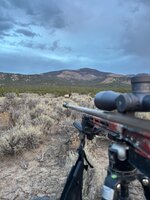
An ARCA rail integral or mounted to the stock is a fantastic tool. I’ve shot more big game with my rifle mounted to a tripod the last 3 years than I have from prone. We deal with a lot of high sage. A tripod gets you over the sage brush and provides a steady shooting position when set up right.
I like a heavy rifle. They are more forgiving and easier to shoot. My ideal rifle weight for a non magnum round is ~12 to 15lbs with everything (scope, bipod, etc). I like the extra weight to be in the barrel, it helps steady the rifle from a bipod. For magnum cartridges, I like a rifle to be closer to 15lbs. Sounds crazy to many, but try it. Even in light recoiling cartridges, I still prefer a rifle to be in the 9-10lb range at a minimum.
A good brass annealing machine did help extend brass life and reduce extreme spreads in reloaded brass. I can’t part ways with mine.
When hand loading, I’ve found bullet seating depth matters for some types of bullets more than others. As an example, Barnes TSX type bullets shoot better when seated deeply. VLD type bullets can also be sensitive to seating depths. Hornady ELDs on the contrary, don’t seem to care all that much where you put them. When I say seating depth matters, I mean big moves, not tiny incremental shifts.
A good electronic powder thrower/ scale combo is a great time save, but check it against a verified scale before you trust it. Also let them warm up before weighing charges! I’ve had some false charge weights from a freshly turned on powder scale.
AR15s are an awesome and undervalued hunting tool. Mine in 223 and 6ARC are not only very precise, but extremely versatile. They have become one of my favorite rifles. If you get a 6ARC, buy a magazine dedicated to 6ARC. I have 3 mags that are unreliable in 6ARC stamped 6.5G.
If you really think you may be shooting at game over 900 yards, the super high BC 7mm and 30 cal bullet/magnum cartridges are outweigh their downsides in cutting wind errors.
After I put in a private range that duplicates shooting in real field positions out past 1200 yards, I discovered how bad I was at reading environmental conditions. Only now, after years of shooting, do I feel competent judging field conditions. The most important lesson I’ve learned is when to recognize that I can’t accurately judge conditions and to limit my shooting distance accordingly.
Despite the 7mm and 30 cal offering higher bc bullets, the 6.5 prc has become my favorite cartridge as an all around long range cartridge. It strikes a good balance of high BC, speed, and most of all, low recoil.
Stock toe line is a real concern and increases in importance as recoil goes up. A flat or gently sloping toe line is more precise when shooting off bags. The stock should be flat on the bottom and not round. A round stock is easier to torque under recoil and cause inconsistencies. I’ve gone all the way to a flat tow line in my 300 prc. When I made the change from a slightly angled bag rider to a flat one I was more consistent. If you shoot off bags and not from a bipod or tripod, the same concern exists for the forearm. I struggled to understand why I had inconsistent accuracy in a couple rifles from certain positions until I learned the rifle recoils before the bullet exits. Stock geometry matters not just for comfort, but for precision.
I hunt the intermount west for any game I can get a tag for, deer, elk, etc. I do a lot of backpack style hunts where I’m packing on foot into high mountains and staying for up to 2 weeks. However, most of my hunting I would describe as short incursions, a couple mile hike into someplace where I spend 1-3 days before moving on or road hunting vast landscapes until animals are located and a stalk planned.
I spent a lot of money chasing weight savings in a rifle initially and discovered I don’t like a light weight rifle because they are harder to shoot precisely in field conditions. I’ve discovered that weight in the barrel is especially helpful in keeping the rifle steady. I’ve had multiple rifles with carbon fiber barrels and now only have 1 for a very specialized role. The rifles I hunt with the most have heavy steel barrels on them. The weight penalty is worth it when it comes to shooting.
One regrettable mistake I made was selling an incredibly accurate 28 Nosler I had custom built. It was bedded into a manners stock and I wanted a rifle in a folding stock for backpack hunting. Instead of dropping the action into the chassis I wanted, I sold the whole rifle. What a terrible mistake as the replacement rifle shot terrible and cost me a lot of money to eventually get it right.
Some major lessons I’ve learned:
A folding or collapsing stock is a feature I don’t know I can go without on a primary hunting rifle. They are so convenient to fold up into a pack and make more transportable.
An ARCA rail integral or mounted to the stock is a fantastic tool. I’ve shot more big game with my rifle mounted to a tripod the last 3 years than I have from prone. We deal with a lot of high sage. A tripod gets you over the sage brush and provides a steady shooting position when set up right.
I like a heavy rifle. They are more forgiving and easier to shoot. My ideal rifle weight for a non magnum round is ~12 to 15lbs with everything (scope, bipod, etc). I like the extra weight to be in the barrel, it helps steady the rifle from a bipod. For magnum cartridges, I like a rifle to be closer to 15lbs. Sounds crazy to many, but try it. Even in light recoiling cartridges, I still prefer a rifle to be in the 9-10lb range at a minimum.
A good brass annealing machine did help extend brass life and reduce extreme spreads in reloaded brass. I can’t part ways with mine.
When hand loading, I’ve found bullet seating depth matters for some types of bullets more than others. As an example, Barnes TSX type bullets shoot better when seated deeply. VLD type bullets can also be sensitive to seating depths. Hornady ELDs on the contrary, don’t seem to care all that much where you put them. When I say seating depth matters, I mean big moves, not tiny incremental shifts.
A good electronic powder thrower/ scale combo is a great time save, but check it against a verified scale before you trust it. Also let them warm up before weighing charges! I’ve had some false charge weights from a freshly turned on powder scale.
AR15s are an awesome and undervalued hunting tool. Mine in 223 and 6ARC are not only very precise, but extremely versatile. They have become one of my favorite rifles. If you get a 6ARC, buy a magazine dedicated to 6ARC. I have 3 mags that are unreliable in 6ARC stamped 6.5G.
If you really think you may be shooting at game over 900 yards, the super high BC 7mm and 30 cal bullet/magnum cartridges are outweigh their downsides in cutting wind errors.
After I put in a private range that duplicates shooting in real field positions out past 1200 yards, I discovered how bad I was at reading environmental conditions. Only now, after years of shooting, do I feel competent judging field conditions. The most important lesson I’ve learned is when to recognize that I can’t accurately judge conditions and to limit my shooting distance accordingly.
Despite the 7mm and 30 cal offering higher bc bullets, the 6.5 prc has become my favorite cartridge as an all around long range cartridge. It strikes a good balance of high BC, speed, and most of all, low recoil.
Stock toe line is a real concern and increases in importance as recoil goes up. A flat or gently sloping toe line is more precise when shooting off bags. The stock should be flat on the bottom and not round. A round stock is easier to torque under recoil and cause inconsistencies. I’ve gone all the way to a flat tow line in my 300 prc. When I made the change from a slightly angled bag rider to a flat one I was more consistent. If you shoot off bags and not from a bipod or tripod, the same concern exists for the forearm. I struggled to understand why I had inconsistent accuracy in a couple rifles from certain positions until I learned the rifle recoils before the bullet exits. Stock geometry matters not just for comfort, but for precision.