PSA on Horse Stall Mat Flooring

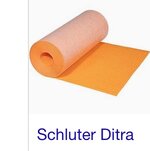
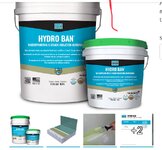
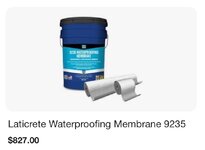
An architect would never specify this, but if it’s simply excess water vapor coming through the concrete floor, a good vapor barrier and laminate flooring would block the moisture. I like tile and would use a shower waterproofing membrane either ditra or hydroban (the best) or Laticrete 9235 and tile the floor.
 

Attachments

  • IMG_1281.jpeg
    IMG_1281.jpeg
    17.8 KB · Views: 11
  • IMG_1280.jpeg
    IMG_1280.jpeg
    136.6 KB · Views: 11
  • IMG_1282.jpeg
    IMG_1282.jpeg
    38.7 KB · Views: 11
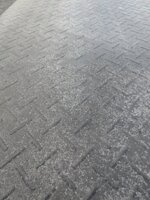
The concrete has been painted with cement paint that is tightly adhered and continuous. What other prep should I have done?

If you have painted the floor with the appropriate paint you are not getting moisture wicking up through the paint.

What is the moisture level in your house?

What kind of HVAC system does your home have?
 
A final thought is you may have a hard time finding the right person to identify the issue. Mold remediation people are vultures out to hard sell you on a fix if you need it or not and I wouldn’t trust them. I’ve had them mis-identify the cause of a flooded basement and the real reason wasn’t mentioned at all.

I love engineers and how they think and some of my best friends are engineers, but they are great at engineering solutions often regardless of what the least cost option is. I’ve never met an engineer that doesn’t love sump pumps. I’ve also watched a perf pipe be installed uphill of a mechanical engineers house and rather than stone he was ok with them backfilling the trench with clay. It didn’t do anything. I told him I watched it being installed and for some reason he couldn’t understand the value of washed stone and sued the architect. Another house had two sets of engineers with two sets of sump pumps and nobody even considered a perf pipe outside that would gravity feed around the house.

Foundation companies are great at waterproofing and they will suggest that.

Landscapers and excavators know grading and they will suggest that in addition to wanting dig up the entire perimeter and rewaterproofing.

Inspectors are good at saying, yep there are moisture problems call an expert.
 
There are remediation options for existing slabs, but the best moisture management is sub-slab insulation and vapor barrier, which has to be done during construction. Do you know anything about how your construction was done? Any documentation/photos/etc?

There are things like Drylok or silane-based coatings that block moisture, but you usually want to be thoughtful about applying them. They'll stop low levels of moisture/vapor seepage, but if you have something like hydrostatic pressure under the slab (which can even vary seasonally or over time for various reasons) sealing it can hide or even make the problem worse (despite Drylok's claims). Sometimes a sump or other measures are needed. Apropos the previous comment, sometimes even something as simple as a dehumidifier ends up being the only "solution" needed.

Regardless of what mitigation option you go with, RMR-141 is your friend. That's what builders use on new builds that have gotten moisture in them prior to closing them up (which is just a thing that always happens in construction.) I know framers/GCs that literally keep bottles of it in their trucks because they use it every week. If you have any staining, RMR-86 will fix that. Wear a mask when you spray either.

 
There's a vapor barrier under the slab, house was built late 2019, had to poke holes in the vapor barrier so the ac condensate line could properly drain. The HVAC is a hybrid heat pump/propane system. The hvac system is full of mold too, but that's unrelated to the mats..

House has a French drain and noticeable grade to the lot. I've monitored basement humidity continuously since moving in, its always around 30%. Dehumidifier has also been plugged in and running in auto since moving in. Relative moisture on the top of my slab reads 99.9%, same as the horse stall mats. Joists have some mold staining but it's never spread, those were 30% moisture.

I have 4 gallons of rm141 on the way, what kind of mask do I need for that?
 
Oh, the house also has a sump pit and pump, and a gravity drain backup in case the sump pump itself fails. I've never heard the sump pump kick on.
 
With the mats over the slab sealing in moisture so it’s essential ground moisture level, it may take a few weeks for the slab to fully dry out even with a fan on it. Since you’re moving I’d scrub the floor with your cleaner of choice and put a cheap box fan in the room in addition to the dehumidifier. Most mold issues go away when the humidity drops. If the condensate is draining into the gravel below the floor that’s not helping. Some houses put out 5 gallons of water a day in the condensate line.

Remediation in the hvac evaporator coil like a UV light or lights just have to be in the correct spots to be effective.

 
Oh, the house also has a sump pit and pump, and a gravity drain backup in case the sump pump itself fails. I've never heard the sump pump kick on.
Pumps, check valves, and water moving isn't silent. Check the sump pump and make sure its working and the water discharges outside. Flush the whole system with a garden hose for a couple minutes. Easier to find out now before the home inspector checks.
 
I had an odd smell in my basement one year (smelled like wet leaves). Hired one of those duct cleaning/Mold remediation companies to come in and test and they put their test probe literally in the sump pit. I was like of course there will be some gross stuff in there. Its a drain. Really told me all I needed to know right there. They told me they would work directly with my insurance to make sure its covered.

I said no thanks and sent them on their way. I have a plastic vapor barrier then a sub floor ontop of that.

OP. What sort of medical symptoms prompted looking into the mold anyway?
 
Lots of things that lacked other explanations. We were looking for gut bacterial infections and found mycotoxins instead. Now on the quest to figure out and eliminate exposure pathways
 
I have zero scientific evidence to support this, but doctors or "doctors" diagnosing mold toxicity always sets off my scam alert senses. I could be completely wrong, and perhaps there are valid instances of this.
 
I have zero scientific evidence to support this, but doctors or "doctors" diagnosing mold toxicity always sets off my scam alert senses. I could be completely wrong, and perhaps there are valid instances of this.
True but I’ve seen a couple of instances where hidden mold was causing pretty big sinus infection and other suspected health issues. One of our universities ignored that there might be issues with a building after staff complaints. For years staff was told that they were crazy. Turns out there were huge mats up to 5” thick of mold in the hvac system. Upon further inspection the whole building was filled with mold. That building was completely gutted and rebuilt over the massive contamination.
 
I have zero scientific evidence to support this, but doctors or "doctors" diagnosing mold toxicity always sets off my scam alert senses. I could be completely wrong, and perhaps there are valid instances of this.
You do realize it's testable, right? Like, we can measure it, and track exactly what flavor of mold is in a person.

Screenshot_20251219-154745.png

For those wondering, the bism in peptobismol is bismuth.
 
Can't add anything to the conversation at this point (although I hope it keeps going as I've enjoyed the discussion), but I decided to check out the mats in my basement and mine look perfectly fine.. House was built in 2020, plastic vapor barrier under the concrete slab, and my mats have air channels in the bottom side of them. Mats have been laying on the concrete for probably 9 months?
 
Verified my sump pump is working. Got a bunch of rmr141 and my ppe, going to spend a day during my holiday break decontaminating the basement. Oh what fun it is
 
Back
Top