Bull_n_heat
WKR
This thread goes hand in glove with a podcast recording that Jaden and Luke did in March 2026 (https://www.rokslide.com/what-do-elk-eat-elk/). Hopefully this pictorial is helpful for giving visuals of the plants discussed there, but definitely go check it out for a bunch of background info on when and why elk will use these plants. There are some great tidbits in a related post about mule deer food (https://rokslide.com/forums/threads/plants-every-mule-deer-hunter-should-know.395040/) that would have a ton of applicability for elk. In particular, look at the Fire-associated plants. The purpose of this post is to familiarize folks with general information about plants that are useful in the field and to help inspire greater curiosity about the places you are hunting. For a deeper dive (and the pool can turn to an abyss quickly!), see some of the linked references.
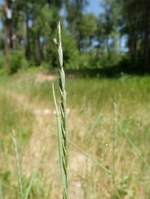
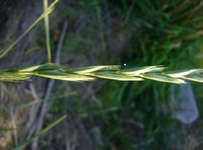
In short, Elk can and will eat most of the same plants that deer will eat, but they can also eat lower quality plants due to their much larger digestive system. The list below focuses on Graminoid (grasses and their allies) plants. These are some of the toughest to identify, so this post is organized to illustrate general groups of grasses and not necessarily individual species (of which there are hundreds in the Mountain West).
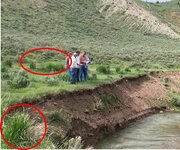
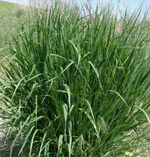
If folks take nothing else from this post, it’s that native bunchgrasses are what you might want to focus on, and that they are usually indicative of high quality and intact habitat. Essentially, these grasses come out of the ground in big bunches or bouquets. If they are fairly short, they can appear grainy from a distance, but are usually homogeneously grainy (see bunchgrasses from Wyoming below). Mixed forbs and shrubs also appear grainy from a distance, but appear to have more texture and usually color contrast. Some examples below.
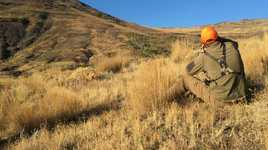
Nevada
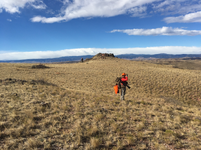
Wyoming
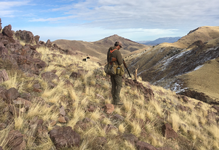
Utah
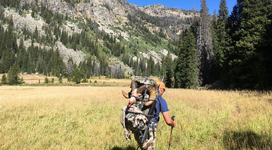
Generally, grass-dominated openings tend to look a bit homogenous in color and texture:
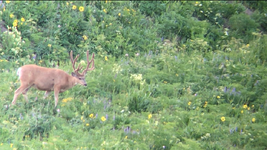
Forb and shrub-dominated areas tend to look a more “grainy”, textured, and heterogeneous:
Helpful references:

 homesteadontherange.com

 extension.oregonstate.edu
And MANY others!
In short, Elk can and will eat most of the same plants that deer will eat, but they can also eat lower quality plants due to their much larger digestive system. The list below focuses on Graminoid (grasses and their allies) plants. These are some of the toughest to identify, so this post is organized to illustrate general groups of grasses and not necessarily individual species (of which there are hundreds in the Mountain West).
If folks take nothing else from this post, it’s that native bunchgrasses are what you might want to focus on, and that they are usually indicative of high quality and intact habitat. Essentially, these grasses come out of the ground in big bunches or bouquets. If they are fairly short, they can appear grainy from a distance, but are usually homogeneously grainy (see bunchgrasses from Wyoming below). Mixed forbs and shrubs also appear grainy from a distance, but appear to have more texture and usually color contrast. Some examples below.
Nevada
Wyoming
Utah
Generally, grass-dominated openings tend to look a bit homogenous in color and texture:
Forb and shrub-dominated areas tend to look a more “grainy”, textured, and heterogeneous:
Helpful references:
Grasses of Wyoming » Homestead on the Range
Learn about the characteristics, distribution, life cycle, ecology, uses, and hazards of the grasses of Wyoming.
homesteadontherange.com
Year-round field identification of common northern Great Basin grasses
Learn to identify common grass species of the northern Great Basin in different plant communities.
And MANY others!