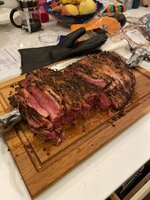
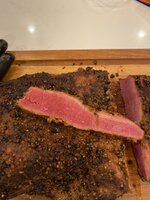
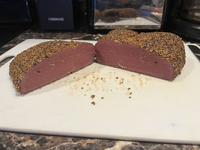
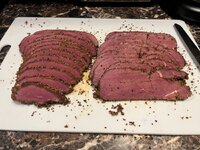
This is a Katz deli knockoff recipe, it is our family favorite. We typically smoke instead of steam but try what you like.
Pastrami Rub
Makes. A bit more than half a cup, enough for a whole beef brisket about 18 pounds with some leftover
Takes. 15 minutes.
Ingredients
2 tablespoons whole black peppercorns
2 tablespoons fresh coarsely ground black pepper
1 tablespoon whole coriander seeds
1 tablespoon coriander powder
1 tablespoon brown sugar
1 tablespoon paprika
2 teaspoons garlic powder
2 teaspoons onion powder
1/2 teaspoon whole mustard seeds
1/2 teaspoon mustard powder
Options. The paprika mostly adds color. If you want to veer from the conventional and amp it up a bit, substitute ancho powder or American chili powder, but be careful, the black pepper and mustard supply an ample kick. You can leave anything out that you want except the black pepper and the coriander.
Method
1) If you wish, you can use only powdered coriander, ground black pepper, and ground mustard, but I like using some whole seeds. If you are using some whole seeds, pour them into a zipper bag and smash them with the bottom of a sauce pan so they are "cracked" but not completely powdered.
2) Blend together all the spices. Rinse the meat, and while it is damp, apply the rub liberally, about 4 tablespoons per square foot of surface, and press it into the surface to help it adhere. If there is a thin part of meat, use less rub.
Pastrami
This homemade pastrami recipe is complex and smoky, but not in the way that other smoked meats are smoky. The smoke in this beef pastrami is not overt. It is blended in thoroughly. Much like Katz's pastrami, this is highly seasoned, but the black pepper and coriander rub is never domineering, and swimming across all your buds are a range of other herbs and spices.
Makes. About 3 pounds of pastrami after shrinkage, enough for 4 good sandwiches after trimming
Cooking time. 6 hours approximately to smoke a thick 4 pound chunk at 225°F. Actual cooking time depends on thickness not weight.
Then it goes into the fridge about 12 hours, and then it steams for about 2 hours. Larger and thicker cuts will take longer.
Ingredients
4 pounds of good corned beef (home made) *the flat section of the brisket is favored by many because it makes nice even slices for sandwiches, but I prefer the point section of the brisket because it is fattier, richer, and more tender. It can also be made from flank steak, or leaner cuts, or even from boneless short plate (rib meat).
3 tablespoons pastrami rub
Method
1) Prep the corned beef, the process takes about a week. (See corned beef recipe). If you are using brisket, one side of the meat will probably have a thick layer of fat on it called the cap. Remove all of the fat cap except about 1/8" and if there is any filmy membrane on the other side, remove it all. That thin layer of fat is important.
2) Desalinate. Put the corned beef in cold water in the fridge for at least 8 hours. This removes excess salt.
3) Rub. Make the rub. Rinse the meat, and while it is damp, apply the rub liberally, about 4 tablespoons per square foot of surface, and press it into the surface to help it adhere. If there is a thin part of meat, use less rub.
Put in the fridge for a minimum of 2 days. Don't wrap it. The rub just sticks to the plastic wrap. Normally I say you do not need to let meats marinate in a rub, but the wait seems to help this particular rub adhere.
4) Fire up. Set up your grill in 2 zones for smoking or set up your smoker. If you can, use a charcoal smoker. It produces a deeper darker crust than any other cooker. Preheat to 225°F. Pick your wood. I don't think it makes a huge difference with all the other flavors banging around in there. My best batch was with cherry wood.
5) Cook. Place the meat on the smoker or on the indirect heat side of the grill. If you plan to steam it before serving for maximum tenderness, you only need to smoke it with indirect heat until it reaches the stall at about 150°F. You can wrap in foil and refrigerate for a week if you wish or proceed to the steaming step. The downside is that steam softens the crust. You can skip the steaming and smoke it up to 203°F and have a nice firm smoky bark, but the meat will not be quite as tender. But it will be tender. And delicious. Your call. Try it both ways and pick the method that suits you best.
6) Steam (optional). If you want to steam it for maximum tenderness, if you have a bamboo or metal steamer in which the meat will fit, you can use that. If not, you can make a steamer by putting a wire rack in a baking pan. If necessary you can sit the rack on wads of foil to keep it out of the water. Unwrap the meat and put it on the foil in which it was wrapped or the steam will wash off much of the rub. Do not slice the meat first.
a) If you made a steamer with a baking pan, cover it with foil. If the pan is steel don't let the foil touch the meat. The salt, the water, the steel, and the aluminum can interact and create electrical charges that can melt the foil!
b) Put the pan on a burner, turn the heat to medium low, and steam it an hour or two until heated through to 203°F. Add hot water as needed, making sure the pan never dries out. Don't rush this. Take it all the way to 203°F. Note that the crust tends to get soft when you steam. No doubt about it, a hard crust is more appealing. So you can firm the crust by putting it on a hot grill or in the oven or under the broiler for a few minutes. The best crust comes from smoking up to 203°F and skipping the steam.