Did some A-B-C testing with the NHS today. My primary focus was where the reticle moved after the shot, as what I want optimized in a competition muzzle device is the ability to see what happened on target as much as possible. I didn't go out of my way to control recoil via my form; to the best of my ability I put in the light side of normal pressure on everything.
First candidate: Tikka 243 shooting 109's. I don't use this rifle for competition, but if you bumped up to a 6.5 Creed it would be an appropriate NRL Hunter Open Light setup.
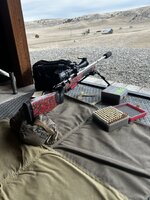
First test was bipod-rear bag
OG suppressor = on average 3 mils up
NHS = on average 1.5 mils up
APA Little Bastard Gen 3 = on average 2.3 mils up
Next test was simulating shooting over a backpack with no rear support. I didn't have a good pack with me, so I made due with a light fill Gamechanger on an ammo box.
OG suppressor = on average 2.8 mils up
NHS = on average no change
APA Little Bastard Gen 3 = on average .5 down
Next candidate: 6 Dasher PRS Rig shooting 105's, what I'll personally use the NHS on the most.
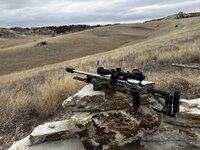
First test was again bipod-rear bag
TBAC Magnus = on average 1.7 mils up
NHS = on average 1.2 mils up
APA Little Bastard Gen 3 = on average 1.3 mils up
Next test was balanced on a single bag, a heavy sand fill game changer.
TBAC Magnus = on average 1.5 mils up
NHS = on average .6 mils up
APA Little Bastard Gen 3 = on average .7 mils up
I already liked the NHS without the direct comparison, just based on experience. Shooting side by side with a brake it was a bit better than I thought. I really expected it'd be a compromise trading blast for performance, but on these two setups I would choose the NHS recoil characteristics over the APA independent of the difference in concussion. Note, I'm not suggesting the NHS reduces recoil more overall than the APA, just that I prefer the experience of spotting shots with it.
I still want to put it side by side with some of the other braked can's, whenever I can arrange that in the future I will. Maybe Saturday, fingers crossed.



