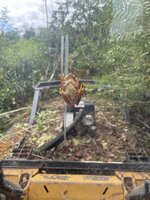
Be careful with all this. Whether you like it or not those
wetlands are most likely regulated at the state and federal level. I think most of us agree that conservation minded land management is noble, but d
on't get yourself into trouble running heavy machinery in a jurisdictional wetland.
That said, there are plenty of trees and shrubs which thrive in wet conditions.
The National Wetland Plant List is a good start. If you're trying to establish good bedding cover, maybe think about planting several hundred cedar fingerlings, common alder, eastern swamp privet, and black willow. It also might be a good idea to plant some hardwoods you'd like to eventually see on your property since this woods will eventually mature over the next 80 years through natural forest succession unless heavily managed. Maybe think about establishing some swamp white oak, silver maples, red maples, river birch and cottonwood.
And then I found this with a quick google search:
https://www.alabamawildlife.org/landowner-network/
Seems like engaging with an organization like this may be beneficial, but again do some research and make an informed decision. This specific organization may not align with your interests, however I'm sure there are others out there.
Also like
@Forestryguy said, not all the recruits in the sapling and shrub stratum are necessarily bad. If you'd like to become an effective land manager it would good to start learning how to identify everything you see, and then cross reference their ecology. See if their ecosystem function is something you desire, and if so let them stay. Unfortunately, it is more than likely that the new growth in the sapling shrub stratum is mostly invasives. But confirm that before destroying what could mature into great bedding cover.
Now to get to your question: mulching (as long as it's a legal activity in the wetland) isn't necessarily a bad management practice. Ideally you want your property to have varying levels of successional growth, so mulching could provide edge habitat and break up a homogeneous habitat type. Whitetails thrive in areas which support a mosaic of varying stages of successional forest. So you'll want to make sure to provide them some older growth hardwoods, early to late successional tracts, and scrub-shrub habitat as well. I would try to maintain a way to access your property for management, therefore mulching paths could be a good idea. Again though, make sure you're not getting yourself into trouble. If your roads are dry enough you could try to plant them with some winter cover like annual rye and white/red clover.