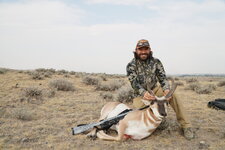
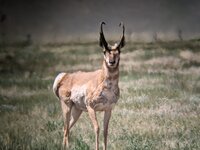
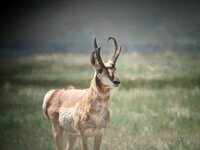
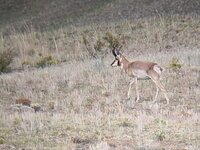
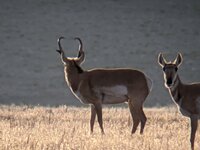
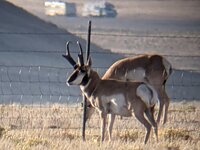
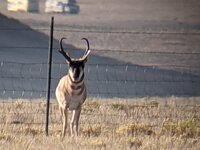
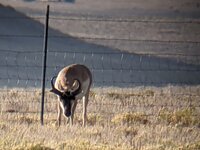
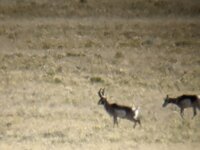
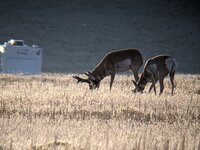
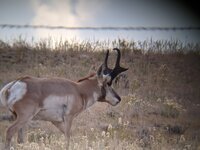
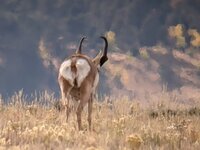
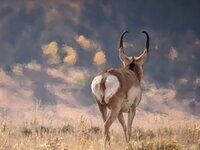
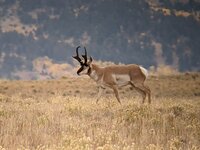
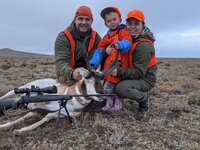
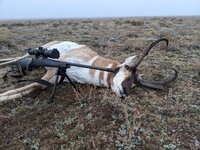
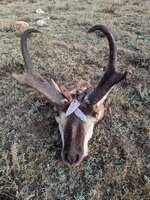
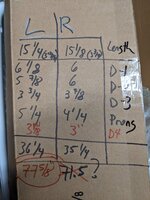
Similar to all horn species MASS is what is important for high B&C scores. As mentioned earlier it is important to get views from several different angles. A spotting scope is pretty much a "must have" because inches play such an important factor in the score.
It often helps to get your hands on several top scoring horns that are produced in the area you will be hunting. Pronghorn in different zones in NM may generally produce a little different horn confirmation than Wyo. Some of the better areas within Wyo may produce different horns than others....and from 1 season to the next! As an example, top scoring bucks from Wyo may have shorter horns than NM but often produce bucks with great mass. Most of the top bucks I've harvested over the years in Wyo have at least 7" bases and hold that mass all the way to the tips. It's super tough to make up for mass with longer horns and prongs....not impossible but very tough. Thinner horned bucks in Wyo generally don't make B&C because Wyo bucks seldom have super long horns.
Sometimes prong length can be hidden a little by super massive horns. Also, just because a buck has prongs way up on a horn doesn't mean it will score better than a buck with prongs coming off low. There are so many different horn confirmations present on antelope that field judging accurately is definitely a challenge.
There are so many different field judging tricks that can be learned but some of it is by trial and error. It helps having a tape and measuring lots of horn length, mass, prongs, etc. from the areas you intend on hunting. Also looking at a lot of video and photos of bucks in the field with measurements on the ground. Some guys use nose, ear, and eye measurements to figure out mass and horn length but I just haven't had success with that strategy. Similar to humans....antelope come in a lot of different sizes and shapes. Some may have short noses, small eyes, small bodies, etc.
Antelope sure are a kick to watch and hunt! Good luck to those that drew 2021 tags!