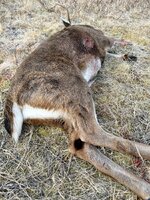
We are at 15 BG animals this season, elk, deer, pronghorn, bear. All but 1 required a pack out of at least 2 miles, most were further in... so all the meat had to be put into backpacks. Most of the time it's just way more convenient to leave the quarters intact. But I'll remove the lower legs at the joint. If it's good weather and there is plenty of daylight, and otherwise no rush, we will skin and quarter (gut-less style). If it's cold and we are in a hurry, I'll just cut the quarters off with the hide on.
I like to put the quarters and BS/TL in unscented garbage bags, and then into argali game bags. This keeps things cleaner. On a rare occasion when we choose to hang the meat on site for a later pack out, I'll only use a game bag instead of the garbage bag.
We have coolers in the vehicle that have frozen water bottles. I usually have one large empty cooler, and one small thick cooler that I keep the frozen water bottles in, stuffed as full as possible. This has kept the ice frozen over multiple days.
Once we get back from the pack out, the quarters go into the empty cooler with the ice layered around them as much as possible. We rarely have more than a 5 hour drive to home, so this is good enough.
Once home, we have a dedicated and contained area adjacent to our garage to hang the quarters if average temps are below 40 degrees. If it's early season, we have a fridge that has all the shelves removed that we can stack quarters in.
We get to the processing as soon as time allows, usually within a day or two, sometimes as long as a week. 1 quarter at a time comes inside, and butchered on our kitchen counter top.
All hide, hair, dirt, silverskin, dry meat, bloodshot, etc is trimmed off. Then we cut as much into steaks and roasts as possible, then the pieces too thin or small for steaks gets trimmed into a burger pile. Any remaining pieces (like lower leg) that has too much tendon/sinew to trim will go into a "pressure cook" pile. We then grind the burger right away and everything gets vacuum sealed into meal size portions and labeled. The scraps/trimmings gets put into ziplock bags to freeze and feed to the pets.
The only real difference we have noticed in the flavor and texture of the meat has to do with the preparation at point of consumption.... if it gets overcooked, it is chewy and gamey. If we pick our favorite marinade, pan sear it and bring the inside just to temp, leaving the steaks pink in the middle... it always comes out moist, flavorful, and tender across the board (including rutty old bulls and bucks, etc). We find that cooking on the grill outside seems to dry it out a bit more than cooking on a flat pan/griddle. (The exception to this is bear meat, which needs to be cooked well done, so usually goes in the instapot...) The burger (which is very lean) gets used in every other meal (like chili, spaghetti, etc) that doesn't involve a steak. The pressure cook stuff comes out fork tender and usually gets mixed with BBQ sauce (pulled pork style).
I'll add that I've found packages of deer and elk steaks processed this way that got missed at the bottom of the freezer... and even after 7 years in the freezer, the meat is still fantastic... in fact, it actually gets more tender over time.
We've been doing this method for many many years, with animals numbering in the triple digits... and we have never had to toss meat that went bad due to handling processes.