Determining Pressure

fshaw

WKR
Joined
Jan 26, 2015
Messages
435
Other than using reloading manual published maximum load data, how do you personally determine when you’re approaching maximum pressure for a given load combination you’re working up for your bolt action rifle? Do you use bolt lift feel, primer appearance, case head expansion, or some other method. Just curious what most guys are using. I don’t have a chronograph and am not interested in purchasing one. Where I hunt (Adirondacks), velocity is of little importance other than obtaining the minimum required to ensure bullet performance.

Thanks.

Frank
 
Imho velocity and quickload are probably the best ways to estimate pressure. I found that you can back into pressure in QL by looking at velocity with a given charge weight, then adjusting case volume until you get the predicted velocity to match actual. Is it perfect, no. With that said, I still look at primers, bolt face imprint, and hard to extract, but those can often only show up until way over pressure. Especially when I am working on cartridges with lower pressure limits
 
Velocity and bolt lift. Sometimes the physical signs of pressure, like extractor swipe marks, flat primers, hard bolt lift don’t show up until you’re way up there. Velocity is a function of pressure, so if you’re getting higher than book max velocity… you are very likely at or above SAAMI pressure rating. I’ve noticed that my primers look slightly flattened with everything except very reduced loads, but when they start to look absolutely smashed I’m pushing the limits. I’ve had very flat primers with the bolt lift still pretty good.

Edit: Max load data for a particular load is of course not a reliable indicator of what that load does in your gun with the particular brass and projectile you’re using. Sometimes book max is weak, sometimes I show pressure at a grain or two below book max.
 
Velocity at max charge, not the charge weight itself because multiple factors can cause this to vary. This is primary.

If I’m getting stiff bolt or other physical indicators on the case/primer while using quality components, I’m usually well past where I want to be.

If I were doing it with no chrono, I’d go slowly until some of those physical indicators showed up (bolt feel likely top) and then back off a significant amount of charge - a full grain or more for 308-sized cases. More for larger.
 
I use all the things and some dead reckoning.

QuickLoad - use this to estimate PSI. I will often correlate it's FPS estimate to PSI to my Chronograph read. So QL says it should be 2750 FPS, Chronograph says it's only 2650, ergo I'm probably at lower pressure for reasons unknown (usually throat geometry, bore tolerances, jump to lands, other factors).

Published data - especially Hodgdon or Ramshot/Western, gets you PSI for start and max loads, so I correlate that with what my chronograph says.

Primers - this is not reliable in and of itself, but yeah, when you start getting primers that are blown out really really flat, show evidence of flowing back into the firing pin protrustion, etc, or blow out, or get loose after only 2 or 3 firings on a piece of brass, then yeah, you're over the edge for pressure.

Case head scuffing on FL or PFL sized brass (neck sized brass will sometimes evidence this because of the tight fit, so you need FL or PFL brass for this to be valid).

Sticky bolt lift (obviously) - but by the time you've got here, you've gone a long way past where you probably wanted to be.

Case head showing evidence of flowing into the ejector hole (also, by the time you get here, you're pretty hot).

TL;DR - dude, drop the $150 or whatever they go for these days on at least a cheap-o chronograph. Poor mans pressure gauge, worth every penny.
 
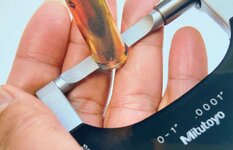
The most definitive measurement of pressure is case life. No matter the velocity, sticky bolt lift, ejector marks, primer flatness, brand of the case, or phase of the moon, if primers fall out, or partial head separations happen at three to five loadings it’s too hot. An average life of at least 10 loadings can provide quite high velocity and reasonable case life, but most people don’t have the time to go back 10x just to check a new load. The short cut that most closely matches case life is head expansion in the same plane as the primer pocket, but it requires good record keeping, tools and ability to measure to .0001”, and a good amount of “feel” for the process.

Case heads are not uniform in diameter, at least not at the .0001” level, so measurements have to be taken at exactly the same point each time. I generally pick the first letter in the head stamp and always measure at that point. Multiple measurements should be taken to get a good number.

Brass work hardens every time it’s shot, so brass will start out with large amounts of expansion and it tapers off quickly each reload. Starting out, for any brand of brass you almost have to measure and shoot them to failure to get a good feel for the expansion rates to judge future loads by. Some brass will continue to expand every shot and some will stop or nearly so, so it requires some judgement and experience to take a reading and know what it’s telling you. If you simply said a single case expanded .0004” without any background info it doesn’t mean anything. On a first firing that’s not necessarily a lot and if it is doing that at 5 reloads that’s a bunch.
IMG_1223.jpeg

Not every load needs this level of attention, so I put together the available clues. With a familiar brand of brass the depth of ejector mark, flatness of primer, ease of ejecting and velocity are fairly easy to estimate the number of reloads it will make.

Ejector marks are probably the least understood thing in reloading. If there is any kind of sharp edge on the ejector hole I’ve seen 10 ejector marks on a soft piece of brass that hadn’t failed yet. I seem to shoot a lot of Federal and Winchester brass and I typically expect one to three ejector marks before it work hardens enough to not show further marks. On the other hand, brass with a hard head can be spicy if any ejector mark shows up.

Primer quality is all over the board so I pay little attention unless primers are blanking, falling out, leaking, or look extra flat. Every brand is different and every lot has its own thickness and hardness. I’ve never had a firing pin so loose it blanked primers with pressures that allowed 10 reloads, so I assume anyone blanking primers is running spicy loads. Easy way to disable a rifle.

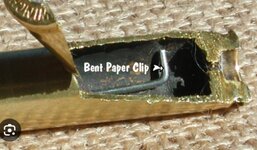
I also feel for the case head separation line with a paper clip. If you feel it every reloading it’s actually quite easy to feel the thinning progress and you’ll have a good idea the case is about to go before the ring is visible on the outside of the case. The idea is to cull the case before the head separates. In all my years I’ve never had a full head separation even though I shoot until the cases are barely clinging to life and might even have a small partial separation when culled.

There’s 0% chance a published max is anywhere as close to a true max in terms of powder weight or velocity with your unique combination of rifle chamber, bore variances, lot of powder, lot of case, lot of bullet, lot of primer. Some rifles top out 100 fps early and some top out 100 fps fast. That’s all I know.

IMG_1224.jpeg
 
Back
Top