
CWD Concern and SE Wyoming Deer & Elk

Laramie

WKR
Joined
Apr 17, 2020
Messages
2,745
With all the recent discussions, I thought it would be good to give regionalized data for those considering applying for deer and elk hunts in 2026. I have researched South East Wyoming extensively and have personal connections to some biologists in the area.

Deer -

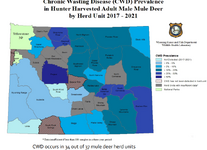
Snowy Range Mountains currently are seeing up to a 25% positive rate on Mule Deer. This includes deer areas 75, 76, 78, and 79 ( Much of Region D). Hunters concerned with CWD should expect a high likelihood of harvested deer in these areas to be CWD positive.

Laramie Range is also seeing up to a 25% positive rate on Mule Deer. This includes areas 59. 60, 61, 64 and 74. Hunters should also expect harvested animals to be CWD positive in these hunt areas.

Platte Valley and Baggs areas are seeing a much lower prevalence of CWD with tested animals in the 5-10% range. This includes deer areas 80, 81, 82, 84 and 100. Hunters here have a much better chance to harvest a mule deer free of CWD. The further west you go, the lower the prevalence of CWD. Areas 101 & 102 have zero detected cases of CWD.

Far SE Wyoming is rough with up to 50% positive rate - deer area 15 (region T).

Bottom line for deer- go further west to avoid CWD.
1766505267940.png


ELK - Much lower prevalence than deer but still a concern in SE Wyoming.

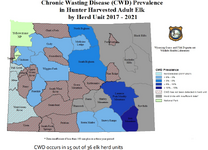
The Iron Mountain herd, elk area 6, is the worst in the state coming in at 15+% positive rate. Followed by a close second with the Laramie Peak herd, elk area 7 coming in at 10+%.

Snowy Range Mountains. These areas are increasing in prevalence and are a concern to the WG&F. Areas included are 8. 9, 10, 11, 12, 13, 15, 21, 108, 110, 125, and 130. These are all part of Region S for the general tag.

Hunters looking to avoid CWD positive areas should look further West in the state as many of those areas still have zero detected cases of CWD.
1766505225434.png

Hopefully this information helps some hunters make informed application decisions and helps someone avoid having to dispose of a deer or elk that ends up testing positive.
 

Attachments

  • 1766505195537.png
    1766505195537.png
    353.1 KB · Views: 13
Hopefully this information helps some hunters make informed application decisions and helps someone avoid having to dispose of a deer or elk that ends up testing positive.

Are you required to dispose of +testing animals in WY?
Also, how many animals are found dead or showing signs of sickness from CWD compared to prior years?
 
With all the recent discussions, I thought it would be good to give regionalized data for those considering applying for deer and elk hunts in 2026. I have researched South East Wyoming extensively and have personal connections to some biologists in the area.

Deer -

Snowy Range Mountains currently are seeing up to a 25% positive rate on Mule Deer. This includes deer areas 75, 76, 78, and 79 ( Much of Region D). Hunters concerned with CWD should expect a high likelihood of harvested deer in these areas to be CWD positive.

Laramie Range is also seeing up to a 25% positive rate on Mule Deer. This includes areas 59. 60, 61, 64 and 74. Hunters should also expect harvested animals to be CWD positive in these hunt areas.

Platte Valley and Baggs areas are seeing a much lower prevalence of CWD with tested animals in the 5-10% range. This includes deer areas 80, 81, 82, 84 and 100. Hunters here have a much better chance to harvest a mule deer free of CWD. The further west you go, the lower the prevalence of CWD. Areas 101 & 102 have zero detected cases of CWD.

Far SE Wyoming is rough with up to 50% positive rate - deer area 15 (region T).

Bottom line for deer- go further west to avoid CWD.

View attachment 990080


ELK - Much lower prevalence than deer but still a concern in SE Wyoming.

The Iron Mountain herd, elk area 6, is the worst in the state coming in at 15+% positive rate. Followed by a close second with the Laramie Peak herd, elk area 7 coming in at 10+%.

Snowy Range Mountains. These areas are increasing in prevalence and are a concern to the WG&F. Areas included are 8. 9, 10, 11, 12, 13, 15, 21, 108, 110, 125, and 130. These are all part of Region S for the general tag.

Hunters looking to avoid CWD positive areas should look further West in the state as many of those areas still have zero detected cases of CWD.
View attachment 990079

Hopefully this information helps some hunters make informed application decisions and helps someone avoid having to dispose of a deer or elk that ends up testing positive.
Dang, that's shocking.
 
Hopefully this information helps some hunters make informed application decisions and helps someone avoid having to dispose of a deer or elk that ends up testing positive.

Are you required to dispose of +testing animals in WY?
Also, how many animals are found dead or showing signs of sickness from CWD compared to prior years?
No, you aren't required to but WG&F encourages hunters to dispose of them.

The number of predators on the landscape clean up dead animals very quickly so it is pretty rare to find a carcass.

I posted the above simply to try to help those worried about it. Makes zero sense to apply and hunt in these areas if those hunters aren't OK eating a CWD positive animal. There is also some data suggesting there will be fewer old age class animals in these areas making them less desirable for trophy hunts. Those hunters do find have an even higher likelihood of testing positive due to their age and time they have lived in a positive CWD environment.
 
No, you aren't required to but WG&F encourages hunters to dispose of them.

The number of predators on the landscape clean up dead animals very quickly so it is pretty rare to find a carcass.

I posted the above simply to try to help those worried about it. Makes zero sense to apply and hunt in these areas if those hunters aren't OK eating a CWD positive animal. There is also some data suggesting there will be fewer old age class animals in these areas making them less desirable for trophy hunts. Those hunters do find have an even higher likelihood of testing positive due to their age and time they have lived in a positive CWD environment.
Why does it make Zero sense to hunt areas with a 25% chance of a positive CWD result?

For the record. I personally woud avoid hunting them. But we will eventually get to a point where everywhere will have a high prevalence.

It's no one's fault the disease is on the landscape. People shouldn't punish themselves because of an unfortunate circumstance that is out of their control.

If a hunter didn't kill that animal, CWD would within 12 to 24 months of exposure. Why does it matter? Killing that deer is preventing it from continuing to spread prions all over the landscape.


Sent from my SM-S931U using Tapatalk
 
Why does it make Zero sense to hunt areas with a 25% chance of a positive CWD result?

For the record. I personally woud avoid hunting them. But we will eventually get to a point where everywhere will have a high prevalence.

It's no one's fault the disease is on the landscape. People shouldn't punish themselves because of an unfortunate circumstance that is out of their control.

If a hunter didn't kill that animal, CWD would within 12 to 24 months of exposure. Why does it matter? Killing that deer is preventing it from continuing to spread prions all over the landscape.


Sent from my SM-S931U using Tapatalk
It makes zero sense because there are quite a few areas hunters can choose with a lower prevalence of CWD. Some people aren't ok eating one of these infected animals so making the large investment to hunt in these areas when there is a decent chance it will be thrown away after the hunt is unnecessary.

I agree, we may eventually get to a point where all areas have it but we aren't there yet so may as well go hunt where it isn't a concern right now.

I agree, people shouldn't punish themselves. Taking the chance of going through all the work and expense to just throw it all away would be punishment imo.

From a landscape & population standpoint, I agree, it doesn't matter much. The predators take out most CWD infected animals before they succumb to the disease because they are weaker in the later stages making them easy prey. It has been proven virtually everywhere that hunting won't stop the spread- the damage is done. It matters because it is devastating to a hunter who invested years of preference points, months of time, and considerable expense to finally harvest that animal that now goes in the dumpster - just sad.
 
Why does it make Zero sense to hunt areas with a 25% chance of a positive CWD result?

For the record. I personally woud avoid hunting them. But we will eventually get to a point where everywhere will have a high prevalence.

It's no one's fault the disease is on the landscape. People shouldn't punish themselves because of an unfortunate circumstance that is out of their control.

If a hunter didn't kill that animal, CWD would within 12 to 24 months of exposure. Why does it matter? Killing that deer is preventing it from continuing to spread prions all over the landscape.


Sent from my SM-S931U using Tapatalk
I understood the post to mean that IF you will be extremely disappointed if the animal you harvest tests positive, you should consider whether you want to hunt in an area where there is a high chance that it will.
 
I understood the post to mean that IF you will be extremely disappointed if the animal you harvest tests positive, you should consider whether you want to hunt in an area where there is a high chance that it will.
Exactly. Some people are willing to take the risk eating an infected animal. To those guys, I say happy hunting.
 
Other numbers for consideration
5000 elk tested state wide

29000+ elk harvested state wide so a lot more people are willing to eat an elk that might test positive. Also a negative test is not conclusive but it's getting better.

Area 7 elk numbers are so far over objective that there are unlimited cow tags even for NR (private/public land limitations apply)
 
Other numbers for consideration
5000 elk tested state wide

29000+ elk harvested state wide so a lot more people are willing to eat an elk that might test positive. Also a negative test is not conclusive but it's getting better.

Area 7 elk numbers are so far over objective that there are unlimited cow tags even for NR (private/public land limitations apply)
Agreed - will be interesting to see what the next 5 years bring from a testing standpoint.
 
It makes zero sense because there are quite a few areas hunters can choose with a lower prevalence of CWD. Some people aren't ok eating one of these infected animals so making the large investment to hunt in these areas when there is a decent chance it will be thrown away after the hunt is unnecessary.

I agree, we may eventually get to a point where all areas have it but we aren't there yet so may as well go hunt where it isn't a concern right now.

I agree, people shouldn't punish themselves. Taking the chance of going through all the work and expense to just throw it all away would be punishment imo.

From a landscape & population standpoint, I agree, it doesn't matter much. The predators take out most CWD infected animals before they succumb to the disease because they are weaker in the later stages making them easy prey. It has been proven virtually everywhere that hunting won't stop the spread- the damage is done. It matters because it is devastating to a hunter who invested years of preference points, months of time, and considerable expense to finally harvest that animal that now goes in the dumpster - just sad.


That makes a lot of sense. I agree. Im also probably spoiled because I'm in an area with very low prevelance and can hunt these animals every year. If I wind up with a positive every 5 to 10 years it's not as big of a deal for me to just have an "it is what it is" attitude and move on.


Sent from my SM-S931U using Tapatalk
 
That makes a lot of sense. I agree. Im also probably spoiled because I'm in an area with very low prevelance and can hunt these animals every year. If I wind up with a positive every 5 to 10 years it's not as big of a deal for me to just have an "it is what it is" attitude and move on.


Sent from my SM-S931U using Tapatalk
I'm not concerned with CWD in my meat as much as I am the likelihood of older age classes missing from herds. If your 5+ year old bucks and 6+ year old bulls have a higher mortality rate, there is a lower chance of finding those big bucks and bulls on a hunt. That honestly explains the lower trophy potential in many of the areas listed above. There is a reason the guys are saying area 7 isn't what it used to be...
 
Hunting the west will soon be just a horn hunt. Salvage laws will be altered for sure. Sad the way this disease is destroying herds.
 
Hunting the west will soon be just a horn hunt. Salvage laws will be altered for sure. Sad the way this disease is destroying herds.
It may get there in our lifetimes but there are a lot of great years of hunting left in CWD free areas. People just need to make informed decisions.
 
Hunting the west will soon be just a horn hunt. Salvage laws will be altered for sure. Sad the way this disease is destroying herds.
What's "soon"?

Deer maybe but only because there are so many other factors affecting deer. Bad winters, predators, development of migration corridors. Mule deer are constantly behind the 8 ball

Elk no way
Elk numbers in SE Wyo are far over objective even though the herds are not widely dispersed. Irrigated hay meadows on private land look like the feeding stations in other parts of the state.

Laramie makes a good point that if you're squeamish about CWD you might hunt elsewhere, quit hunting deer and elk or just take up fishing. Looking at the application numbers and point purchases in Wyo folks don't seem too worried.
 
Laramie makes a good point that if you're squeamish about CWD you might hunt elsewhere, quit hunting deer and elk or just take up fishing. Looking at the application numbers and point purchases in Wyo folks don't seem too worried.
I would honestly bet that 90+% of the people applying haven't even considered CWD as an issue. It isn't until they get that email telling them their animal tested positive and encouraging them to dispose of the carcass, many times after they have paid for the processing. Hunters should go into this with eyes wide open and understand the risks.
 
Back
Top
