I
I'll try to post some tomorrowLet's see some of your best groups. Pics man, show us what you're talking about.

Follow along with the video below to see how to install our site as a web app on your home screen.
Note: This feature may not be available in some browsers.
I'll try to post some tomorrowLet's see some of your best groups. Pics man, show us what you're talking about.

Your 30 day group would statistical all fall within your 30 shot cone of fire but not necessarily be the same as your 30 shot cone of fire.So if we take a known good rifle system and fire 30 rounds back to back and establish a cone of fire that Form often refers to, is the overall conclusion that 30 cold bore shots let’s say 30 days in a row would produce the same cone of fire?
In other words , Cp and Cpk would be the same and standard deviation of each group would be the same ??

That is essentially the experiment this thread is about. The variable introduced is 30x breaking position. That is not insignificant by itself.So if we take a known good rifle system and fire 30 rounds back to back and establish a cone of fire that Form often refers to, is the overall conclusion that 30 cold bore shots let’s say 30 days in a row would produce the same cone of fire?
In other words , Cp and Cpk would be the same and standard deviation of each group would be the same ??

So if we take a known good rifle system and fire 30 rounds back to back and establish a cone of fire that Form often refers to, is the overall conclusion that 30 cold bore shots let’s say 30 days in a row would produce the same cone of fire?
In other words , Cp and Cpk would be the same and standard deviation of each group would be the same ??
So the cold bore cone size would be larger than the warm bore cone size, for 100 rds?Functionally correct. In properly stress relieved barrels with no outside influence, the two groups would look very similar with the except of the inherent variation in 30 round groups. Increase the number to 100 cold bore shots, and the 100 “warm” or “hot” rounds will be inside the cold bore cone.
In addition to what Form said, for most shooters, the more likely variables here are mirage from the barrel heat for the 30-shot group vs variances due to cold shooter, different clothing, and positional inconsistency for the 30x1 shots - rather than what the barrel is doing.So if we take a known good rifle system and fire 30 rounds back to back and establish a cone of fire that Form often refers to, is the overall conclusion that 30 cold bore shots let’s say 30 days in a row would produce the same cone of fire?
In other words , Cp and Cpk would be the same and standard deviation of each group would be the same ??
No. By "inside" he means the same size, i.e. not spilling out of the cold bore cone.So the cold bore cone size would be larger than the warm bore cone size, for 100 rds?

Thanks for sharing.Here’s a take from applied ballistics just the other day. He is talking about variation between 5-round groups, and % of groups within 1sd, 2sd’s etc. in other words he is also talking about dispersal of shots falling into a bell curve when you look at the total dispersion.
View attachment 999573
View attachment 999574View attachment 999575
Manscaping.did I miss anything fellas?
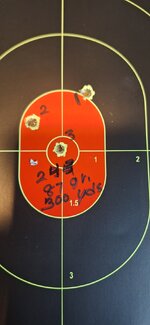
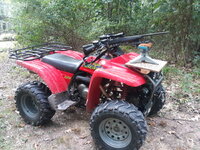
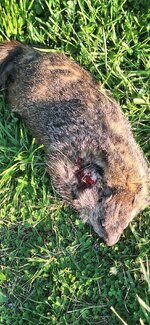
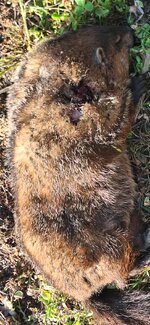
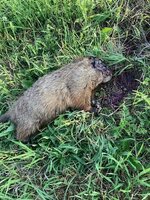


I for one think it shows a lot of humility on your part to participate in an open and honest way, showing whatever you have to show. Most other people who have their beliefs challenged the way that you have, simply aren't that brave. And you're not the first one we've seen be put through that grinder!! lol Truth be told the pics of the groups don't tell us much, except that you're a pretty fair shooter and that you're willing to learn!So one forum member asks me to post whatever I have knowing I don't have Rockslide standard data targets. The next member tells me my posts are meaningless. Point taken. I will note in the chucks' obituaries that they have all died statistically meaningless deaths.
Point taken. I will note in the chucks' obituaries that they have all died statistically meaningless deaths.