TaperPin
WKR
- Joined
- Jul 12, 2023
- Messages
- 6,317
You know those really good round loafs of sourdough that are like $7 at a bakery - anyone can make a basic loaf for about $1.25 or so. It’s something everyone in our family was afraid of so it just hasn’t been passed down, but a no kneed bread is so easy there’s no excuse.
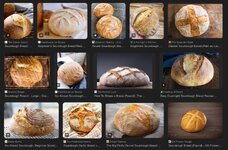
As a science project anyone can make a sourdough starter in two to three weeks. Every day mix 50g of flour and 50g of water in a tall water glass and throw out half of the old starter. Cover with aluminum foil and set on the countertop. After the two week point if it doubles in size it’s ready to use baking and can be kept in the fridge and fed once every week or two. The day before you need to use it add extra flour and water. It’s literally that easy.
Bread of any size can be remembered with an easy ratio. For however much flour use 75% water, 2% salt and 30% starter. That’s it. 500g of flour makes a nice round loaf. Swap in some whole wheat flour if you want.
Mix it all up and let it sit covered. Every 30 minutes for a couple of hours wet your hand so it doesn’t stick and pick the flour up and give it a shake like it owes you money, set it back down, repeat about four times. That takes the place of kneading. Let it double in size, maybe half a day. Then sprinkle with flour and form it into a ball and put into something round like a colander lined with a smooth dish towel that is sprinkled heavily with flour so it won’t stick, and cover with aluminum foil. Let rise another half day, plop it into a preheated Dutch oven with a piece of parchment in the bottom, make a cut across the top with scissors and bake covered for 30 minutes at 475 degrees (202 degrees internal temp). That’s it. Perfect every time. Preheat everything for about 45 minutes.
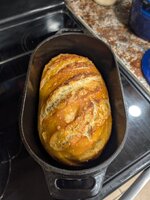
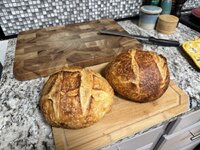
Your first loaf will look stupid, but taste great, better than any store bought bread. With practice it only takes about 10 minutes of work and looks like the pictures. If you’ve ever thought about it, there’s no time like now to start.
As a science project anyone can make a sourdough starter in two to three weeks. Every day mix 50g of flour and 50g of water in a tall water glass and throw out half of the old starter. Cover with aluminum foil and set on the countertop. After the two week point if it doubles in size it’s ready to use baking and can be kept in the fridge and fed once every week or two. The day before you need to use it add extra flour and water. It’s literally that easy.
Bread of any size can be remembered with an easy ratio. For however much flour use 75% water, 2% salt and 30% starter. That’s it. 500g of flour makes a nice round loaf. Swap in some whole wheat flour if you want.
Mix it all up and let it sit covered. Every 30 minutes for a couple of hours wet your hand so it doesn’t stick and pick the flour up and give it a shake like it owes you money, set it back down, repeat about four times. That takes the place of kneading. Let it double in size, maybe half a day. Then sprinkle with flour and form it into a ball and put into something round like a colander lined with a smooth dish towel that is sprinkled heavily with flour so it won’t stick, and cover with aluminum foil. Let rise another half day, plop it into a preheated Dutch oven with a piece of parchment in the bottom, make a cut across the top with scissors and bake covered for 30 minutes at 475 degrees (202 degrees internal temp). That’s it. Perfect every time. Preheat everything for about 45 minutes.
Your first loaf will look stupid, but taste great, better than any store bought bread. With practice it only takes about 10 minutes of work and looks like the pictures. If you’ve ever thought about it, there’s no time like now to start.



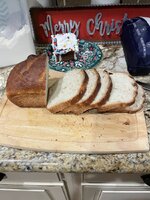
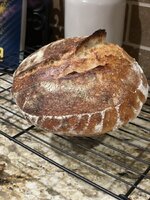
 homemade bread is so much better.