Best dies (measurable data only)

As @windgypsy posted, someone else has said the expander ball is not the most consistent method in their experience.
For whatever it's worth, i haven't sized without an expander ball for years. I accept that it is a no no in some circles but it doesn't seem to negatively impact me. People talk about how the forster design is less apt to induce runout but i cant confirm or reject that based on measurement. I just know it's good enough for me. If I start sizing on my progressive maybe i'll go back to using a mandrel in that application but i've no interest in making 2 sizing passes on a single stage.
 
My most accurate rifle that never printed a stacked bullet hole outside a 1/2 MOA circle until the day it was burned out enough a friend bought it, did that with basic 1980 vintage RCBS dies and an expander ball. I have some fancy bushing dies, even a Wilson chamber type seater with the cute tiny little arbor press and have yet to see anything on target that beats basic dies. I’m sure there’s a statistical improvement in there somewhere, but if ANY company could publish repeatable data showing their dies made a noticeable difference in hunting ammo, even 1/16 MOA, every one of us would own them. It would be the product that sells itself. Instead we have a collection of gee wiz features, fancy knobs, fancy names, fancy claims.

 
Curious on everyone's take on the best dies. I'd really like to hear data on why? "I went from ___ to ___ and saw tighter tolerances" ect... not just "_____ is the best with no data"

Lets say the below 2. Can be different brands
-Full length sizing
-Seating
If you are truely looking to find what are the best dies. You should be checking with benchrest shooters. they are shooting for the smallest groups of any shooting sport.
asking on a hunting forum what the best dies are is kind of a waste of time.
 
My most accurate rifle that never printed a stacked bullet hole outside a 1/2 MOA circle until the day it was burned out enough a friend bought it, did that with basic 1980 vintage RCBS dies and an expander ball. I have some fancy bushing dies, even a Wilson chamber type seater with the cute tiny little arbor press and have yet to see anything on target that beats basic dies. I’m sure there’s a statistical improvement in there somewhere, but if ANY company could publish repeatable data showing their dies made a noticeable difference in hunting ammo, even 1/16 MOA, every one of us would own them. It would be the product that sells itself. Instead we have a collection of gee wiz features, fancy knobs, fancy names, fancy claims.
Far too many other variables in the process that die companies cant control for them to claim anything. Even if they have data.
 
Show me where a mandrel and the potentially straighter ammo it might produce is more accurate. IMO this lands in the same gray area as the similar argument “does seating depth matter”. :)

As to the BR reference above, many LRBR shooters just use a bushing die because for them the extra step of a mandrel didn’t give them anything more accuracy wise.
 
I’d challenge someone to load up 30 rounds using a standard RCBS or Hornady or Forster FL die. And then load up 30 rounds of the exact same load using a SAC or 419 or Cortina or whatever other expensive, fancy die, and show the two targets, and SD/ES values side by side. I’d love to see a measurable difference.

Will your brass last longer and can you measure straightness? Sure. But the OP asked for measurable data showing the difference. I don’t think that’s possible to show. Prove me wrong.
 
I’d challenge someone to load up 30 rounds using a standard RCBS or Hornady or Forster FL die. And then load up 30 rounds of the exact same load using a SAC or 419 or Cortina or whatever other expensive, fancy die, and show the two targets, and SD/ES values side by side. I’d love to see a measurable difference.

Will your brass last longer and can you measure straightness? Sure. But the OP asked for measurable data showing the difference. I don’t think that’s possible to show. Prove me wrong.
this would be awesome to see. I think you could show measurable different( or lack there of) . Maybe fl ____ die had a tolerance of +/- .002 compared to desired should bump for all rounds sized. ____ die gave me +/- .005. Could be __ gave me this group size/ es ect and ____ gave me larger/smaller/exact same

I think it would be cool to see. Original questions was ment to hear the WHY behind your reasoning on what the best die is.
 
Show where that claim was made first.
Maybe not in this thread but it's a common claim. Why would one seek "tighter tolerances" out of a die or loading procedure if it wasn't accuracy related? If it didn't matter then what's the point to this thread? I suppose one could make the point that tighter tolerances equates to that the ammunition will fit into your chamber every time?

Oh, and why I didn't quote you because you didn't make that claim here in the thread. ;)
 
The combination that I have had excellent results with is a Redding body die, then a Lee Collet die in combination with a Forester seating die. Very, very consistent case bump, neck tension/concentricity, and bullet seating.

What I have gone to recently, is using a FL sizing die with no expander ball. It allows me to set my neck tension with a mandrel die. I went away from expander balls when I began to notice that it would move my shoulder/give inconsistent shoulder measurement after sizing. After I removed the expander ball, this inconsistency disappeared. I am a sample size of one, please keep in mind. I also anneal my brass after each firing (AMP annealer), which may have played a part in the brass moving.

The SAC dies are also great for sizing. The problem I have with their seating die is that you have to reset it for every cartridge. For me, they are too expensive to have one for each cartridge I shoot. They do great job on all of their equipment.
 
Where I’ve personally landed is a Redding type S FL bushing die, and a carbide expander ball. To me, this seems to represent the closest combo to ideal given all the things that matter to me: cost, brass life, speed and ease of use, and the ability to produce consistently accurate ammo.

Anything else represents a compromise or sacrifice of some sort that is less appealing to me.

Yes, I use a lot of the fancy SAC bushings, but I’m honestly not convinced they do anything over and above a regular Redding bushing. I’ve never seen a donut.
 
Three pages later, there's still no hard data in this thread. Testing components is really common, but apparently testing one die vs the other isn't.
I don't have much to contribute either. The closest I have are the following:
  • Hornady and RCBS 223 dies in an 18" Larue. No difference in group size whatsoever, both 1.5 MOA average.
  • Seating 6 UM with a 6mm seater stem in a 300 WSM Hornady seater die before my Whidden dies came in. No difference in accuracy with that setup vs the Whidden seater.
Like many, I generally just have one set of dies per caliber. I can't tell a bit of difference between them in terms of rifle precision on paper. As for preferences, I wouldn't pay a premium for Whidden again. The sizing die is pretty normal, the seater is obnoxious. My Redding micrometer 3 die set is my favorite functionally, but any standard die set will result in the same results out of the barrel.
 
I used basic rcbs dies for years and was always able to make very nice, accurate ammo that performed well.

I’ve upgraded a few of them though to redo g master hunter fl sets. The micrometer makes things nice and easy to adjust.

While the ease of adjustment is great, I’ve seen no noticeable improvements in accuracy.
 
My question is are any easier to use? Should I stick with RCBS for my 6 creed dies or try something different?

I put Hornady lock rings on my RCBS dies.

I do get tired of bumping my forearm on the top of the RCBS FL die. Wondering if I want to get a set of Redding basic FL and seater just to avoid that.

I wonder if having the ability to change seating stems with the Redding would be nice, or perhaps using a carbide expander ball.

But, I have spare parts for RCBS dies, but would need to add those to the cost of the Redding.
 
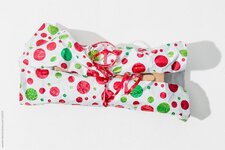
I want to see a Venn diagram of guys who use expensive dies that are more complex than a basic 2-die set, versus guys who can't neatly wrap a Christmas present box.

Just sayin'.....:)
You have to decap, then anneal, then tumble, then body size, then shoulder bump using a bushing die, then use an expander mandrel, then trim. Just can't make good ammo any other way.

Of course you have to neck turn before ever using new brass.

This is a properly wrapped present.1125515.jpg
 
In most cases it isn’t so much what one can do over the other, it is how easier/harder to get the same outcome with one or the other. As far as statistical significant data, good luck, too many ever changing variables.
 
Back
Top