Ammo shelf life

dlvandyke

FNG
Joined
Feb 25, 2015
Messages
9
Location
Madison, Wi
I have some older .308 ammo and I’m wondering if the casing has been compromised. There are some small spots where there’s a little bit of crust on the case, I don’t know of a better way to explain it. I may try to take a picture to post later. What is your experience or opinion thanks
 
If it’s been exposed to water or even really high humidity, I’d probably pass. I recently shot some 20+ year hand loads that were kept in a controlled environment. Just fine.
 
Lots of factors play a role - I've got some 40 year old stuff [rimfire, shotgun and centerfire] that I have no problem shooting. Then there was this that I came across - I had no control over how they had been stored nor how long they had been stored:

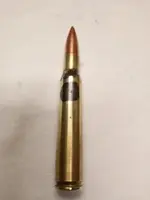
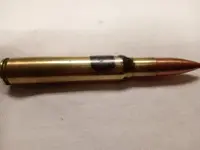
Visible Condition:
IMG_20230404_200952.webpIMG_20230404_201043.webp

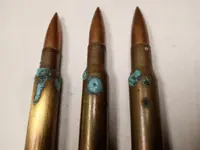
Seemed better than these [from the same batch]:
IMG_20230404_200809.webp

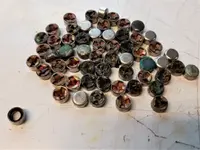
I pulled the bullets from them all just to see; the various components were interesting to say the least:
IMG_20230410_222356.webp
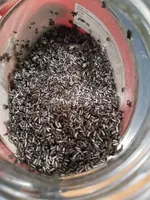
Powder was identifiable as such - but lots of it was literally wet. Most was clumpy and stuck together.

IMG_20230423_123620.webp
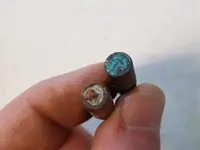
Primers were definitely compromised even though from the outside, they had appeared just fine while sitting in the brass; and some were. Many fired when I dented them with a set&hammer.

IMG_20230423_124333.webp
Various pulled projectiles.

IMG_20230423_124138.webp
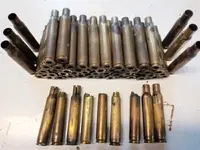
Various cases post bullet extraction; I used pliers as I did not have a puller handy. Some cases held up - others didn't [to put it mildly].

Here is a summary of my observations from this experiment:
  • Powder/case was not corroding on the interior and, in fact, most all of these appeared viable with loose powder. Interestingly enough, many of these had internal air pressure released as soon as the bullet was pulled - so much so that loose powder was expressed from the cartridge in a 'whoosh' of air [I have no idea why that would be].
  • Some of the cases split at the neck when pulling the bullets. Understandable.
  • Some of the cases shredded or tore at the shoulder-to-neck or shoulder-to-body; obviously compromised by corrosion.
  • All of the primers fired regardless of how bad they appeared externally [I only dimpled about 6 - they are much louder than I would have thought].
  • Several primers were corroded to the case and separated when driven out.
  • Most all of the bullets had some degree of corrosion at their bases regardless of visible case corrosion.
  • Many cases had powder that was literally wet in the case; it was still loose but was in a droplets of moisture.
  • In a few instances the powder had solidified into a block at the area of the worst corrosion; it was still in a discernible cylinder powder grain shape but was a solid block.
A small amount of coloration may be okay on a case but if the powder doesn't seem loose or if there is any moisture or actual corrosion exhibited - shite can them; not worth the risk. If you want, pull a few apart and take a look.

 
Lots of factors play a role - I've got some 40 year old stuff [rimfire, shotgun and centerfire] that I have no problem shooting. Then there was this that I came across - I had no control over how they had been stored nor how long they had been stored:

Visible Condition:
View attachment 1013294View attachment 1013295

Seemed better than these [from the same batch]:
View attachment 1013296

I pulled the bullets from them all just to see; the various components were interesting to say the least:
View attachment 1013297
Powder was identifiable as such - but lots of it was literally wet. Most was clumpy and stuck together.

View attachment 1013298
Primers were definitely compromised even though from the outside, they had appeared just fine while sitting in the brass; and some were. Many fired when I dented them with a set&hammer.

View attachment 1013300
Various pulled projectiles.

View attachment 1013301
Various cases post bullet extraction; I used pliers as I did not have a puller handy. Some cases held up - others didn't [to put it mildly].

Here is a summary of my observations from this experiment:
  • Powder/case was not corroding on the interior and, in fact, most all of these appeared viable with loose powder. Interestingly enough, many of these had internal air pressure released as soon as the bullet was pulled - so much so that loose powder was expressed from the cartridge in a 'whoosh' of air [I have no idea why that would be].
  • Some of the cases split at the neck when pulling the bullets. Understandable.
  • Some of the cases shredded or tore at the shoulder-to-neck or shoulder-to-body; obviously compromised by corrosion.
  • All of the primers fired regardless of how bad they appeared externally [I only dimpled about 6 - they are much louder than I would have thought].
  • Several primers were corroded to the case and separated when driven out.
  • Most all of the bullets had some degree of corrosion at their bases regardless of visible case corrosion.
  • Many cases had powder that was literally wet in the case; it was still loose but was in a droplets of moisture.
  • In a few instances the powder had solidified into a block at the area of the worst corrosion; it was still in a discernible cylinder powder grain shape but was a solid block.
A small amount of coloration may be okay on a case but if the powder doesn't seem loose or if there is any moisture or actual corrosion exhibited - shite can them; not worth the risk. If you want, pull a few apart and take a look.

Super interesting post. Do you have the boxes those were in, by any chance? About the only time I've seen external corrosion like that is when the acids of box material is in contact with the casings, with some moisture present. Very curious what its storage conditions were like.
 
I am no expert and honestly pretty naive when it come to rifles and ammo. But I had a real bad experience with some vintage factory ammo I purchased used ( unfired) during the ammo shortage of '21 '22. After chasing my tail for a couple seasons including a rodeo on a nice blacktail buck, I finally deferred to someone with much more experience. I was convinced I was at fault, or the gun or scope. Never occurred to me the ammo was bad. After three shots the gun smith I gave the gun to identified the problem, fresh box of ammo and problem solved. This was mostly 90s era Remington green box. All of it looked good on the outside, appeared never fired (to me) and no pitting. Some of it was tarnished a bit. After this experience I am more careful of how I store my own ammo, and only trust a few handloader buddies or fresh factory stuff. IMO unless you know how its been stored I would pass.
 
Super interesting post. Do you have the boxes those were in, by any chance? About the only time I've seen external corrosion like that is when the acids of box material is in contact with the casings, with some moisture present. Very curious what its storage conditions were like.
I do not. I received them from an acquaintance and as noted really had no idea age or storage to that point; I believe he had received them from a family member who hand-loaded them. When I took them, they were loose bundled in a large, nylon bag. I split them out and had them bundled in a military style ammo box for a number of years - then transferred them to MTM boxes, where they sat for maybe another 5 or so years.

I do recall, that when I moved them into the military case, many looked like the top two photos - I suspect the damage had been done at that point and it was not reversible. They basically rotted from the inside out - maybe it was the older style of powder. I have no real idea.
 
I can only say what I know to be 100% factual. I bought several thousand rounds of S&B 9mm ammo 15 years ago from BASS PRO. It did have sealed primers and although I kept it in a safe, it wasn't in an ammo can. I'm still shooting that stuff occasionally without a single issue.

How much of it do you have?
 
Back
Top