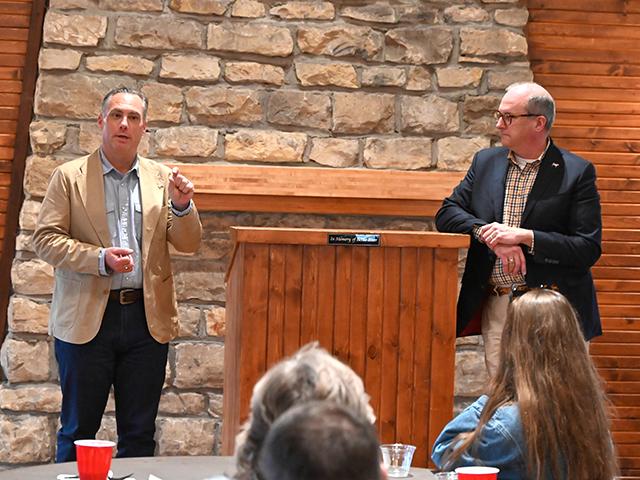
American Prairie loses grazing rights

I’m a bit slow, so perhaps you can clarify:

What questions, specifically, are you asking regarding the APR that haven’t been answered earlier in this thread?

Who is telling nonresidents to mind their own business?

Who, exactly, is asking you to send money?
this thread is about whether AP should received federal considerations whether that be subsidies or other federal involved processes. Your questions seems like you are saying being Montanan, owning land there, or having accessed AP property gives someone a unique stake that people who have not done those things have. As with an federal expenditure, everyone is a stake holder also at this point.

I hope you get paid to constantly post propaganda and rile people up. Otherwise this is just a sad life.
The reality is that all the pro-APR people can call the points Gila is making ragebait all they want. Maybe there some stretches or falsehoods among his points, but the core idea that APR is associated with some wildly anti hunting organizations at the top is 100% accurate. The way APR is structured, hunting can be off the table on all their properties tomorrow. Having cozy relationships between extremely progressive anti hunting leadership at the top of the leadership pyramid provides a pathway for those anti hunting organization to establish themselves amongst APR leadership and decision makers.
 
this thread is about whether AP should received federal considerations whether that be subsidies or other federal involved processes. Your questions seems like you are saying being Montanan, owning land there, or having accessed AP property gives someone a unique stake that people who have not done those things have. As with a federal expenditure, everyone is a stake holder also at this point.

What was posted 9 posts above my first post in this thread (#601)?

Who, exactly, does the wildlife on AP deeded and federally-owned, AP-leased properties belong to?

Again, who is telling nonresidents to mind their own business? Who is asking you for money?

Since you’re ignoring 30+ pages of discussion and going back to post #1 as your basis of being a stakeholder, please tell us the difference in federal expenditure between 1000 head of bison and 1000 head of cattle on the same 6 federal grazing allotments.
How does this affect you, as a US citizen and taxpayer?

The reality is that all the pro-APR people can call the points Gila is making ragebait all they want. Maybe there some stretches or falsehoods among his points, but the core idea that APR is associated with some wildly anti hunting organizations at the top is 100% accurate. The way APR is structured, hunting can be off the table on all their properties tomorrow. Having cozy relationships between extremely progressive anti hunting leadership at the top of the leadership pyramid provides a pathway for those anti hunting organization to establish themselves amongst APR leadership and decision makers.

Why do you think the AP is associating with these organizations?
 
No problem, although my answers contribute nothing of value:
  1. Yes.
  2. Yes.
  3. Yes–volunteerism and a community utility project.
  4. Yes.
Presumably your concise answer would be “No” to all four questions I’ve asked. My point being, I’d happily encourage you to apply for a nonresident hunting license and actually go experience a hunt on an AP property or the public lands accessed via an AP property.

While you’re at it, go engage with some of the AP employees in Lewistown or those working their deeded ranches. Solicit some information in the watering holes or grocery stores of the surrounding communities. Report back on your experience. If you are actually being intellectually honest, you might be surprised.


I’m glad you’ve actually visited central Montana. Fort Peck is such a cool place with a very interesting history.

It seems like you greatly value the prairie ecosystem across the West for both its natural and agricultural significance.


You’re right about all of this. However, how many outsiders purchase a property and then immediately lease it back to the seller’s family or neighbors so that they can continue operations? The outsiders we abhor are the ones purchasing land to add to their portfolio; either to offset investment profit or to set up their own Western fiefdom.


Frankly, I’m not engaging with any of this divisive drivel. No one here is pulling for those anti-hunting organizations or concepts, even if AP has managed to find some common ground with them. It’s the same things you brought up in the last APR thread that got locked.

If you want to spend your time mining for hidden agendas, have at it. I’ll be out chasing game on an AP deeded property while you pontificate online about how anti-hunting AP is.

…Of course you’re welcome to come along.

I appreciate you bringing a boots-on-the-ground perspective to this discussion on APR. I respect much of the habitat work that APR takes on and sincerely hope they continue their policy of welcoming hunters, anglers, and the outdoor recreation community as partners in conservation.

That being said, I believe that just tossing aside concerns with donors and partnerships aligned with anti-hunting groups as purely “divisive drivel” is a bit foolish. Can we find common ground with environmental groups? Absolutely! We saw that with the Sen Mike Lee Public Lands legislation last year. However, we have to really be vigilant. Colorado has seen a plethora of national “pro-wildlife” supposedly “environmental” groups come in and coalesce to push a clear anti-hunting agenda in our state. They now control a majority voting bloc on our wildlife commission. This drama is covered extensively in other threads. Just glimpse of what could happen in places like Montana as wealthy urban elites move in and team up with powerful non-profit orgs. I truly hope APR is different……
 
  • Like
Reactions: CMF
this thread is about whether AP should received federal considerations whether that be subsidies or other federal involved processes. Your questions seems like you are saying being Montanan, owning land there, or having accessed AP property gives someone a unique stake that people who have not done those things have. As with an federal expenditure, everyone is a stake holder also at this point.


The reality is that all the pro-APR people can call the points Gila is making ragebait all they want. Maybe there some stretches or falsehoods among his points, but the core idea that APR is associated with some wildly anti hunting organizations at the top is 100% accurate. The way APR is structured, hunting can be off the table on all their properties tomorrow. Having cozy relationships between extremely progressive anti hunting leadership at the top of the leadership pyramid provides a pathway for those anti hunting organization to establish themselves amongst APR leadership and decision makers.
Would it be wildly inaccurate to translate this to mean "Maybe he's stretching harder than a crunchy Yoga mom and half full of crap, but there is this one thing that make me irrationally angry about them so we should all hate them?"

While I don't think that this should be controversial, you DO understand that "progressive" does not mean "anti hunting", right? You understand that there are progressives who hunt and who support hunting, right?
 
this thread is about whether AP should received federal considerations whether that be subsidies or other federal involved processes. Your questions seems like you are saying being Montanan, owning land there, or having accessed AP property gives someone a unique stake that people who have not done those things have. As with an federal expenditure, everyone is a stake holder also at this point.


The reality is that all the pro-APR people can call the points Gila is making ragebait all they want. Maybe there some stretches or falsehoods among his points, but the core idea that APR is associated with some wildly anti hunting organizations at the top is 100% accurate. The way APR is structured, hunting can be off the table on all their properties tomorrow. Having cozy relationships between extremely progressive anti hunting leadership at the top of the leadership pyramid provides a pathway for those anti hunting organization to establish themselves amongst APR leadership and decision makers.

Here’s the problem, which “conservative” wildlife organizations are actually doing great things habitat wise in the west. REMF buys up properties, but ultimately many on them are not open to public hunting. MDF in Utah does good things habitat wise, but pimps tags to the highest bidder like no other.

If you actually care about habitat on public lands, it means that an objective look at groups like WWP etc is warranted.

I vote conservative as it aligns with my personal values and family values, but am disgusted by their treatment of public lands and lack of habitat protections.
 
That being said, I believe that just tossing aside concerns with donors and partnerships aligned with anti-hunting groups as purely “divisive drivel” is a bit foolish. Can we find common ground with environmental groups? Absolutely! We saw that with the Sen Mike Lee Public Lands legislation last year. However, we have to really be vigilant. Colorado has seen a plethora of national “pro-wildlife” supposedly “environmental” groups come in and coalesce to push a clear anti-hunting agenda in our state. They now control a majority voting bloc on our wildlife commission. This drama is covered extensively in our threads. Just glimpse of what could happen in places like Montana as wealthy urban elites move in and team up with powerful non-profit orgs. I truly hope APR is different……
This is precisely my point. I share the same concerns and I’m not being dismissive towards the threat anti-hunting groups pose.

However, those organizations and concepts and their association with AP have been brought up ad-hoc to intentionally stir up controversy throughout that user’s post history on the subject. It’s bait, patronizing, and I’m not engaging with it.
 

@Gila ,

You can share all the rage bait you want.
What I have posted is just the tip of the iceberg. I don’t see any rage but very specific facts spoken by folks that are in the frying pan.
The reality is, American Prairie isn’t going away. They’ll probably still be purchasing ranches from willing sellers and grazing bison long after both you and I are buried deep in the prairie dirt.
AP’s original business plan was to stitch together 3.5 million acres of public and private lands. About 2 million acres was to be public lands both state and federal just to get an idea of proportion. This was AP’s holdings before the public land grazing leases were ripped away. Total Habitat Base: 603,657 acres, Deeded Acres: 167,070 acres, Public Land: 436,587 acres. The concept of public lands conservation leases on BLM grazing lands has been tossed out the window because the Public Lands Use Rule of 2024 was rescinded. Tomorrow that could put AP’s public land holdings pointing toward the zero direction.

Do enjoy what you have while you have it…

They are embracing the North American principles of wildlife conservation on their managed properties and are actively welcoming sportsmen and recreationalists to their table. They are continuing to offer more and more access opportunities each year, including some that were previously thought to be lost for good (for a very recent example, see: Bullwhacker Rd. Oh, and if you’re interested in land grabs with hidden agendas, research the story of how it got closed in the first place).
I am familiar with that case. An atta’ boy for AP there.
In the last decade or so, can anyone identify a private landowner in Montana who has opened more acres of previously inaccessible land to the public (Both deeded and landlocked fed/state) than AP? How about anywhere in the country?

RMEF has facilitated some large and/or critical land transfers and easements, but they aren’t acting as a private landowner in the way that AP is, at least not for any length of time.
RMEF doesn’t have “re-wilding” as their primary objective. There was 1.2 million acres in Block Management in region six. In South Dakota over 95% of the public hunting is on private lands.
 
RMEF doesn’t have “re-wilding” as their primary objective. There was 1.2 million acres in Block Management in region six. In South Dakota over 95% of the public hunting is on private lands.
All newly opened to the public in the last 10 years? By a single private landowner?
 
All newly opened to the public in the last 10 years? By a single private landowner?
88K is a high amount of block management acres for one ranch, I’ll give you that. What amount of land is in the more restrictive type 2? From what I understand there is no mule deer hunting on the property which isn’t endorsed by the Montana Fish & Game. It is also my understanding that there is no predator management? Any hunting or fishing opportunity on private lands should be appreciated. Access to public lands is golden. Any effort by any landowner to grant access to public lands should be applauded.
 
88K is a high amount of block management acres for one ranch, I’ll give you that. What amount of land is in the more restrictive type 2? From what I understand there is no mule deer hunting on the property which isn’t endorsed by the Montana Fish & Game. It is also my understanding that there is no predator management? Any hunting or fishing opportunity on private lands should be appreciated. Access to public lands is golden. Any effort by any landowner to grant access to public lands should be applauded.
*Sigh*

I’m honestly not trying to be rude, but please reread the question a third time.
 
From what I understand there is no mule deer hunting on the property which isn’t endorsed by the Montana Fish & Game?

It is also my understanding that there is no predator management?

How much of the 88K acres in block management are in the most restricted type 2 with limited hunting hours and access?

How many acres is actually open to public access? And is that access restricted?

How much BLM leased land where bison are/were grazed is/was open to public hunting, fishing, trapping?

Have there been any carbon and/or biodiversity credits sold from AP’s public land leases?
 
From what I understand there is no mule deer hunting on the property which isn’t endorsed by the Montana Fish & Game?

It is also my understanding that there is no predator management?

How much of the 88K acres in block management are in the most restricted type 2 with limited hunting hours and access?

How many acres is actually open to public access? And is that access restricted?

How much BLM leased land where bison are/were grazed is/was open to public hunting, fishing, trapping?

Have there been any carbon and/or biodiversity credits sold from AP’s public land leases?
My understanding is that the mule deer restrictions are in place due to some population decline issues. A wise conservationist might want to support this decision. Not a biologist, but the 2 podcasts I listened to with Montanan hosts both seemed to not have a big problem with those limits. A quick google confirmed population trends in SE Montana declining by near 40% so this doesn't seem like an unreasonable limitation. It seems like exactly the kind of limits a smart outdoorsman would want to support if they value the future of mule deer hunting more than supporting an agenda.


The acreages and access rules aren't difficult to find online. Took me all of 2 minutes. Looks to be about a 50/50 split by named sites. I didn't break it down by acreage because it doesn't matter enough to me since I'm not planning a trip to MT. I commented on the access restrictions before. You can either whine about lack of access or about too many people being in the woods but not both. I think that some limits on access aren't entirely bad.
 
My understanding is that the mule deer restrictions are in place due to some population decline issues. A wise conservationist might want to support this decision. Not a biologist, but the 2 podcasts I listened to with Montanan hosts both seemed to not have a big problem with those limits. A quick google confirmed population trends in SE Montana declining by near 40% so this doesn't seem like an unreasonable limitation. It seems like exactly the kind of limits a smart outdoorsman would want to support if they value the future of mule deer hunting more than supporting an agenda.
The Montana FWP has used science to advance mule deer hunting in that area. Hunting opportunity for any species should be based on the principles of the NAWCM. AP does not own the wildlife, mule deer are in the public trust.

The acreages and access rules aren't difficult to find online. Took me all of 2 minutes. Looks to be about a 50/50 split by named sites. I didn't break it down by acreage because it doesn't matter enough to me since I'm not planning a trip to MT. I commented on the access restrictions before. You can either whine about lack of access or about too many people being in the woods but not both. I think that some limits on access aren't entirely bad.
I would rather that the Montana F&G Commission determine those issues. I don’t understand Type 2 completely but apparently the landowner can be individually restrictive up to a certain degree with type 2 block management, hence the questions.
 
Just recently an MOU was signed by the USDA and DOI to advance and expand cattle grazing on public lands. They think they can improve habitat through regenerative grazing practices like using the Clarence Mortensen principles. I do hope that the Administration continues to fund and keep CRP out of the plan. I suspect the ESA may go through some major modifications very soon. Wolves and Grizzlies need to be delisted and managed. I don’t think there are very many hunters that would disagree with that.

Looks like Bison grazing isn’t in the picture. This plan is a critical blow to American Prairie.

 
The Montana FWP has used science to advance mule deer hunting in that area. Hunting opportunity for any species should be based on the principles of the NAWCM. AP does not own the wildlife, mule deer are in the public trust.


I would rather that the Montana F&G Commission determine those issues. I don’t understand Type 2 completely but apparently the landowner can be individually restrictive up to a certain degree with type 2 block management, hence the questions.
FWP's sell tags, that's their job. Mule deer are declining across their range. I know ton's of private landowners that do not allow mule deer hunting in many states across the west or very limited.

This is a private landowner offering their private land to public hunters, keep this in mind as you toss stones. They do a drawing for their mule deer hunts on their deeded to limit harvest.
 
Just recently an MOU was signed by the USDA and DOI to advance and expand cattle grazing on public lands. They think they can improve habitat through regenerative grazing practices like using the Clarence Mortensen principles. I do hope that the Administration continues to fund and keep CRP out of the plan. I suspect the ESA may go through some major modifications very soon. Wolves and Grizzlies need to be delisted and managed. I don’t think there are very many hunters that would disagree with that.

Looks like Bison grazing isn’t in the picture. This plan is a critical blow to American Prairie.


1. They are not going to use Clarence Mortensen principles, its not like saying beetlejuice 3 times and it'll magically happen.

2. It's not just a blow to the APR, its a blow to bird hunters, its a blow to watershed health, and its big game hunters who will see limited carrying capacity for elk herds etc.
 
1. They are not going to use Clarence Mortensen principles, its not like saying beetlejuice 3 times and it'll magically happen.

2. It's not just a blow to the APR, its a blow to bird hunters, its a blow to watershed health, and its big game hunters who will see limited carrying capacity for elk herds etc.
You don’t know anything…
 
The Montana FWP has used science to advance mule deer hunting in that area. Hunting opportunity for any species should be based on the principles of the NAWCM. AP does not own the wildlife, mule deer are in the public trust.


I would rather that the Montana F&G Commission determine those issues. I don’t understand Type 2 completely but apparently the landowner can be individually restrictive up to a certain degree with type 2 block management, hence the questions.

You're the one continuously demonstrating that you know little to nothing about land management, hunting access and wildlife issues in Montana. APR restricted mule deer hunting on its properties because of severely declining populations across Central Montana. As did plenty of other BMA owners, because they recognize that populations are in trouble and FWP isn't doing enough to address overharvest. Participating BMA landowners across the state are legally allowed to choose what species they allow access for, just like how any nonparticipating landowner can tell you what you can shoot on their property.

The point that should land is that they still allow free public access for multiple species. You blithely ignore the fact that APR is a private landowner that would be well within their rights to completely exclude the public from hunting anything on their property or on the inaccessible public lands contained within their exterior boundaries, the same way that the Wilkes Brothers, Stan Kroenke, or any other private landowner prohibits public access in this state.

My family owns working land within spitting distance of APR property. I hunt APR property every year without issue. They did a poor job of PR when they first arrived on the scene, and that has spiraled into endless antipathy and dogmatic conspiracy theories from internet dipshits. That's on them, but they're doing good work for our public wildlife and hunting opportunities and deserve more than your inane slander. Your retirement would be better spent trying to figure out who funds the United Property Owners of Montana, the entity behind most of the anti-APR propaganda and the one that sued the State of Montana to force FWP to cull 50,000 elk statewide in order to conform to outdated population objectives that were based on landowner tolerance, not data-based carrying capacity. Sadly, I doubt that conforms to your worldview, so you'll probably ignore it.
 
Back
Top