RockAndSage
WKR
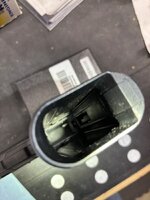
Lube - seems to do this less often when freshly lubed, however, he picture above is ~150 rounds after a fresh application of Hoppes grease on all surfaces.
Failures to eject as you describe, including with that casing getting smashed up, are most typically the result of the slide velocity going backwards being too slow. In a factory gun, that's most often an indicator of excessive friction between the moving parts, but can also be from the thumb riding the slide a bit, and limp-wristing, as you mentioned. In custom or tuned guns, it's most commonly from excessive spring power.
In a way, diagnosing weapon malfunctions is similar to diagnosing a car that won't start - always begin with the simplest things first. As in, starting with battery issues before concluding the starter needs to be replaced.
In otherwise good guns, as long as ammo and mags are good, about 90% of mechanical malfunctions are due to excessive friction - which means, insufficient lubrication. You've pretty much ruled out the magazine issue. On ammo, that could definitely be part of the problem, and hotter ammo might cause the problem to go away for higher round-counts - because hotter ammo leads to increased slide velocities. But you can also get increased slide velocities by reducing friction.
If you look at other comments I've made above, lightweight greases offer maximum reliability for the longest courses of fire, without cleaning or relubing. You can homebrew some up, you can use TW25b, or you can go with a cherry balms grease. All of those will work. But if you want maximum friction reduction, go with the cherry balms black rifle balm for this. It reduces friction to a greater degree than the others - I've seen it cause limp-wristing problems to disappear entirely, with women shooting heavily-sprung sub-compact .45s. I typically go anywhere from 2500 to 3000 rounds on one application in my Staccato C, DWX Compact, and ARs with it, as long as its applied heavy, and they're still generally chugging along when I add a bit more or decide to break them down, clean, etc. If you homebrew, try to find a moly grease (they're usually blackish in color), as that moly additive reduces friction further than greases without it.
Especially taking them apart.