RunDMC33
FNG
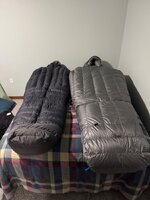
There aren’t many straight, side-by-side comparisons between these two high-end hunting/backpacking bags, so I bought both to compare them myself. Neither bag was given to me (though I asked), and I have no affiliation with either company.
Size & Fit
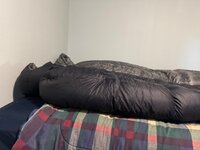
The first thing that stood out was how big the Chilkoot feels. That’s both good and bad.
The good: it has a ton of loft and immediately gives the impression that it’s going to be very warm.
The bad: it only comes in one size, cut to fit users up to roughly 6’5”. If you are someone who is less vertically challenged than I, this may not be an issue as you may require a taller bag anyways. For me (5’11”, 215 lbs), it can feel like you’re swimming in the bag.
On flat ground this isn’t much of an issue, but on a slight incline during a Montana hunt last year I had trouble staying positioned and keeping my head in the hood. Some of that is probably user error, but it’s worth mentioning.
Peax makes a few difference sizes in their Solace bag. A regular (what I own), a regular wide, and a tall. Their Tall bag also fits up to 6’6”. For taller guys, this won’t matter.
Weight
Both bags weighed right around their advertised specs. Comparing similar sizes (SG vs. Peax Tall), the Chilkoot is a couple ounces lighter. For ounce-counters, that matters. For me, it doesn’t—since I’d run a regular Solace, which ends up lighter than the Chilkoot anyway.
Features - This is where the Peax separates itself.
The Solace has quilt mode, arm ports, and a parka mode. The Chilkoot is a traditional, roomy mummy bag with no extra features.
• Quilt mode: Lets you roll and secure the hood and use the bag as a quilt on warmer nights. Good for shoulder seasons or guys who sleep warm.
• Arm ports: These are very well done. Peax uses a baffle system, and I had no issues with drafts or heat loss. Being able to reach out of the bag without fully getting out is a big plus—especially for glasses/contacts, checking weather, or stoking a stove.
Parka Mode
Parka mode is a good idea but slightly missed in execution. Unlike some Sitka bags, you can’t engage it while wearing the Peax—the loop is up near the neck, so you have to exit the bag first. Once on, it wears like a traditional parka (bottom around waist height), but having to take the bag off feels like a miss.
Phone Pocket
Neither bag has an internal phone pocket. In cold weather, phones almost have to live in the bag overnight to keep the battery alive. I think this should be standard on cold-weather bags. I am a side sleeper and have nearly crushed my phone a time or two when rolling over at night. An internal phone pocket would help eliminate this issue.
Warmth
I’ve used both bags in temps below 10°F, with windchills at or below 0°F. Both performed very well. I actually got too warm in both if I wore more than a lightweight base layer and midweight merino socks. I don’t wear a hat while sleeping.
The Peax arm ports did not let in cold air, and the center zip on the Solace is one of my favorite features. I’m not very flexible, and getting fully zipped into the Chilkoot can feel like more of a chore.
Zippers
The Peax zipper is excellent—smooth, no snags, and easy to run. The SG zipper is also high quality, but I did have it snag once around 2 a.m. after getting back into the bag. I eventually got it freed and didn’t have any issues after that, but it’s worth mentioning.
Foot Box
The foot boxes are different. The Chilkoot is a more traditional mummy-style foot box. The Peax allows your toes to point more upward. Neither bothered me, but the Peax foot box was impressively warm. I was skeptical of the claims about down distribution, but after using it, I buy it.
Shell Materials
Both bags use quality shell fabrics, but they feel very different.
• Stone Glacier: 15D Pertex — extremely soft, light, and silky. Feels great against the skin and should shed light moisture well.
• Peax: Toray fabric with DWR — still lightweight and windproof, but feels noticeably more durable. Peax also uses fully waterproof fabric on the foot box and top of the hood, which is a big plus for tipi/stove users.
Storage & Loft Recovery
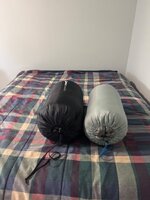
Stone Glacier nailed the storage sack—it’s large enough that the bag isn’t compressed during long-term storage. I found the Peax storage sack a bit tight and switched to a larger aftermarket mesh sack.
After about 6–7 hours in their stuff sacks, both bags took roughly 20 minutes to reach near-full loft once laid out.
Tipi Use
Because of its size, the Chilkoot can be harder to keep off tent walls, gear, or a stove in a tipi setup. In a dome tent or without a stove, this isn’t really a factor.
Conclusion
If you already own the Stone Glacier Chilkoot, I don’t think the Peax Solace is enough of an upgrade to justify buying a second 0° bag unless you really want the added features.
If I didn’t already own a 0° bag and was buying one today, I’d choose the Peax Solace.
Size & Fit
The first thing that stood out was how big the Chilkoot feels. That’s both good and bad.
The good: it has a ton of loft and immediately gives the impression that it’s going to be very warm.
The bad: it only comes in one size, cut to fit users up to roughly 6’5”. If you are someone who is less vertically challenged than I, this may not be an issue as you may require a taller bag anyways. For me (5’11”, 215 lbs), it can feel like you’re swimming in the bag.
On flat ground this isn’t much of an issue, but on a slight incline during a Montana hunt last year I had trouble staying positioned and keeping my head in the hood. Some of that is probably user error, but it’s worth mentioning.
Peax makes a few difference sizes in their Solace bag. A regular (what I own), a regular wide, and a tall. Their Tall bag also fits up to 6’6”. For taller guys, this won’t matter.
Weight
Both bags weighed right around their advertised specs. Comparing similar sizes (SG vs. Peax Tall), the Chilkoot is a couple ounces lighter. For ounce-counters, that matters. For me, it doesn’t—since I’d run a regular Solace, which ends up lighter than the Chilkoot anyway.
Features - This is where the Peax separates itself.
The Solace has quilt mode, arm ports, and a parka mode. The Chilkoot is a traditional, roomy mummy bag with no extra features.
• Quilt mode: Lets you roll and secure the hood and use the bag as a quilt on warmer nights. Good for shoulder seasons or guys who sleep warm.
• Arm ports: These are very well done. Peax uses a baffle system, and I had no issues with drafts or heat loss. Being able to reach out of the bag without fully getting out is a big plus—especially for glasses/contacts, checking weather, or stoking a stove.
Parka Mode
Parka mode is a good idea but slightly missed in execution. Unlike some Sitka bags, you can’t engage it while wearing the Peax—the loop is up near the neck, so you have to exit the bag first. Once on, it wears like a traditional parka (bottom around waist height), but having to take the bag off feels like a miss.
Phone Pocket
Neither bag has an internal phone pocket. In cold weather, phones almost have to live in the bag overnight to keep the battery alive. I think this should be standard on cold-weather bags. I am a side sleeper and have nearly crushed my phone a time or two when rolling over at night. An internal phone pocket would help eliminate this issue.
Warmth
I’ve used both bags in temps below 10°F, with windchills at or below 0°F. Both performed very well. I actually got too warm in both if I wore more than a lightweight base layer and midweight merino socks. I don’t wear a hat while sleeping.
The Peax arm ports did not let in cold air, and the center zip on the Solace is one of my favorite features. I’m not very flexible, and getting fully zipped into the Chilkoot can feel like more of a chore.
Zippers
The Peax zipper is excellent—smooth, no snags, and easy to run. The SG zipper is also high quality, but I did have it snag once around 2 a.m. after getting back into the bag. I eventually got it freed and didn’t have any issues after that, but it’s worth mentioning.
Foot Box
The foot boxes are different. The Chilkoot is a more traditional mummy-style foot box. The Peax allows your toes to point more upward. Neither bothered me, but the Peax foot box was impressively warm. I was skeptical of the claims about down distribution, but after using it, I buy it.
Shell Materials
Both bags use quality shell fabrics, but they feel very different.
• Stone Glacier: 15D Pertex — extremely soft, light, and silky. Feels great against the skin and should shed light moisture well.
• Peax: Toray fabric with DWR — still lightweight and windproof, but feels noticeably more durable. Peax also uses fully waterproof fabric on the foot box and top of the hood, which is a big plus for tipi/stove users.
Storage & Loft Recovery
Stone Glacier nailed the storage sack—it’s large enough that the bag isn’t compressed during long-term storage. I found the Peax storage sack a bit tight and switched to a larger aftermarket mesh sack.
After about 6–7 hours in their stuff sacks, both bags took roughly 20 minutes to reach near-full loft once laid out.
Tipi Use
Because of its size, the Chilkoot can be harder to keep off tent walls, gear, or a stove in a tipi setup. In a dome tent or without a stove, this isn’t really a factor.
Conclusion
If you already own the Stone Glacier Chilkoot, I don’t think the Peax Solace is enough of an upgrade to justify buying a second 0° bag unless you really want the added features.
If I didn’t already own a 0° bag and was buying one today, I’d choose the Peax Solace.