Sig Zulu6 HDX Pro Review

catorres1

WKR
Joined
Sep 25, 2015
Messages
309


Introduction

The first time I saw image stabilized binoculars was many years ago when Canon introduced some to the market. I was a photographer at the time so was very familiar with the capability that IS brought to the table. But the Canon’s were weird looking to me, and their bulk did not appeal to me from a hunting perspective. I also never actually got to try a set, so I just passed them by.

Some years later, Sig released their initial version of a stabilized bino, and a friend that worked with the Texas A&M shooting team told me I should check them out. I only had a few minutes with them on a city street, but I thought they had some promise, but still was not sold.

Fast forward a few years and I began reading reviews that seemed impressive. I talked to my contacts at Sig, and they suggested I take another look. So I met up with them at a TAC event and got to check out the newest versions. I was particularly interested in the latest HDX Pro iteration, as I thought the enhanced IS system and larger objective lenses would be quite useful on the higher magnification models.

Looking through them, I was sufficiently impressed with the pro’s from a first impression and had some ideas on how they might bring some efficiencies to some of my hunts, so I got a set from Sig to check out. They are available in 14x, 16x, and 18x, all with 50mm objectives. For my intended use, I wanted the most magnification, so I chose the 18 power pro’s.

It’s important to note that I was not intending to use these as a replacement for my 10 powers, which also serve as my ranging solution. The reason is mainly due to field of view, but I also suspected under low light conditions, the 18’s would likely die off pretty quickly on very distant targets.

My intention was to test and see how they would do lightening my pack by removing my spotter and tripod under specific conditions. That is, no, I would not leave my 70 power spotter behind if I was hunting in Southwest Colorado. But in most places where I hunt in Texas, I really don’t need 70 power, but definitely could use more than 10. So some 18’s where I don’t need a tripod looked like a potential solution, and being able to leave the weight of my spotter and tripod out of my pack sounded great


Whats in the box
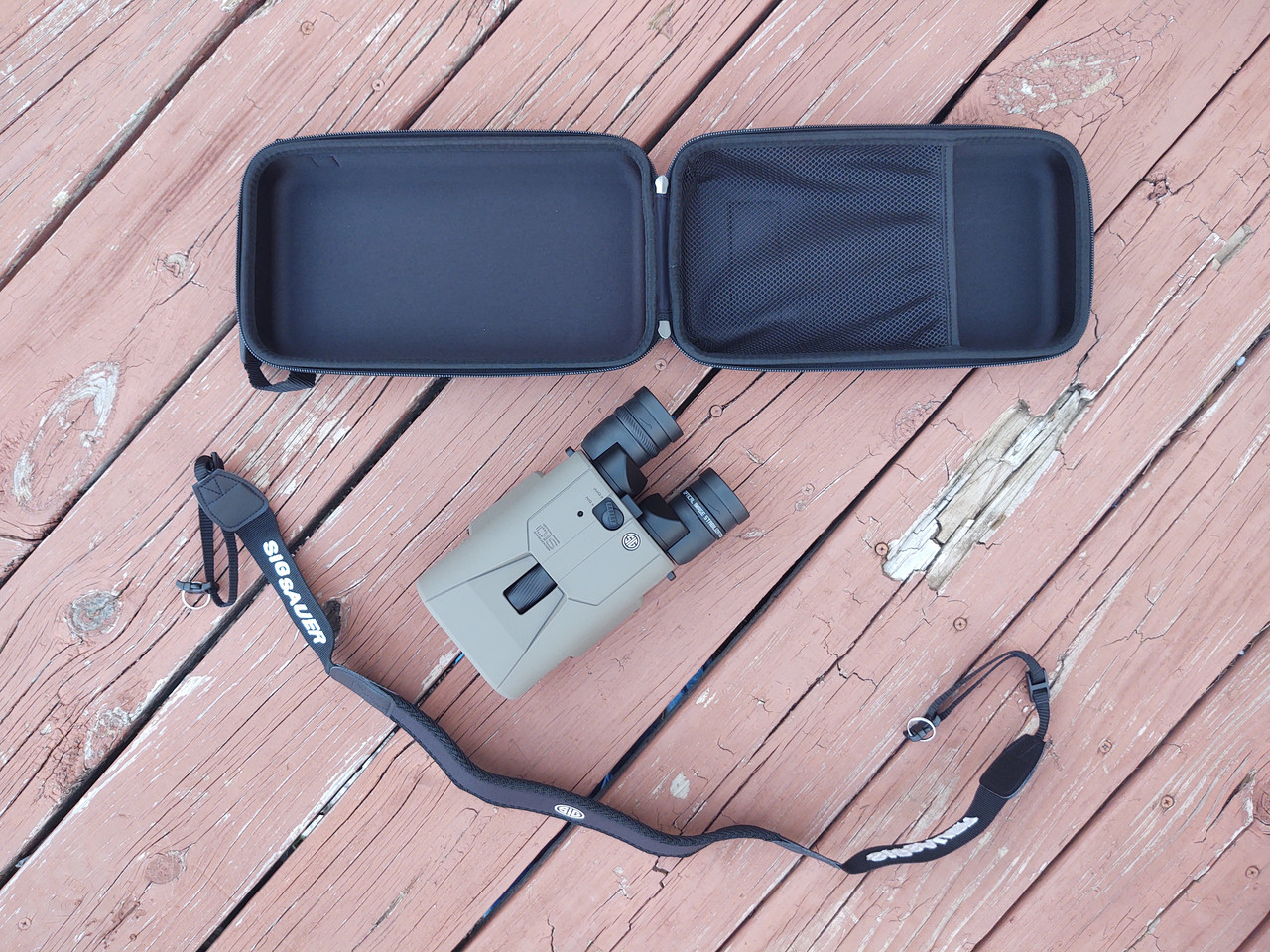


The Zulus are pretty straightforward, so they don’t come with a lot of accessories, though some decent caps to protect the glass would be a great addition.​


The Zulu’s come in a carrying case which provides pretty good protection, but adds bulk to an already bulky item. They also come with a carrying strap, two batteries, and have some little caps that cover the eye pieces for shipping (they don’t stay on on their own) and that’s mostly it, other than the usual marketing stuff you get. Unlike RF bino’s, there is not a lot of complexity here, so the package is pretty straightforward. The case it comes in is quite protective, and as there are no real covers to protect the glass, I found myself carrying the Zulu’s in my pack in the case….something that is sub-optimal for sure….but better than leaving the glass to get ground into the sand, sticks, and rocks at the bottom of my pack. Browsing their site, I noted they do offer objective covers for the marine version, something I definitely would like to have, but I don’t know that there is a solution for the eye pieces. I would definitely like to have all the glass covered, doing so would save me the weight, bulk, and extra time in dealing with the zippered storage case.

Physical Description
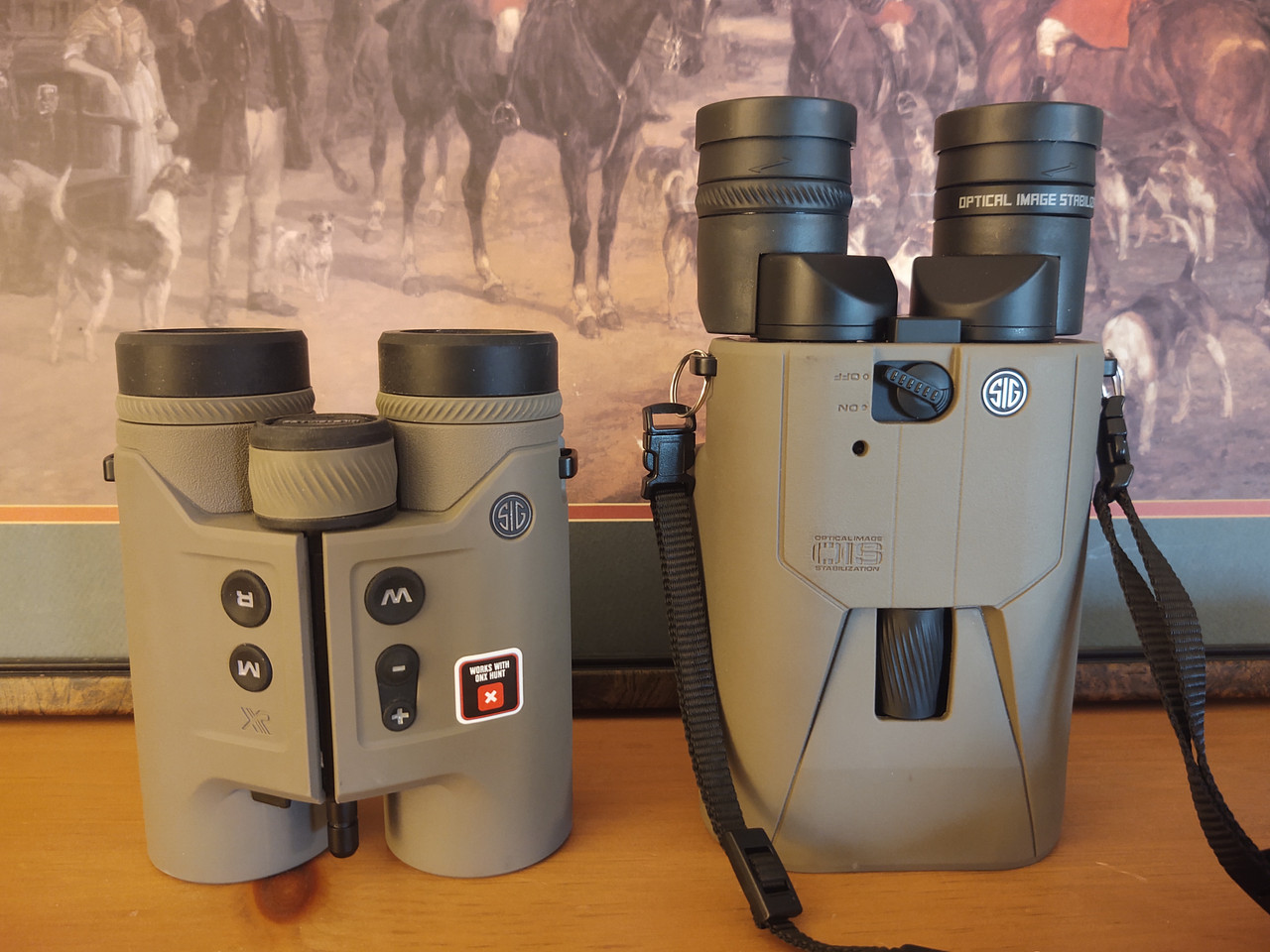


Though quite a bit taller, they are not any wider than my 10k’s, and they weigh almost exactly the same.​


While there are certainly larger binos, these are not small. I don’t have a set of conventional 15’s or 18’s to compare them to, but they are definitely on the beefy side compared to my 10’s, particularly in their length. Of course, when compared to a spotter and tripod, life is good in this regard. I just mention it in regards to those that might want to grab a set of the 14’s or 16’s to run in a chest rig.

Weight wise, they weigh in at 2 lbs 2 ozs. Actually not nearly as heavy as I expected. My 10k’s weigh 2lbs 1 oz. And, of course comparing that weight to my spotter and tripod, which come in at 8 lbs 4 ozs, it’s a drastic difference. And yes, the spotter brings a whole other level of performance that the Zulus can’t approach, but the point is when that extreme magnification is not needed or even useful, there is the potential to save some significant weight with the Zulus and still have a large increase in magnification vis a vis your 8’s or 10’s.

Control wise, the button to turn IS on and off is kind of where you would expect the focus wheel to be. The focus wheel is moved much forward, closer to the end of the objective body. Nothing wrong here, but it’s something you have to get used to coming from conventional binos. There is also a diopter adjustment on the right eye piece, which is fairly straightforward, and the eye-cups rotate up to adjust eye relief.
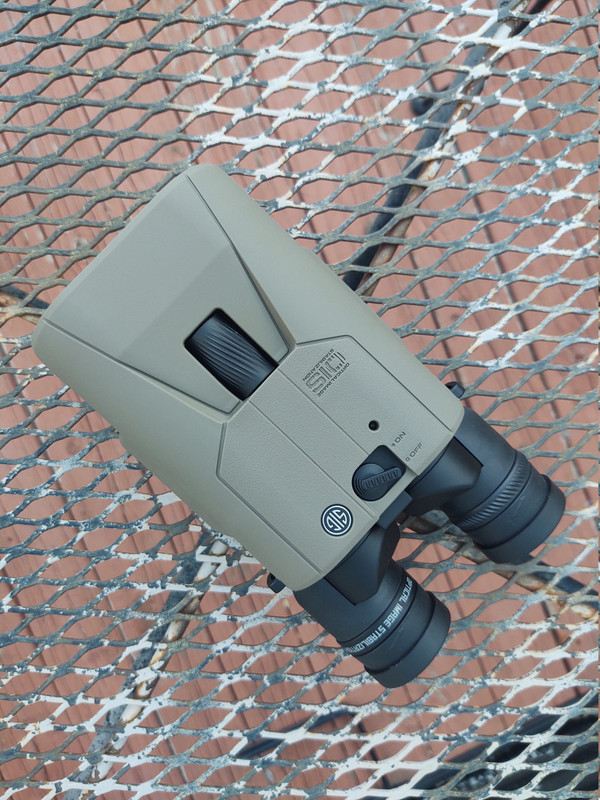


Controls are very straight-foward and well laid out once you get used to them in comparison to standard binoculars.​


The one thing that is noticeably absent is a tripod mount. Sig does have an external device you can strap on to the binos for this purpose, but this looks bulky compared to a simple stud. I guess the idea is that you don’t need a tripod to hold them steady, but there are times when it’s nice to have the weight of the bino on a tripod you are already carrying, or perhaps you want to lock it on one spot for an extended period and not have to re-aquire the target every time. It’s definitely not a deal-breaker, but it seems like a really small, simple thing that would add some utility.

Performance

Image Stabilization


To get right to the point, the image stabilization performance on these has been outstanding. I wondered how good it would be on a relatively light 18x bino, but it did not disappoint. Unlike previous models, there is one switch you turn on and it auto toggles between two levels of stabilization. You do not have to quick cycle the switch to kick up the stabilization, it handles it on it’s own. I was a little incredulous how this would work in real life at first, but I found it to work well. In truth, what surprised me is that due to the IS, I can actually handhold these more steadily than I can my 10x binos. The IS I am familiar with from when I was a photographer (many years ago) was not this good, though I imagine IS on current pro camera lenses has much improved. Still, it is impressive. It is interesting to note that Sig does offer IS in some of their more conventional offerings. When I asked what the difference was, I was told that this bino design does not shift the objective lenses, but does its stabilization at the prism level, which allows much more effective stabilization. Hence the different form factor.

In terms of battery life, the pro’s use two AA batteries, one on each barrel for balance and ergonomics. How long do they last? I really don’t know. They are supposed to last 40 hours. I have used these a bunch and haven’t had to change them yet. Part of that is due to the auto-off feature. After 10 minutes, it automatically turns off the IS so if you forget to turn them off and head down the mountain, it will not drain your battery trying to stabilize itself. Only thing is that during long glassing periods, it’s a little annoying when the IS shuts off and the image bounces around until you either flip the power switch off, or just cycle it and the IS kicks in again. But overall, I have no complaints on their implementation of IS on these, very effective, been great on battery life, and easy to use.
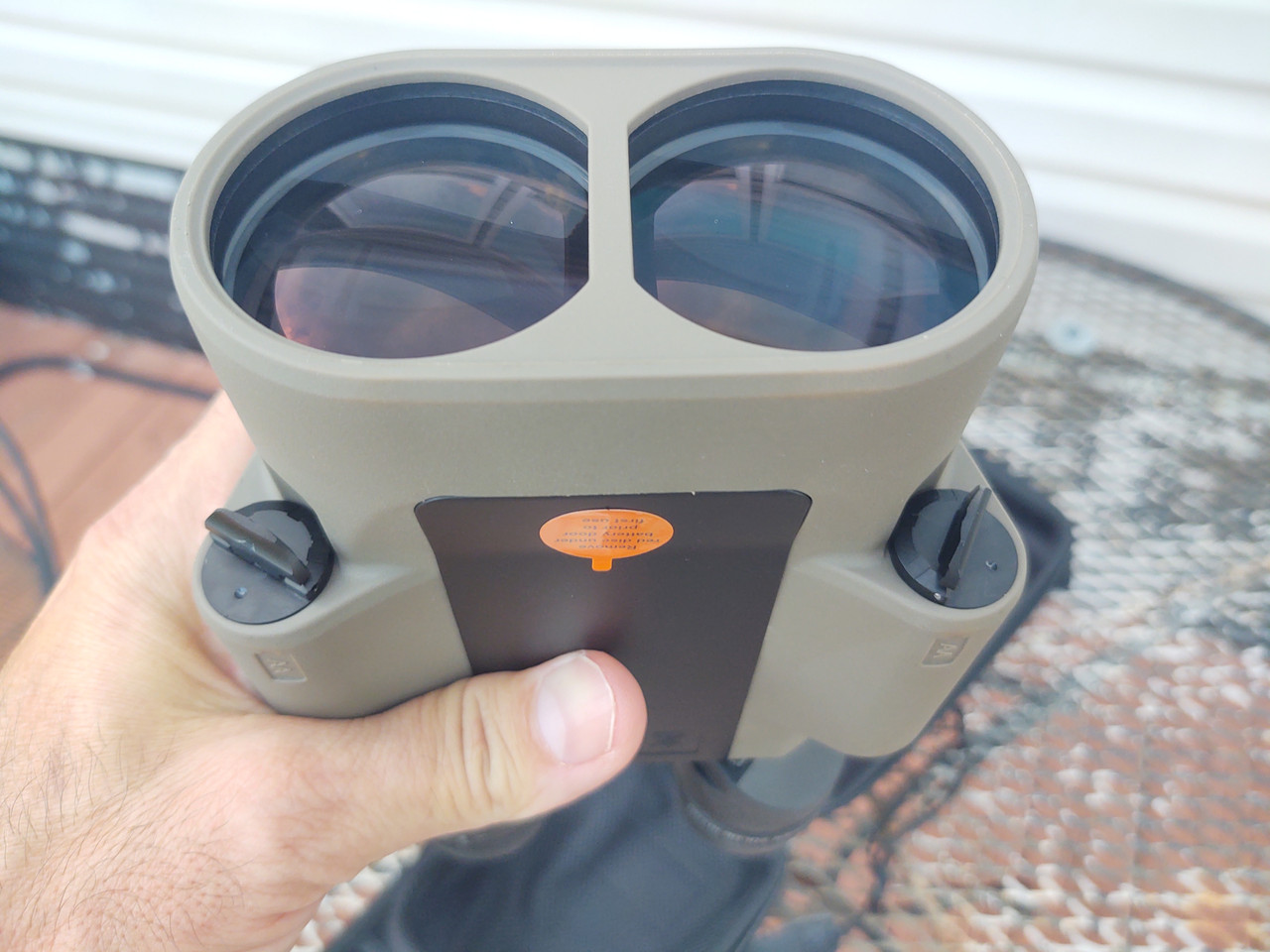


Despite them being 50mm objectives, they are pulled close together so are compact for their size in this regard. The batteries are in two tubes, separated to balance weight and allow better ergonomics.​
 
Sig Zulu6 HDX Pro Review Part II


Glass

The glass on these was a pleasant surprise, and I think part of it is due to IS. Lets answer the question first which always comes up….as good as alpha brand x binos? No. I have compared it to some 8x Leica pros I had on loan at the same time, but I felt a better, but still poor, comparison was against my 10k’s. I say poor because I am comparing 18 power verses 10 power, so yes, I can see more detail. That said, I actually felt that even beyond the increased magnification, everything was a little clearer than on my 10k’s. More surprising, I felt like the color and contrast was better too. Part of that is likely due to the fact that the 10k’s still have some color cast on one barrel for the RF laser (these are gen 2’s, not the gen 1’s, but some coloration exists on most RF binos). Regardless, I felt like the Zulus had a better image, even without the increased magnification. That said, everyone has different eyes, and my eyes have a few miles on them at this point so I asked a couple friends to look through both and give me their opinion. When I did, I asked them to try and ignore the effects of the increased magnification and just tell me what they thought about clarity, contrast, color and overall image quality. They both agreed immediately that the Zulus looked a little better.

When it comes to the color and contrast, I think that the reason may be because of the aforementioned coatings required for the RF hardware in the 10k’s. But when it comes to the clarity and sharpness, I think the Zulus punch above their weight because of the IS, much like your 10’s take a step up when you mount them on a tripod. That is, as I mentioned before, I am noticeably steadier at 18x on the Zulus than I am at 10 or 8 on the binos I compared them to when hand holding. The IS takes out all the shake, while regular binos suffer from some form of movement that introduces tiny amounts of blur that give the perception of lower sharpness. Would this change with the 10k’s mounted on a tripod. For sure they would step up in perceived sharpness, but that wasn’t really what I was trying to test. I wanted to see how they compared hand held so I could leave my tripod in the truck. And in that use case, the Zulus surprised me in being steadier, and therefore ‘sharper’, than my 10’s or 8’s.

The other comparison I made was against my spotter, which was part of this exercise, that is, to see what I might be losing by leaving it in the truck. For this comparison, I limited the spotter to its minimum power of 20x to have as close as possible comparison. The Zulus win in ease of use and the comfort of two eyes working,, but the 82mm spotter wins everywhere else. I like the Zulus for certain things over the spotter, yes, but when it comes down to image quality, the spotter for sure wins.

In Use


For certain huting scenarios, the Zulus proved to be a light, fast, and convenient option that still gave me the power I needed to cover much farther distances than I could with my 10’s alone.​


That being said, what I wanted to see is if I could give up the spotters particular strengths in some scenarios in order to gain other benefits that the Zulus offer over the spotter. Initially, I had in mind some specific hunts where I hauled around a spotter because I wanted more mag than my 10’s gave me, but did not need the full power of the spotter. These included some whitetail hunts in central Texas, as well as hunting Aoudad, deer, and pigs in canyon land in west central Texas. In these specific scenarios, in most cases, my realistic visibility is maybe 1500 yards. There are a few places where you can see further, but that often means looking at a hilltop poking out that is on someone else’s property, so it’s not very helpful. What I found was that, indeed, it worked really well for my needs in these cases. In cases where we wanted to be certain of a deer’s age or size before taking the shot, the 18’s made that verification quick and easy. In one case, my friend almost took what he thought was a small doe for meat, but I was able to see that it was actually a young spike. And when I shot my Aoudad, glassing those canyons with the 18’s was much more convenient using the Zulus than setting up a spotter, while still giving me almost twice the magnification of my 10k’s. This allowed me to get a good look at the Aoudad, which were almost always moving in and out of the trees and drainages, and then pack up and move easily. So over the last months of hunting, I really came to value the Zulus for what they are, and how they were able to lighten my pack, let me work faster, and in the scenarios where appropriate, not lose much over using a spotter.


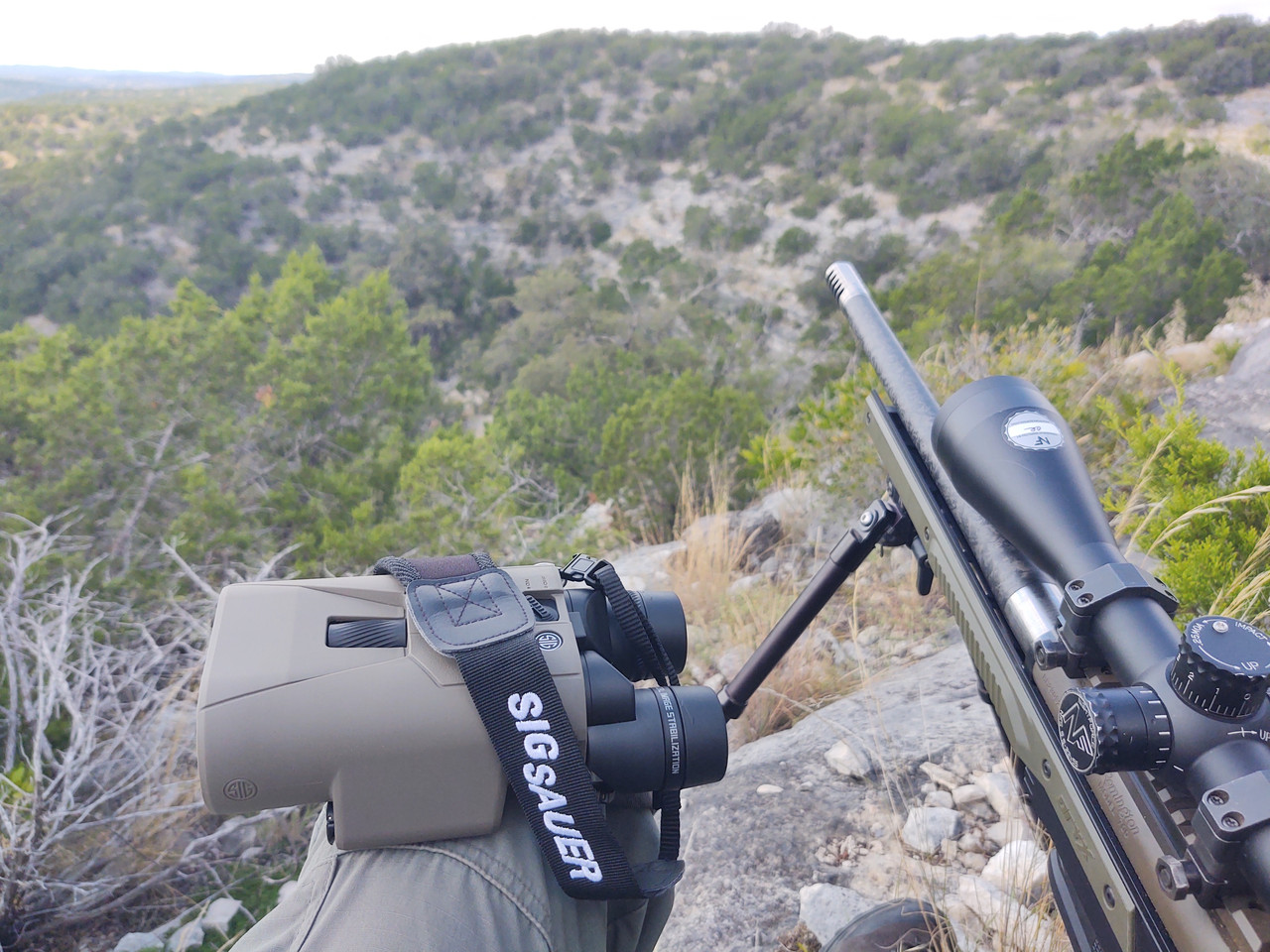
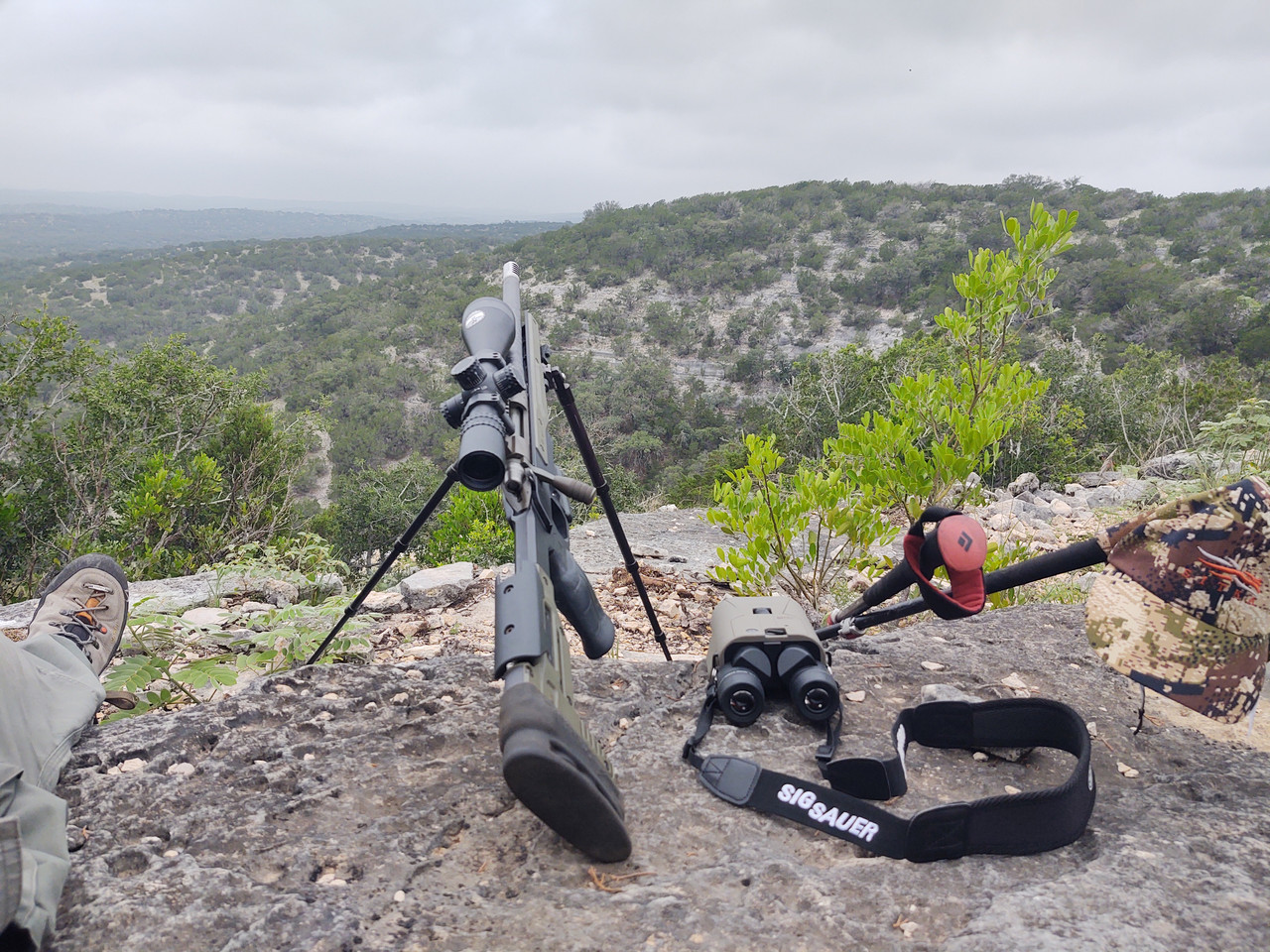
With this setup, I never felt undergunned optics wise. From this position, I could pretty easily keep watch well enough to see anything moving through the canyons. I found my spotter to be overkill here, but the Zulus were just the ticket.​


But another use for the Zulus I had not even really originally considered was just on range days. Previously, I would always have to pack my spotter in order to see 22lr hits at moderate distance on paper, and centerfire hits on paper on more extended shots. I was happy to find that the Zulu’s do a pretty good job at letting me see my target without needing my spotter. Sure, I could use my scope, but not all my scopes hit 18x, and even the ones that do, I just find it easier using both eyes for some reason. So I now find myself needing to haul the spotter out for range days less often, which is pretty nice.

Overall, I found the Zulus have a lot to offer me personally in some of the hunts I go on where the 10’s are not as much as I’d like, but the spotter is overkill. By including them in my toolbox I can, in certain circumstances, replace a powerful, heavy spotter/tripod with a much lighter, faster, and more convenient solution. Chosen for appropriate situations, right tool for the right job, I did not find myself lacking, and the difference in weight, mobility, and setup time over a spotter was dramatic, while still providing me a sufficient distance boost over my 10x’s when I felt I needed it. And as a bonus, I found I could also reduce my range load out in many cases as well.

Strong points

Overall, I was actually surprised with the image. Being able to handhold an 18 power optic, and have it beat the stability of my 8’s or 10’s, impressed me. And although 18x with a 50mm objective only gives you an exit pupil of 2.8, where 4 generally is considered an optimal target, I did not find the glass unusable during shooting light. Would a set of NL pures do better? Of course. But the Zulus did much better than I expected, matching my other, admittedly not top alpha tier, glass, which I did not expect considering the exit pupil. But the real surprise was the perceived sharpness of the image. Combined with the stabilization, the clarity and sharpness surprised me. Again, I believe that stabilization is making it jump up in performance by removing micro-vibrations that rob clarity without us realizing it. So overall, within my expectations, I was very pleased with the optics when I used them on various hunts and during testing over the last 9 months.


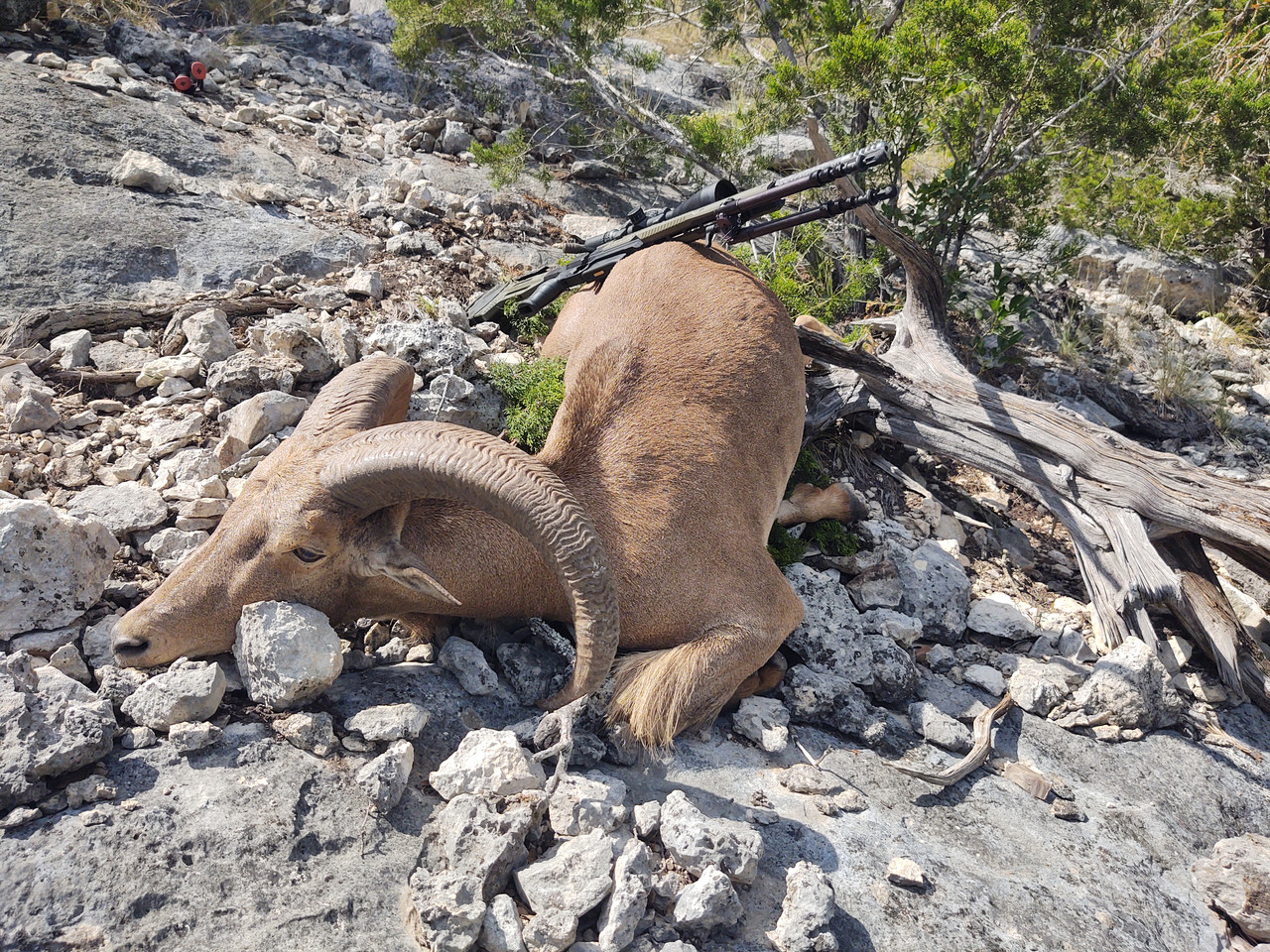
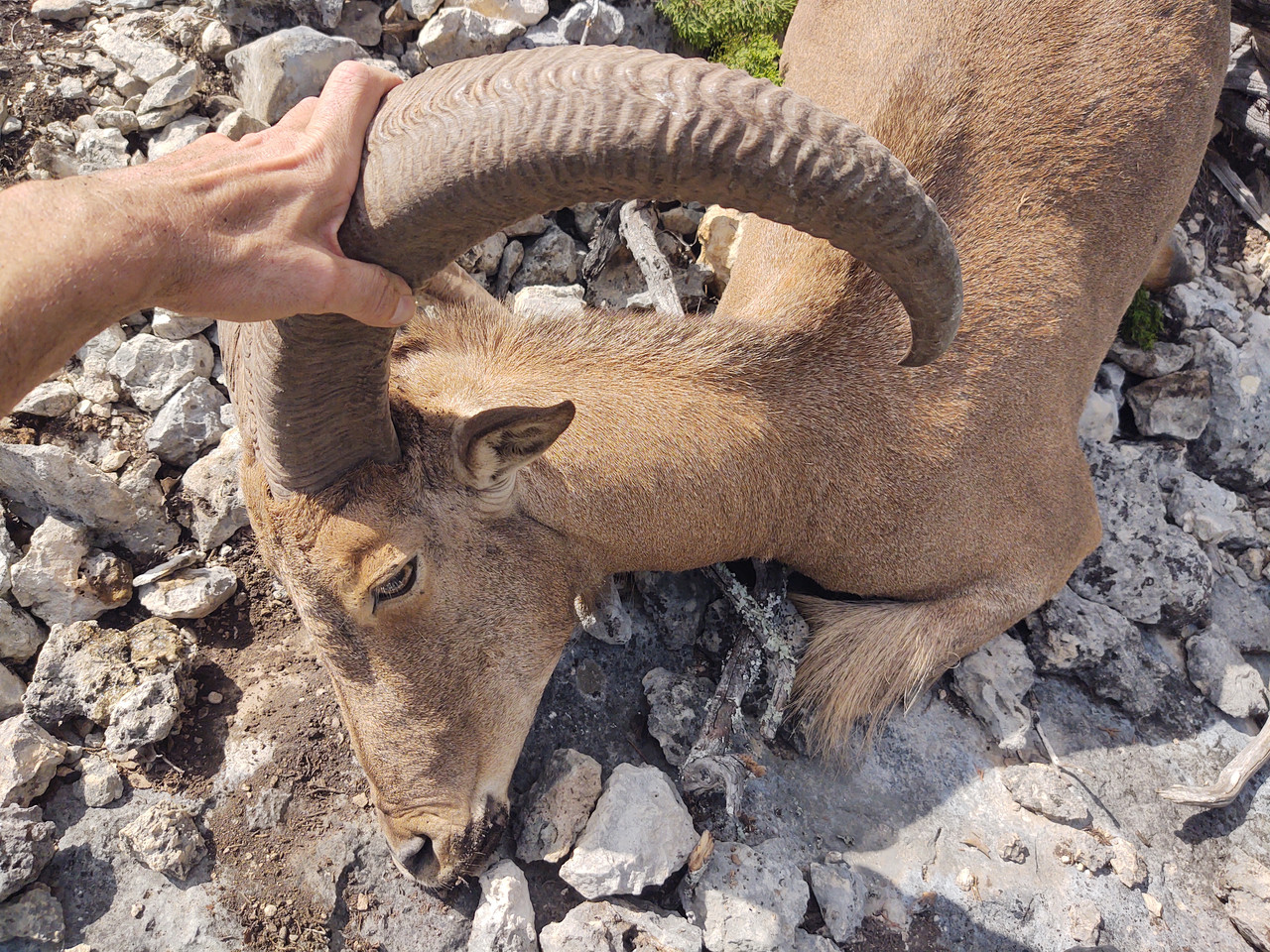
Finding the Aoudad was not all I wanted the Zulus for, but I wanted to get a good look before taking one. The extra power over the 10’s helped me make the decision to take this ram. Not a monster compared to what you might find in the Davis Mountains, but for this area, he was by far the largest we had seen in the past few years.​


Battery life on this optic is another thing I was concerned about. Clearly, the IS is making this optic, and so battery life was of a concern to me. In the end, however, as I mentioned, I still have not had to change out the batteries after many, many hours of use. I wish I had kept track, but that wasn’t realistic. I can only say the Zulu’s battery management was also a pleasant surprise.
 
Sig Zulu6 HDX Pro Review Part III


Weak Points

Carrying these around has been, for me, a bit of a conundrum. They are definitely too big for my chest harness. I don’t know if anyone makes one that would fit, but even if it did, I don’t want to supplant my 10k’s on my chest. And because of a lack of any protection for the glass, I felt the need to keep them in the case that comes with the Zulus, so that made them even more awkward. Granted, they are much smaller than a spotter, but still, one of their strongest points is quick and easy use, but that was just a little blunted by having to keep them in a side pocket of my pack in a zippered hard case. Ideally, and this also covers one of my other criticisms, these would come with tethered covers. They already make one for the marine version, which I plan to get, but they need a set for the eye pieces as well. This would allow me to throw these in the lid of my pack or wherever and not worry about the glass, removing the bulky case from the equation.

The only other issue I encountered was with the eye relief. It’s important to note that I do wear glasses and have deepset eyes, so I have eye relief issues with pretty much every spotter on the market, especially at top magnification. But I never have, that I can remember, with any binos. With these, I do. I am just at the cusp of not being able to get a complete view. It’s really easy for me to lose 5 or 10% of the view if I am not very deliberate in getting them adjusted just right, and even then, I have to hold them in the ideal spot to get the whole view. This is probably due to the compact size for the magnification and to the fact that, as best as I can tell, these are somewhat like two mini-spotters put together with a prism. Almost like a shrunk down big-eyes. And like I said, I have issues with most spotters as well. It could be that the 16x and the 14x versions would be better, they do list higher eye relief numbers, but I have not spent much time with those to see if that is correct. Either way, I wanted as high magnification as possible, and while that probably exacerbates the problem somewhat, I can get it to work if I am intentional, and that extra mag really suits my use case. But for most people, especially if you don’t wear glasses, it’s not an issue. All the people I have let look through these have remarked how sharp they are, how good the image looked, and none of them (none of which wore glasses) have had any problem with eye relief.

The last point, and it’s more a suggestion than a weakness, is that I feel like the focus adjustment is just a bit too fast. It’s really easy to blow past the focus point. I don’t think it’s a depth of field issue, as that seems pretty good once it’s focused. I think it’s just the gearing they chose. It’s not a big issue at all, and maybe my regular binos are just slower, but I’d like to see Sig slow down the adjustment just a bit to make it easier to creep up on the sweetspot.

Conclusion


In the end, after looking at Aoudad and passing on what I was seeing on this ranch for several years, I was pleased to finally find and take this ram., something I had been trying to achieve for many, many years.​


Overall, I have been really happy with them. I have had quite a few people look through them to get their feedback and, of course, the IS surprises them. But after getting over that, they all have remarked how clear, bright, and pleasant the image is. Being able to hand hold an 18 power bino that is fairly light is really impressive. I need a better solution for carrying and protecting the glass, but I think if I can find some tethered eyepiece covers, I’ll just pick up some of the objective covers they have for the marine version, and then these can ride in the lid of my pack for quick access. I don’t know that a chest rig would work with their size and even if it did, I want my 10x’s there.

As I had envisioned, in some cases, many in my case actually, the Zulus let the spotter and tripod stay home. That’s a big weight and bulk savings. But sometimes, you need that spotter, so in those cases it won’t really have a place unless you are used to carrying 10’s, 15’s and a spotter….a bit much for me. However, for those that do carry all three, I still think they are more useful than standard 15’s because the IS makes the tripod unnecessary during those times when you don’t need your spotter, or they let you take a quick closer look before you have had time to set it up.

Ultimately, as it is, the Zulus have replaced the spotter for me in most of my Texas hunting. Would I do the same in Colorado? No, not me personally. My eyes are just not good enough, I want the additional mag I get with the spotter. But in its scenario sweetspot, which for me is pretty broad, I really liked them.

Combined with the bonus that it has also become a much more convenient option for checking targets etc. when out shooting, it’s been a very useful tool to add to my toolbox. It’s not for every scenario, but in a good number of them, it provides a lighter, faster, more convenient alternative.
 
Choices. The IS world forces you into them. I’ve decided to go back to a handheld rangefinder . This allows me to go with the Zulu 6 12’s with a big spotter. FOV is a little bit of a sacrifice with the binos but my spotter has a real nice wide angle eyepiece. Nice write up though and beautiful aoudad.
 
Choices. The IS world forces you into them. I’ve decided to go back to a handheld rangefinder . This allows me to go with the Zulu 6 12’s with a big spotter. FOV is a little bit of a sacrifice with the binos but my spotter has a real nice wide angle eyepiece. Nice write up though and beautiful aoudad.
Thanks! Yeah, there are so many options, ways to kit out. For myself, I kinda feel like it's a horses for coarses deal, the loadout changes. Probably for me, part of it is the vast differences between the opportunities I have....most of my Texas hunting is completely different than Colorado, for instance. So my clothes, boots, and other gear gets switched around alot.

Your solution is definitely one I thought about too when I saw how still I could be using IS. But I really love a bino RF....soooo....that's what I want to see. I don't know how they can do it with the IS being on the prism though, and objective IS is much less effective, so may be technically impossible, I don't know.

But if they could do that, that would be awesome.

Glad you like the review, thanks again for the compliments!
 
Awesome write up- thanks. I love the lower power IS Zulu’s but I’m in more timber. The 12x have ridden in my chest right now for a couple years. For me the replace alpha glass but totally agree with your assessment in big open country.
 
Awesome write up- thanks. I love the lower power IS Zulu’s but I’m in more timber. The 12x have ridden in my chest right now for a couple years. For me the replace alpha glass but totally agree with your assessment in big open country.
That's awesome, what chest rig are you using? Are these the pro's or the regular ones?
 
Yeah, if I remember correctly, the Pro's are quite a bit bigger....50mm vs 42...though on these, I don't know that makes the difference as they are fairly narrow anyways. Its the length. I'd like to see a solution come out for these, but I honestly don't think that would happen unless the lower power versions got very popular, as most people are probably not chest carrying an 18x optic for general use.

That 12, however, makes a lot of sense...FOV is a compromise though as PredatorX mentioned. Just have to balance the tradeoffs to the job. Me, if I were not wedded to and RF bino at this point, I'd be thinking really hard about the 12's, as the steadiness and extra mag really appeal to me.
 
Back
Top